
In total, €258 billion was immobilized in Belgium, of which €202 billion was frozen at the Euroclear depository in Brussels, which handles securities. Neither the country nor the international institution agrees to the seizure of these funds for transfer to Ukraine. Ukrainian experts are working to change the current state of affairs.
To form a consolidated position, the Centre for Russian Studies organized the roundtable “‘Unfreezing’ Russian Assets for Ukraine: What Stands in the Way?”. Three speakers represented the Pylyp Orlyk Foundation: lawyer Maksym Baryshnikov, economist Lesia Yastrubetska and diplomat Volodymyr Yelchenko. A total of 13 experts took part in the event.
The event was moderated by diplomat and head of the Centre for Russian Studies Volodymyr Ohryzko. He proposed a draft resolution that was to be adjusted and supplemented following the roundtable. The draft comprised five points. Here is a summary of the essentials:
1. In 1974, the UN General Assembly adopted Resolution 3314, “Definition of Aggression”. Article 1 of the document defines aggression as “the use of armed force by a State against the sovereignty, territorial integrity or political independence of another State (…)”. Russia’s actions against Ukraine fully match the concept approved by the resolution.
“The adoption of the resolution, by the way, was initiated at the time by the Soviet Union,” Volodymyr Ohryzko added. “So we can congratulate Russia on having started digging a hole for itself a very long time ago.”
2. The commission of a crime must entail liability, including financial liability.
3. The immobilized Russian assets must be recognized as part of such financial liability. The EU has every legal ground to recognize these assets as exactly that.
4. The European Union must declare that it will not accept claims from Russia and its agents regarding the use of these immobilized assets. It is worth emphasizing that there is no threat whatsoever to the financial resources of uninvolved countries.
5. The European Union should be encouraged to use the immobilized assets proportionally, so that the countries of the Union see their own economic interest in this.
Reparations Loan as a Way to Use Russian Money for Ukraine’s Benefit
Member of Parliament, First Deputy Chair of the Verkhovna Rada Committee on Law Enforcement Andrii Osadchuk noted that since the start of the Russians’ full-scale invasion, the Ukrainian authorities have not developed a so-called One Voice Policy. So, although the Ukrainian community at various levels conveyed Ukraine’s problems and needs in the war to the international community, these efforts were not consolidated. Osadchuk noted that the outcomes of the roundtable could be used to try to lay the foundation for a One Voice Policy. But a position that politicians, diplomats and experts from different fields would articulate jointly to foreign audiences must be approved by the top military and political leadership.
For himself, Osadchuk formulated personal arguments and used them in his communication with foreign media and politicians:
“I do not want taxpayers in the United Kingdom, France, Germany and America to pay for all the horror that Russia has caused. Russia itself must answer for it. All the more so since it is no secret to anyone that there is a huge amount of Russian assets in Europe, in America and elsewhere around the world. And, of course, this money must be used to compensate for the damage inflicted on Ukraine.”
The second problematic point singled out by the MP is that the topic of Russian assets has not been pushed hard enough. They were immobilized back at the end of February 2022, but active discussion of the topic began only in 2025, when the Europeans themselves started looking for alternative sources of funding. At that point the Americans got in the way, but Ukraine’s European supporters proposed an alternative — a reparations loan.
“It is a very elegant legal scheme that our friends came up with. Thanks to this idea, Russian money can work for Ukraine,” Osadchuk noted.
The reparations loan means that the immobilized assets are used as a guarantee against which funds are allocated to Ukraine. And they would have to be repaid only after Russia compensates for the damage (read more about the mechanism on EUR-Lex. — Ed.). So the MP proposed joining efforts around expanding and improving this instrument as the most workable one.
Plan B. Redirecting Russian Money from Belgium to the European Commission
Diplomat Oleksandr Motsyk noted that Russia’s war against Ukraine is a grave international crime:
“This crime is the largest in the world since the Second World War. Its scale is gigantic. In addition, there are hundreds and thousands of local crimes, such as the seizure of the Zaporizhzhia NPP, the blowing up of the Kakhovka HPP, the executions of Ukrainian prisoners of war, crimes against the civilian population such as the bombing of Kyiv and all of Ukraine, and so on. Russia must answer for these crimes.”
The inevitability of Russia’s punishment was supposed to be guaranteed by the UN Security Council, but that institution is paralyzed by the criminal itself, which illegally occupies a seat on the Security Council and holds veto power as a permanent member. Likewise, the Budapest Memorandum was supposed to guarantee Ukraine’s security, but here too international agreements proved futile.
Therefore, Oleksandr Motsyk believes, Ukraine has every reason not just to ask but to demand that the issue of Russian assets be resolved. In addition to the reparations loan, Mr. Motsyk proposed preparing a fallback option as well.
The point is that Belgium and Euroclear refuse to unfreeze Russian assets for Ukraine’s benefit because they fear legal prosecution and pressure from Russia. Oleksandr Motsyk proposed solving this problem by transferring the Russian assets to the management of the European Commission. Then, in exchange for reforms, Ukraine could receive funds for defense from the European Union.
To legally justify such actions, one can rely on international law, which allows tough and substantial countermeasures to be applied against an aggressor (Articles on Responsibility of States for Internationally Wrongful Acts, drafted by the UN International Law Commission in 2001. — Ed.). Since different countries in the European Union defend their own interests, obstacles should be expected along this path. To overcome them, a large-scale advocacy campaign is needed:
“Our voice needs to be heard at all levels: at the interstate level, at the parliamentary level, at the level of civil society organizations and think tanks, and at the level of academia,” the ambassador concluded.
The Legal Grounds for Confiscating Russian Money Exist. It Is Now a Matter of Political Decision
Professor and specialist in private international law Anatolii Dovhert noted that every possible option for confiscating Russian funds must be used. This means both the reparations loan and the transfer of funds to the European Commission. Another option is to use them on the basis of PACE Resolution 2678 of September 30, 2026, “How to ensure that the Russian Federation implements the judgments of the European Court of Human Rights, including paying the compensation awarded”. The essence of the resolution is to pay compensation to Ukrainian applicants to the European Court of Human Rights out of the frozen assets.
But, the professor noted, none of the options has been applied in practice. The idea of the reparations loan was not implemented — matters did not move beyond statements of support. Ukraine was allocated €90 billion, but this sum was not linked to the frozen assets. The transfer of funds to the European Commission also remained at the discussion stage. PACE resolutions are not always effective, because bringing them to the stage of enforcement can take years. The skepticism was shared by lawyer, Head of International Legal Projects and Strategic Research at the Pylyp Orlyk Foundation Maksym Baryshnikov:
“With all my respect for PACE, its decisions have no influence whatsoever on the actions or the actual state of affairs in Russia,” he stated.
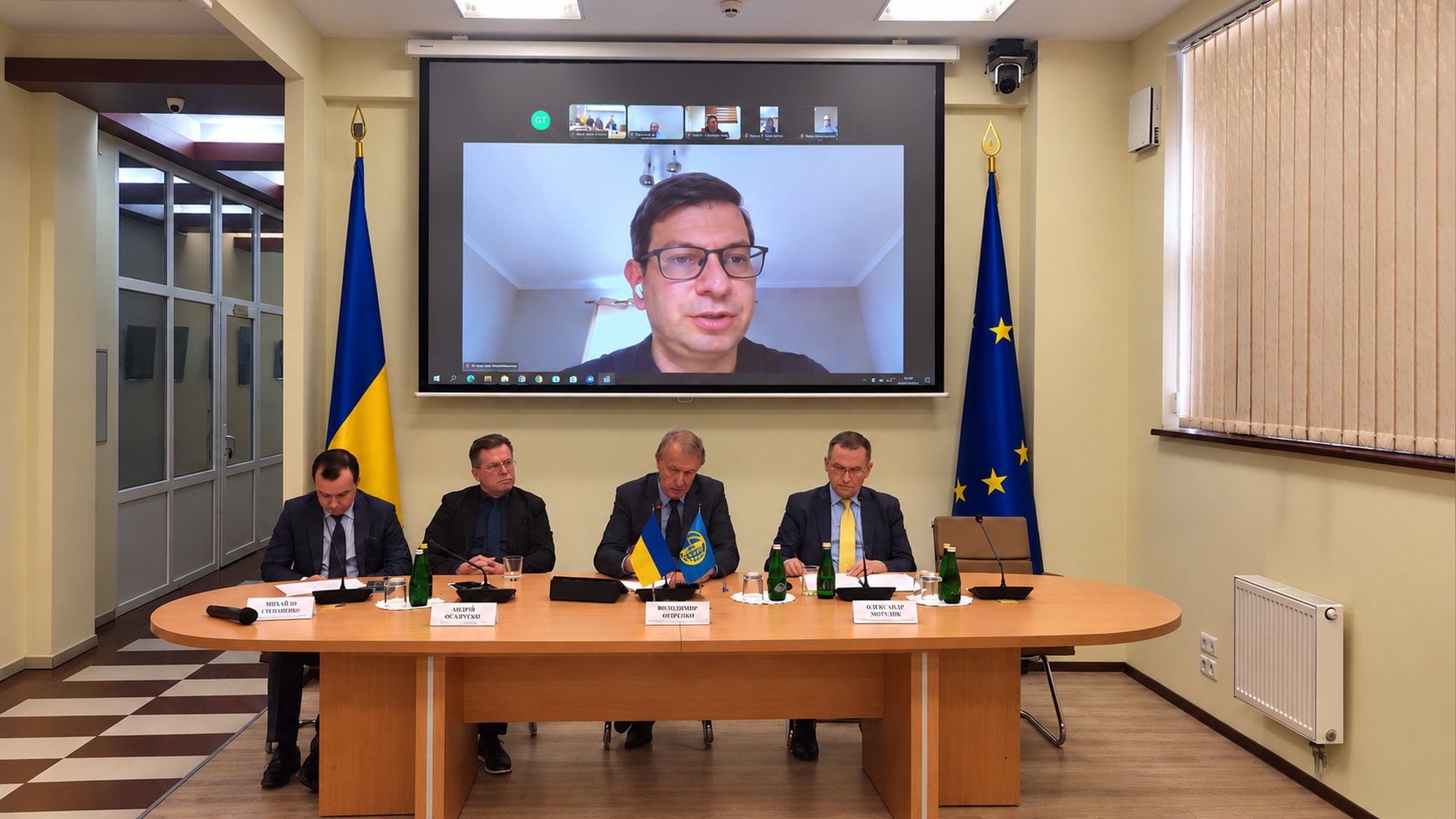
International lawyer, specialist in the protection of public law and the protection of human rights Borys Babin added to Professor Dovhert’s caveats. He said that the judgments in favor of Ukrainian applicants at the European Court of Human Rights have not been delivered as regards the monetary part. And even when they are delivered, they will concern the payment of compensation to private victims, which means the Russian money will not reach Ukraine’s defense budget. On top of that, the Russian clique has a powerful network of agents of influence in Strasbourg.
Dovhert noted that European partners are looking for legal grounds for seizing Russian funds. But this has been going on for four years already, although there are enough norms to appeal to. These are the already mentioned right to countermeasures, the UN resolution on the definition of aggression, and Article 51 of the UN Charter on collective self-defense. Ukrainian diplomat, Head of International Policy Research at the Pylyp Orlyk Foundation Volodymyr Yelchenko also added UN Security Council Resolution 2341, “Threats to international peace and security caused by terrorist acts”.
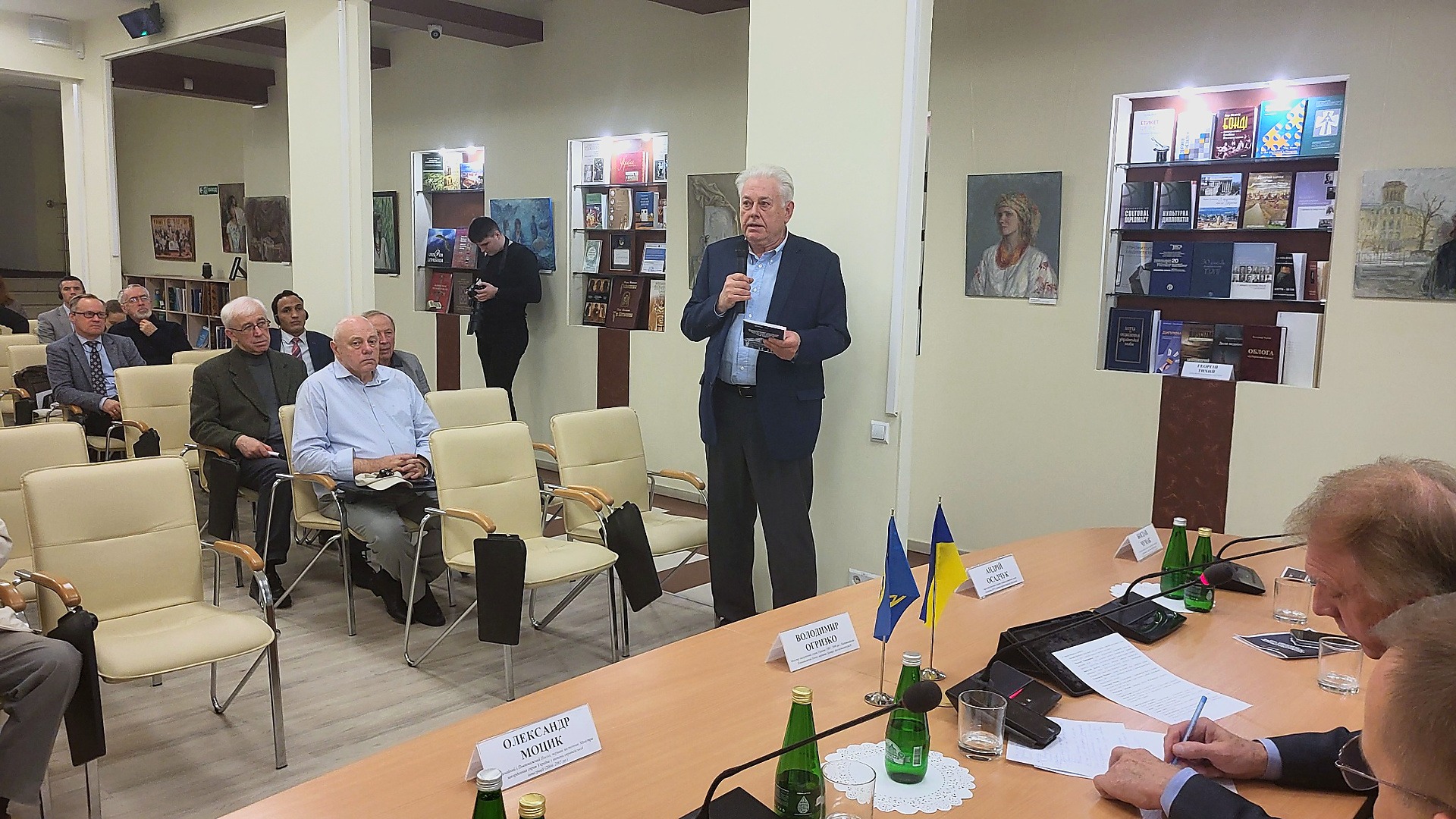
Despite the theoretical legal basis, a practical precedent is lacking — one that the European partners have still not dared to set. Political will is lacking.
One of the reasons for the resistance is the threat of protracted litigation, as happened with Luxembourg, which froze Mikhail Fridman’s assets in implementation of EU sanctions. The Russian oligarch responded with a claim demanding $16 billion in compensation for the violation of his rights as an investor. Belgium fears a repeat of this scenario.
“It is now a matter of political decision. International partners do not need to be convinced; they know everything perfectly well. It is just that there is still an ambiguous attitude toward this situation, because our foreign colleagues still have plans for future cooperation with Russia,” Anatolii Dovhert explained.
Not Only the Assets Frozen in Belgium. How to Make Russia Pay for Its Aggression
Head of International Legal Projects and Strategic Research at the Pylyp Orlyk Foundation Maksym Baryshnikov noted that Russia is unlikely to recognize the rulings of international or national courts. That is why alternative mechanisms of financial recovery for the crimes committed should be developed. And not only the funds immobilized in Belgium but also assets in other countries should be taken into account.
Baryshnikov noted that there is Russian money in France, the United Kingdom and Germany. Head of International Policy Research at the Pylyp Orlyk Foundation Volodymyr Yelchenko also added Austria, where many Russian-owned properties have remained since 1945, standing abandoned, and they could be sold.
“As for the total amount of Russia’s assets. If we add Russian-owned properties and private funds, then by some estimates the amount could reach up to a trillion dollars (according to the NACP’s estimate. — Ed.),” Mr. Yelchenko noted.
To make Russia pay, Baryshnikov recommends introducing a special tax or levy on the economic activity of Russians. This tax could be split between a special fund under the European Union and the countries that would introduce it.
As for private individuals and companies, the lawyer advises paying attention first of all to the capital located in the USA:
“In this case, in my view, American courts should be used, since their judicial system has a large body of precedents precisely on the prosecution of both state and private persons connected with the state,” Maksym Baryshnikov suggested.
He recalled the beneficiaries of Russia’s war against Ukraine, such as India. And he proposed working with the countries that have profited from Russian aggression toward satisfying Ukrainian claims to a share of such profits.
For her part, the Pylyp Orlyk Foundation’s expert in the USA, economist Lesia Yastrubetska recalled the mechanisms for the lawful seizure of Russian virtual assets:
“As the forms of warfare have changed, so too have the ways of financing it. Today a new financial architecture is taking shape, involving complex crypto ecosystems and the infrastructure associated with them. Their use creates additional opportunities for circumventing sanctions, moving and concealing financial flows and, ultimately, preserving resources for Russia’s further financing of the war against Ukraine.”
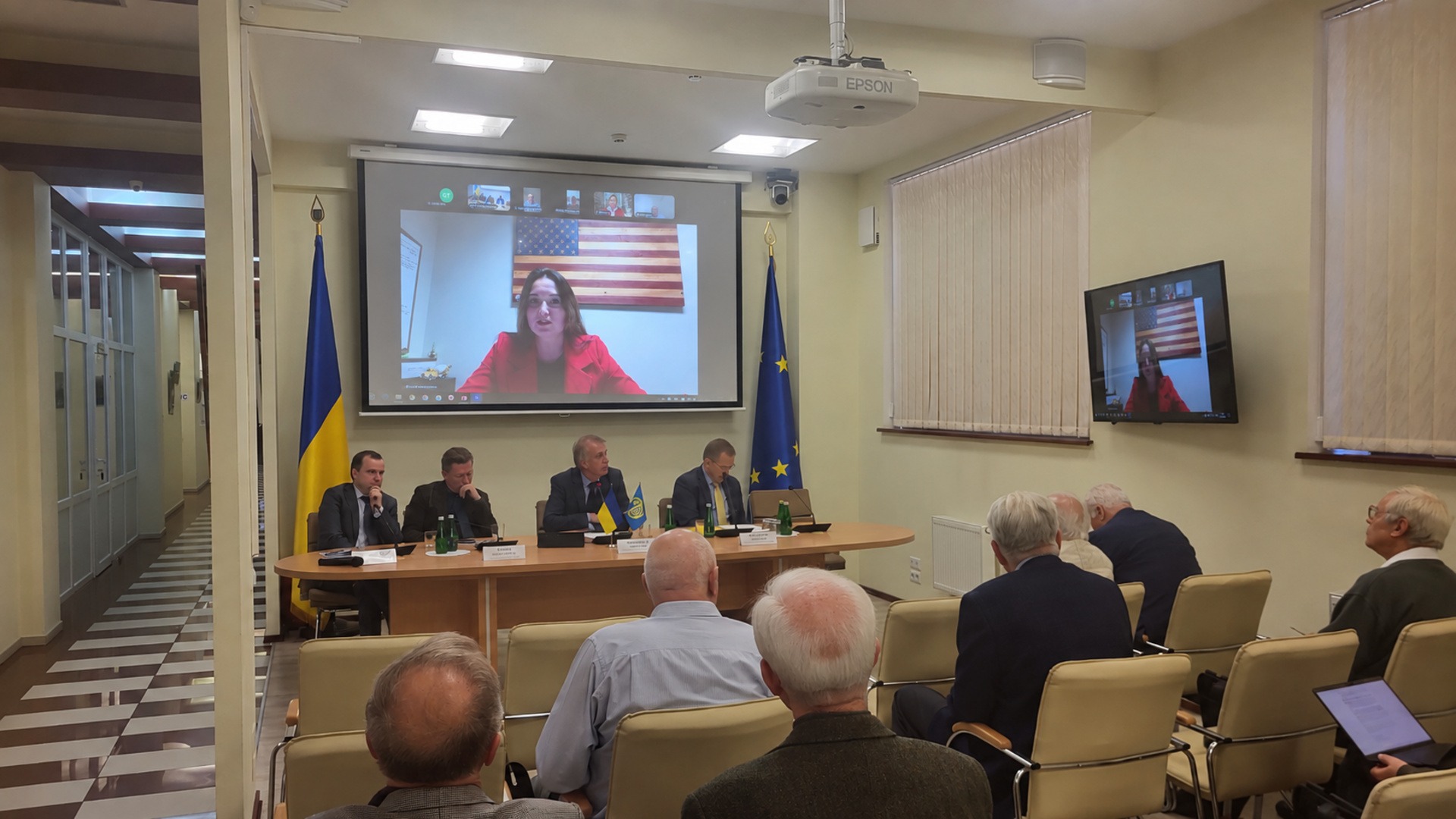
In particular, Russia circumvents sanctions by using virtual assets. Such capital can also become a resource from which the aggressor will pay lawful compensation, the scholar believes.
“In 2025 alone, Russia circumvented sanctions to the tune of $93 billion with the help of cryptocurrency,” the expert said, citing the Chainalysis/2026 Crypto Crime Report study.
She added that European law is already shaping a corresponding response mechanism. In particular, Article 19(2) of EU Directive 2024/1260 will come in handy here. Provided that virtual assets are properly legally qualified as property and lawfully confiscated, we will obtain legal grounds to raise the question of treating such resources as a potential element of a future mechanism for compensating the damage caused to Ukraine, the economist explained. This concerns funds used in schemes for circumventing sanctions and for Russia’s financing of the war.


