
The program’s first in-person module, dedicated to the «Memories in Boxes» methodology and work with the «Introduction to History» course for children aged 9–12, is taking place in Prague on September 18–20, 2026. The program was developed by Natalia Omelchuk, coordinator of educational projects at the Pylyp Orlyk Foundation.
The methodology involves learning through inquiry, working with objects, personal stories, and interactive tasks. Its goal is not merely to convey knowledge about the past to children, but to help them build their own connection with Ukrainian history.
At the start of the first day, participants got to know one another and the program organizers, and discussed expectations, format, and working rules. Special attention was paid to how modern educational tools can help children abroad maintain their connection with Ukrainian culture and history.
Andrii Korol, First Secretary for Humanitarian Cooperation and Relations with the Ukrainian Diaspora at the Embassy of Ukraine in the Czech Republic, emphasized the importance of this approach. According to him, the integration of Ukrainians into the societies of their host countries is a natural process, but it is important to distinguish it from assimilation:
«The issue of preserving Ukrainian identity among children is especially relevant today, since the full-scale Russian invasion has increased the number of Ukrainians abroad not only in Czechia but throughout Europe. Undoubtedly, healthy integration is needed, but we are against assimilation. And I believe the “Roots and Wings” project is an example of how Ukrainian identity can be preserved.»
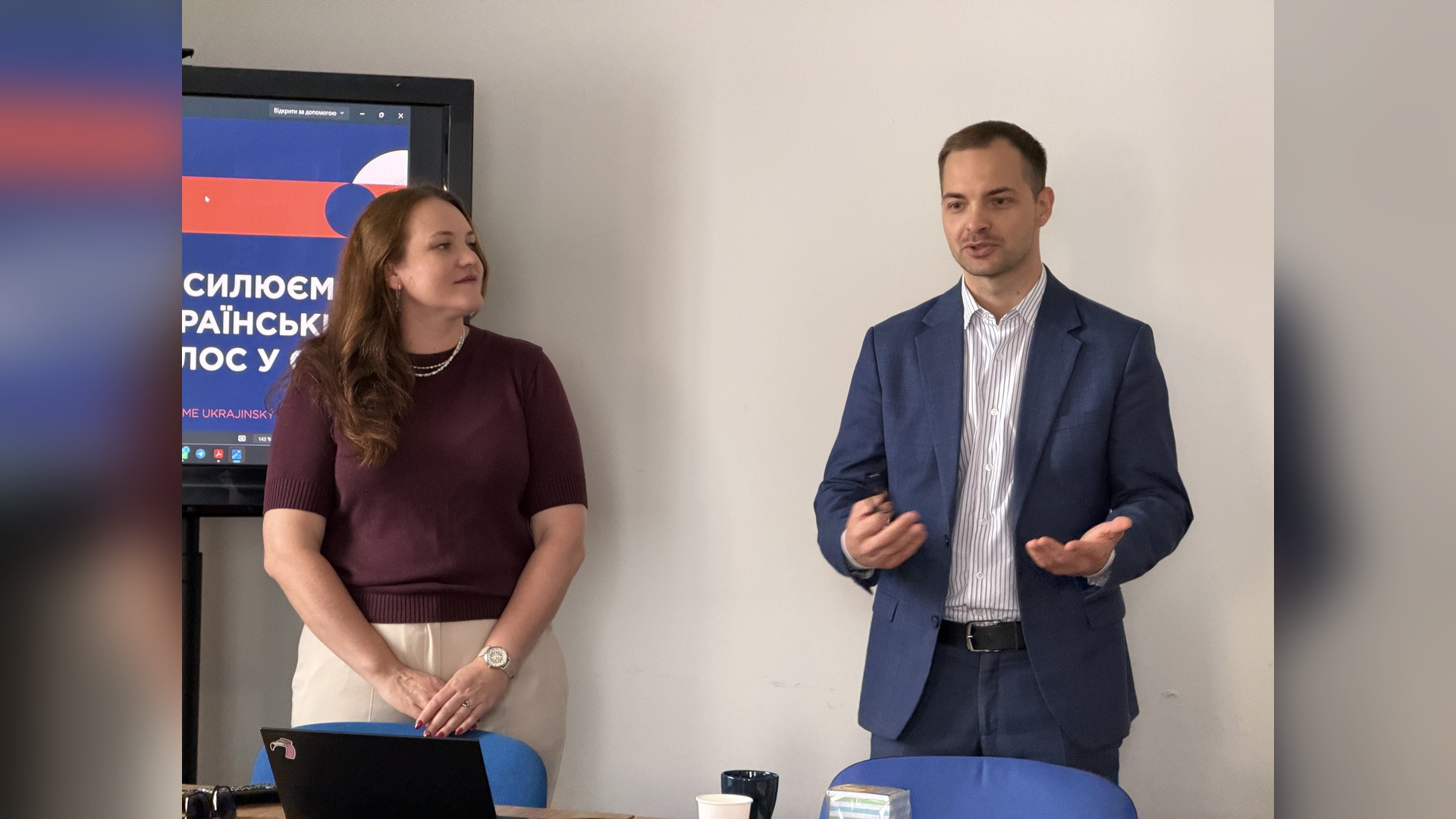
Photo: Pylyp Orlyk Foundation.
Rostyslav Prokopiuk, director of the Ukrainian Institute in Prague, also addressed the participants. Speaking about the program, he connected its name to the need to pass knowledge about Ukraine on to future generations. According to him, the work of Ukrainian educators abroad helps to strengthen the Ukrainian voice and not lose connection with one’s own origin:
«Lesya Ukrainka once said this line: “Trouble will teach you how to live in this world.” And Natalia Omelchuk added to it and said, “History will teach you how to live in this world.” In other words, to learn, to do something, not to be passive, to be together.»
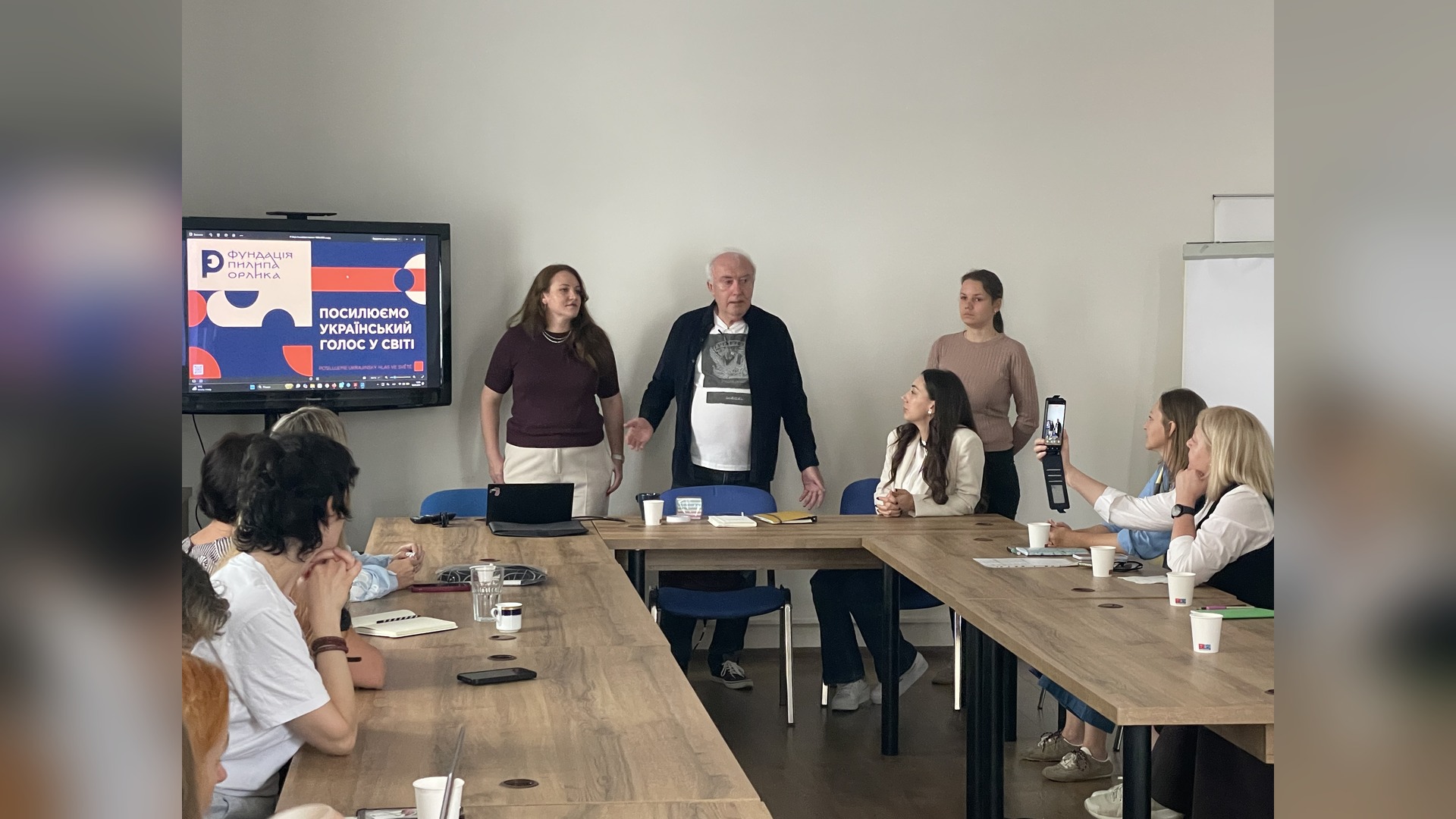
Photo: Pylyp Orlyk Foundation.
From Methodology to Practice
After the introductions and presentation of the program, participants moved on to the methodological foundations of teaching and creating educational programs. For a significant part of the day, they did not simply listen about tools but carried out tasks themselves that they will later be able to use in their work with children.
One of the central elements of the practical work was the «timeline» — a large paper material that lets children literally see historical time and work with the sequence of events.
According to Natalia Omelchuk, understanding chronology is one of the key competencies that the study of history should develop. A dense paper strip about 2.75 meters long is used for the work. Students gradually place cards with dates and historical events on it. An important element is the ability to change their arrangement: the cards are attached with double-sided tape rather than glue.
This allows children to see that historical knowledge can change and be supplemented as new sources emerge.
«This process, in which children independently “move time around,” when they sit with the cards, they think, they start moving things, re-sticking them, and better understand the continuity of history,» — explained Natalia Omelchuk.
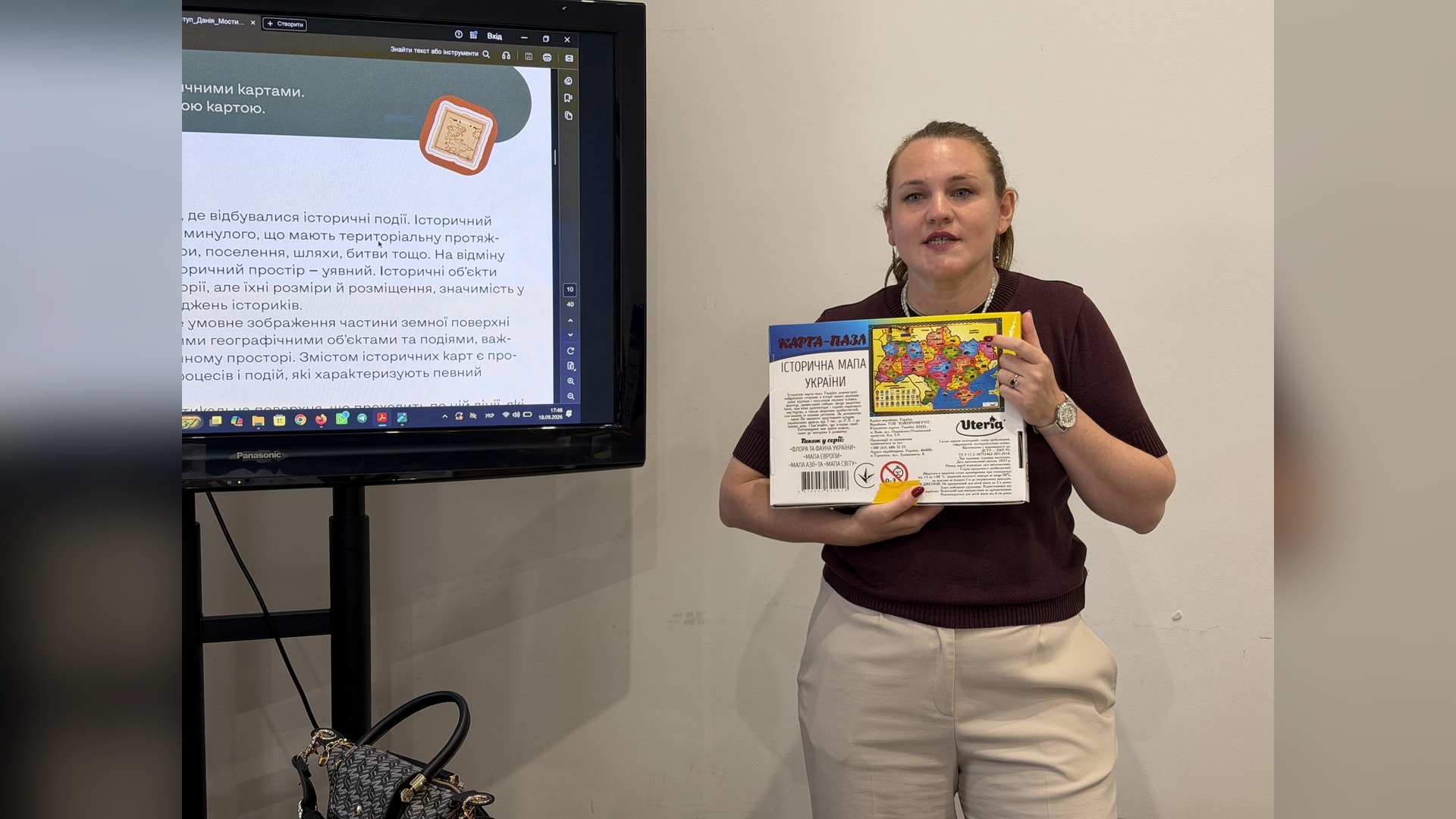
Photo: Pylyp Orlyk Foundation.
During the practical session, program participants unrolled the strips themselves, marked the timeline on them, and worked with materials from envelopes. In this way, program participants could experience and understand what a session with children would be like.
In particular, it was noted that this kind of work requires space. During lessons, the strips can be laid out on the floor, in corridors, or in other available spaces. It was also noted that a child’s first encounter with chronology may require significantly more time than the traditional 45-minute lesson.
This is especially true for topics related to the concepts of «century», «millennium», dating of events, Arabic and Roman numerals, as well as the concepts of «BCE» and «CE».
These are precisely the topics of the first session of the «Introduction to History» course. It also introduces children to the concepts of history, the historian, and historical events.
Program participants noted that the course materials can also be integrated into other educational disciplines. This approach makes it possible to involve various educators in working on historical topics and to combine history, in particular, with logic or mathematics.
«The Box» as the Student’s Personal Space
Another important element of the methodology is each student’s individual box. It holds the materials the child works with throughout the course: a notebook, cards, stickers, envelopes, and other elements.
The box is gradually filled with materials and becomes a kind of personal archive for the student.
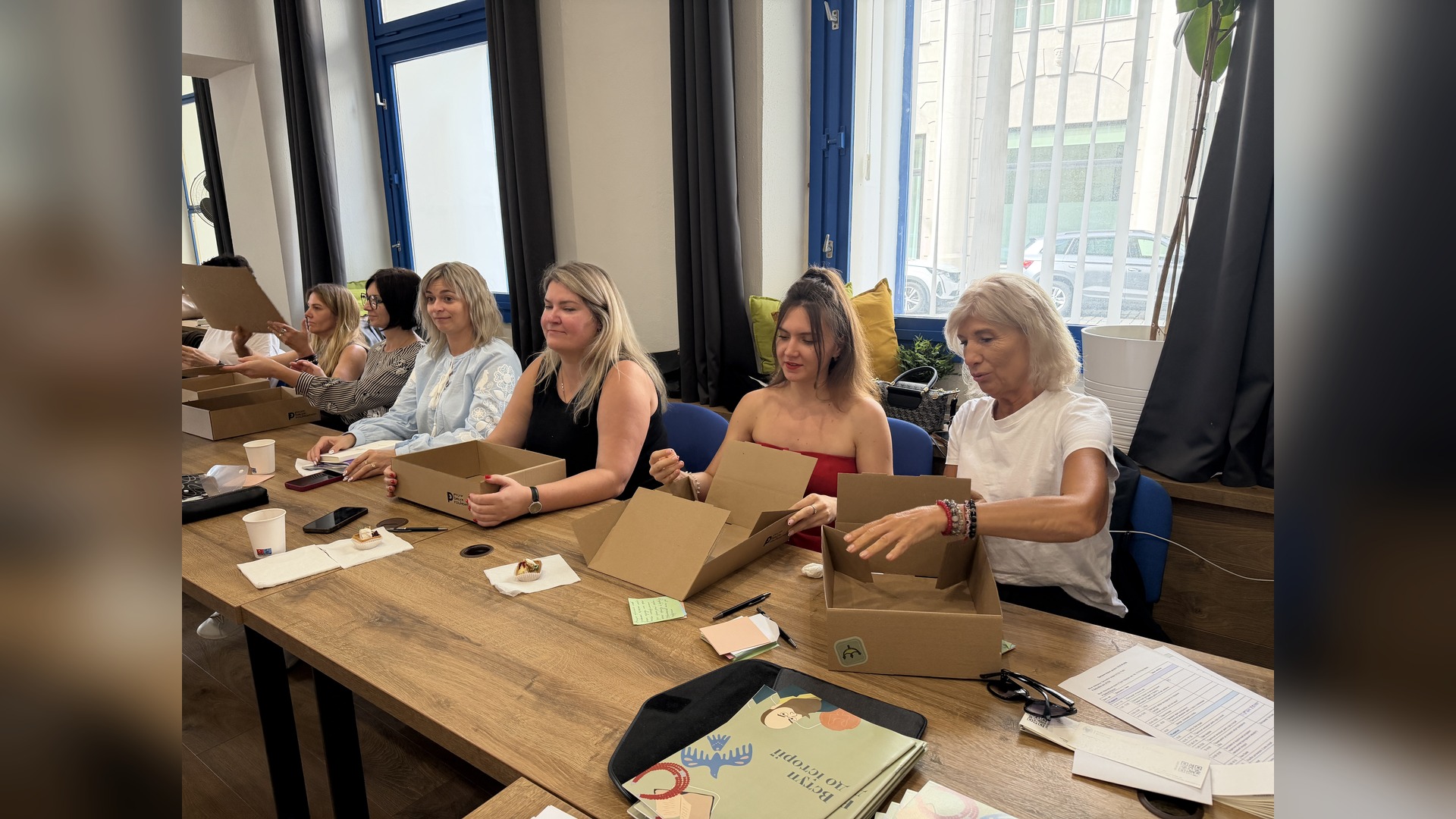
In addition to the box, each child receives a workbook. It contains lesson materials, spaces for notes, tasks, and stickers. Each topic has its own mark, which is repeated on the corresponding envelope with materials.
This principle creates an additional element of anticipation for children: at each session, they must find the envelope with the corresponding mark and only then open it. Gradually, the workbook turns into a kind of route map for the course. After completing each session, a child can mark the stage passed with the corresponding sticker.
History That Can Be Explored
The practical part of the first day showed participants how the methodology combines work with historical knowledge and a research-based approach.
Instead of perceiving history merely as a set of dates and facts, the child works with objects, cards, documents, personal stories, and their own assumptions. They must not only memorize information but also carry out a specific action — arranging, comparing, finding correspondences, asking questions, revising their own version after new material appears.
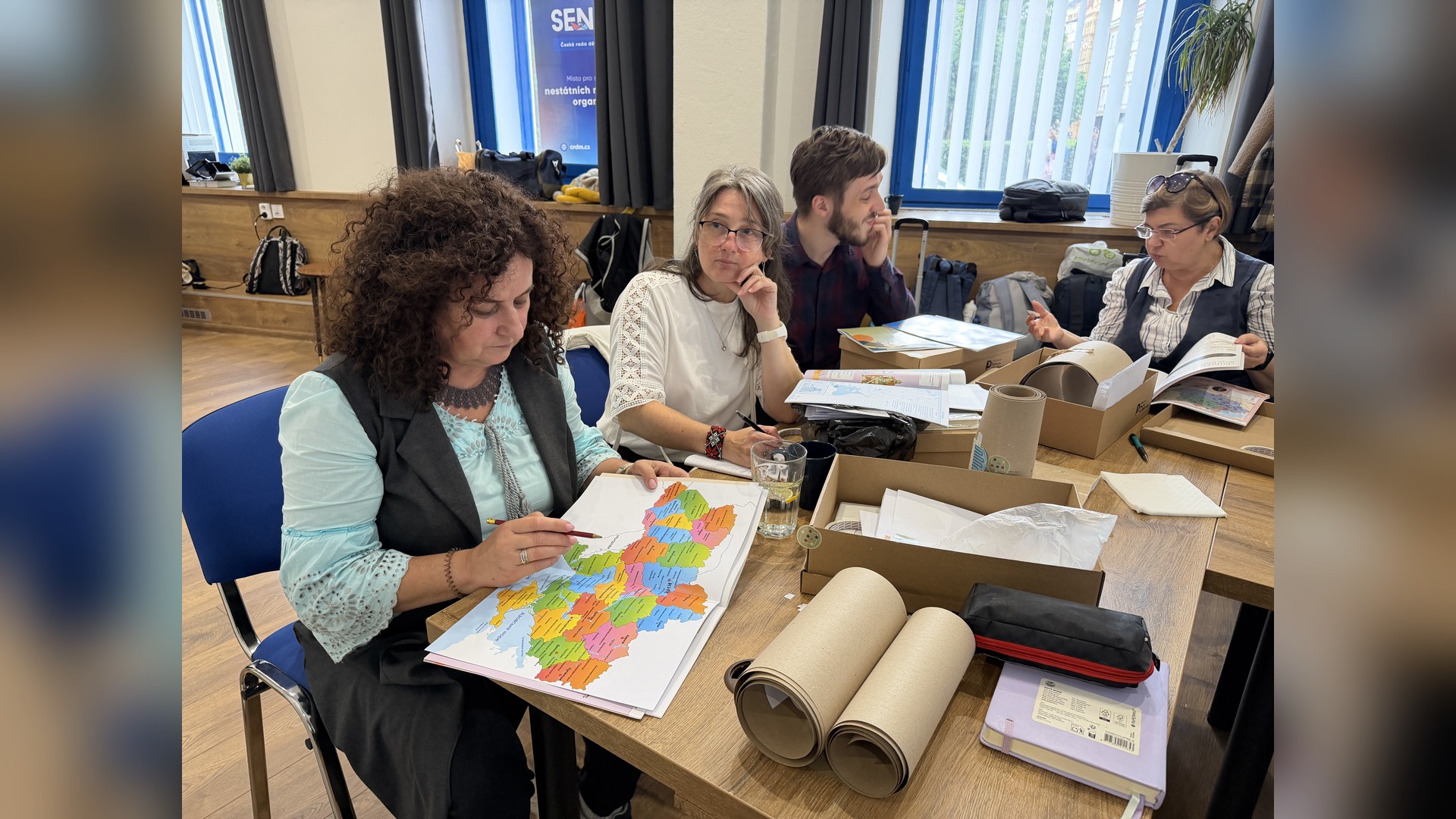
That is why an important part of the first day was not only the explanation of the methodology, but also the opportunity for educators to go through individual stages of the course themselves.
Mariana Dedoriichuk from FREE PEOPLE School in Vienna said she plans to use the knowledge gained when launching a new Ukrainian educational component for middle school students.
«The Ukrainian school in Vienna is planning to launch a new project — a specifically Ukrainian component for middle school students — and this program will be very relevant for studying the history of Ukraine. I’m hoping for a “wow effect,” for the children to be able to absorb the material better through hands-on activity and touch historical time with their own hands.»
For Anzhelika Vovkodav from Spain, who represents the Ukrainian school “Litachok Mriya”, combining historical knowledge with creative tasks was important.
«A simple chronological timeline turned from something boring into a very creative event for me, and not only for our children — there are interesting stickers, envelopes, and a whole bunch of moments that will get children thinking in engaging ways and developing not only their historical knowledge but their creativity.»
Throughout the academic year, participants will not only master the methodology but also practice in a mentoring format, exchanging their own experience and adapting the tools to the needs of children in various Ukrainian educational settings abroad.
«It’s important that after this program, a teacher gets not just a set of ready-made materials, but an understanding of how to work with history so that the child wants to explore it themselves. This is especially important for Ukrainian children abroad — to create the opportunity not just to study facts about Ukraine, but to build their own connection with its history,» — noted Natalia Omelchuk.
«Roots and Wings: A History That Unites» is a year-long educational and mentoring program of the Pylyp Orlyk Foundation for Ukrainian schools, community organizations, educational initiatives, and cultural-educational centers working with Ukrainian children abroad.
Program organizer — the Pylyp Orlyk Foundation.
Program partners — the Embassy of Ukraine in the Czech Republic and the Ukrainian Institute in Prague.


