
The international scholarly journal Regional and Local Studies, which is indexed in the Scopus scientometric database, has published the article “Memory and Loss in Post-war Smart City Reconstruction: Digital Archives and Cultural Heritage in Zaporizhzhia, Ukraine.”
The full-scale war has posed a new challenge for Ukraine — the need not only to rebuild the destroyed city but also to preserve its historical memory. Work on the material took about six months. During this time, the researchers compiled material on the cultural heritage of the Zaporizhzhia region, analyzed the risks caused by the war, and selected the digital tools that Ukrainian territorial communities can realistically use.
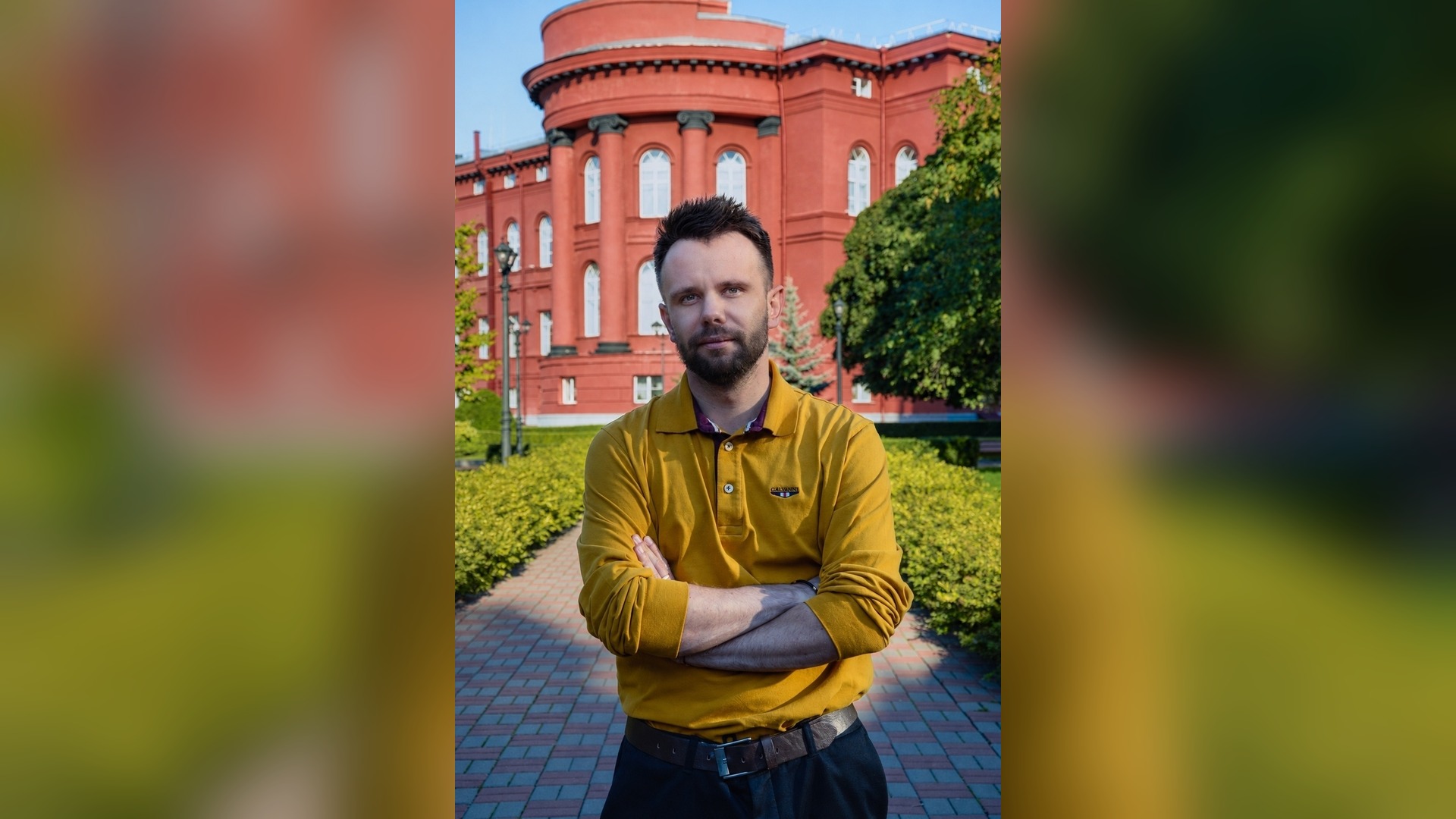
According to Oleh Zaiarnyi, the publication is one of the practical results of implementing a state scholarly project aimed at finding modern digital solutions for the reconstruction of Ukrainian cities.
That is why the authors of the study propose integrating digital tools into the Smart City concept — a smart city where modern technologies work not only for infrastructure development but also for the preservation of cultural memory.
This involves creating digital archives, electronic museums, interactive maps, virtual tours, and other digital services that will make it possible to preserve information even if cultural heritage objects are physically lost. For the study, the authors chose the Zaporizhzhia territorial community itself — one of the largest frontline regions of Ukraine. However, the proposed model is not limited to Zaporizhzhia alone.
“The main idea of the article is to show a mechanism for how cultural heritage can be preserved using modern digital tools. The toolkit that we present in international publications has the capacity to be scaled to other territorial communities. If you set aside the specifics of individual cultural heritage sites, any community can use the idea itself, especially in frontline regions,” explains Oleh Zaiarnyi.
In the article, the scholars propose a set of practical solutions for preserving cultural heritage, including:
- creating digital archives of historical materials;
- forming electronic maps of museums and monuments;
- developing virtual tours;
- using secure cloud storage to preserve digital copies;
- integrating digital cultural resources into urban planning;
- ensuring open access to digital heritage for both community residents and researchers and everyone interested in the history of Ukraine.
The authors emphasize that digital technologies cannot fully replace real historical monuments, but they can preserve knowledge about them, document their condition, and make cultural heritage accessible even after physical destruction.
In addition to analyzing international experience and modern digital practices, the authors conducted an empirical study: they surveyed 312 residents of Zaporizhzhia and conducted expert interviews with urban planners, cultural heritage specialists, and digital technology experts.
The results indicate a high level of support among residents for the idea of integrating digital memorial projects into the process of the city’s post-war reconstruction. At the same time, the researchers point to the need for broader involvement of residents in creating and populating such digital resources.
The article underwent international double-blind peer review and was accepted for publication by a Polish scholarly journal indexed in the international Scopus scientometric database. This means that the results of Ukrainian research will become accessible to the international academic community — scholars, historians, museum professionals, urban planners, and digital transformation specialists.
At the same time, the authors emphasize that the main value of the work lies not only in its scholarly novelty but also in the practicality of the proposed solutions. The proposed model demonstrates how modern digital solutions can help not only document losses but also create a foundation for restoring cultural heritage and developing Ukrainian cities after victory.


