
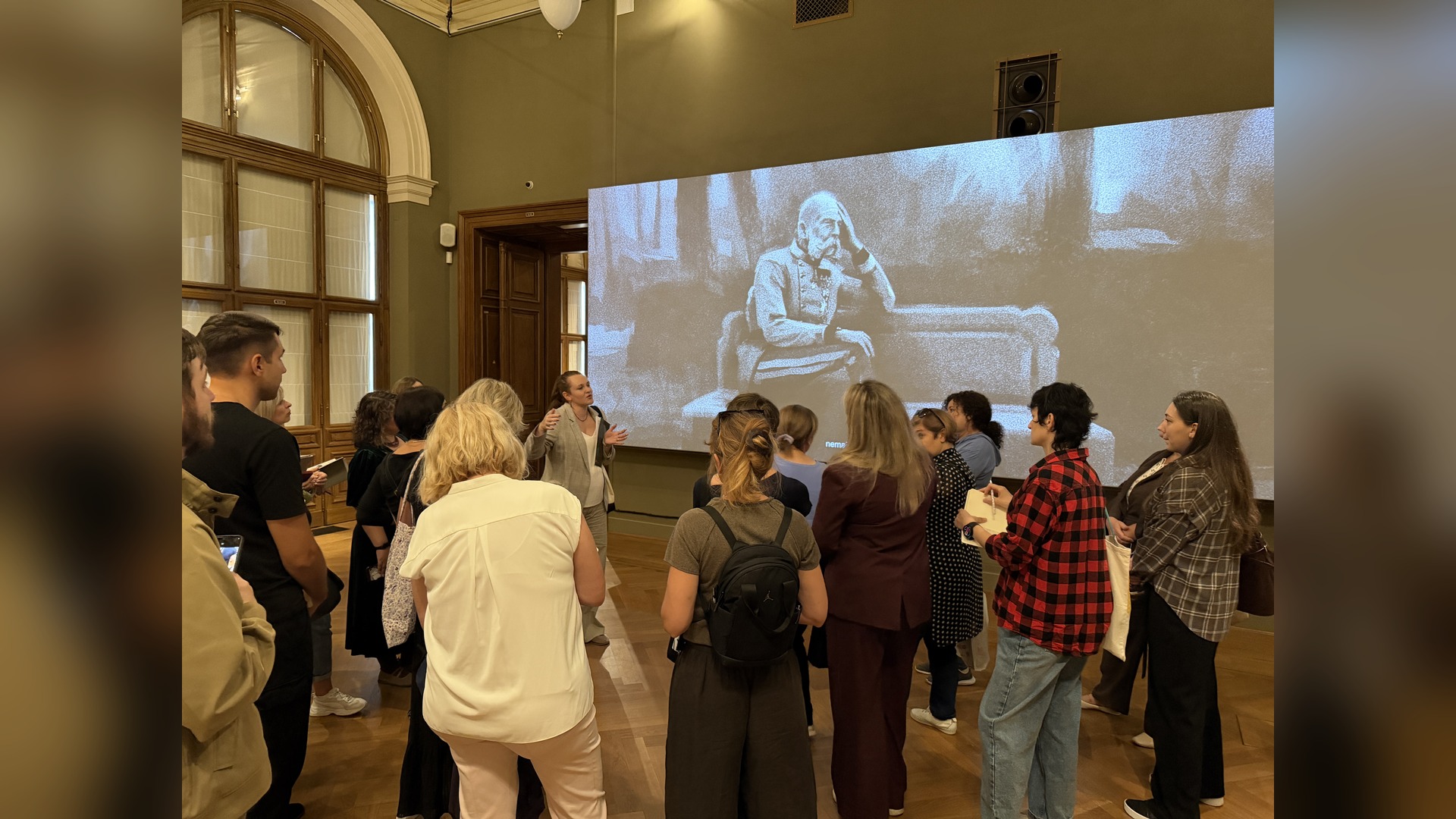
The hands-on session was devoted to how to use the museum collections of host countries when working with Ukrainian children. Participants explored the exhibition and worked with a practical workbook.
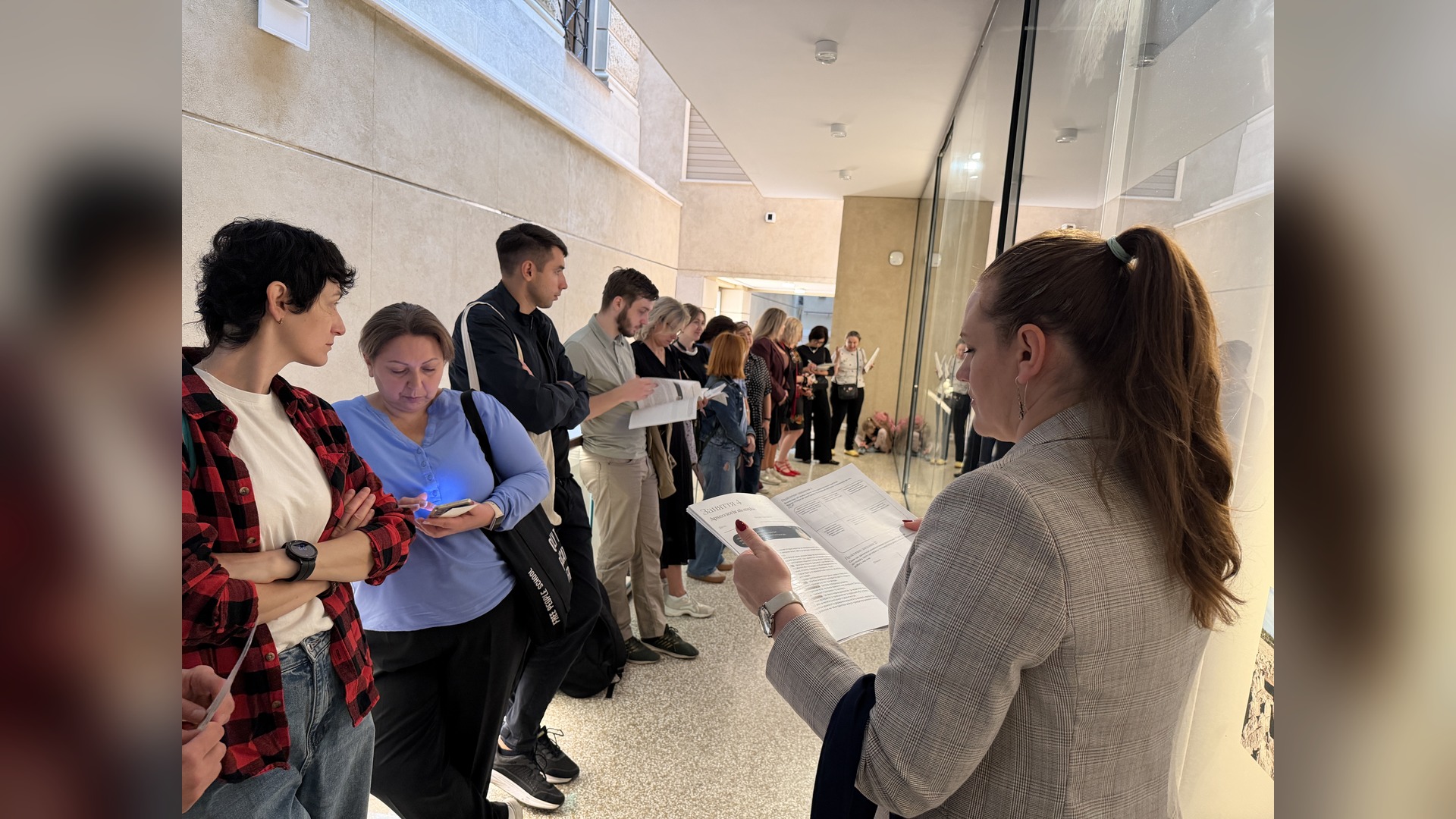
Participants discussed archaeology, ethnography, and special historical disciplines that help study different periods and changes in a given territory. They also worked separately with a “timeline” they had brought with them to the museum, comparing what the children had already added to it with the historical materials and objects presented in the exhibition.
“The main goal of such sessions is to take children beyond the classroom and show them, hands-on, that history is not a textbook but the study of objects, people, when they lived, and what they used. And for this you don’t need a large, multi-storey museum. Most museums have separate collections or are devoted to a particular historical period, and these can also be used for this kind of learning format”, explained Natalia Omelchuk, coordinator of educational projects at the Pylyp Orlyk Foundation.
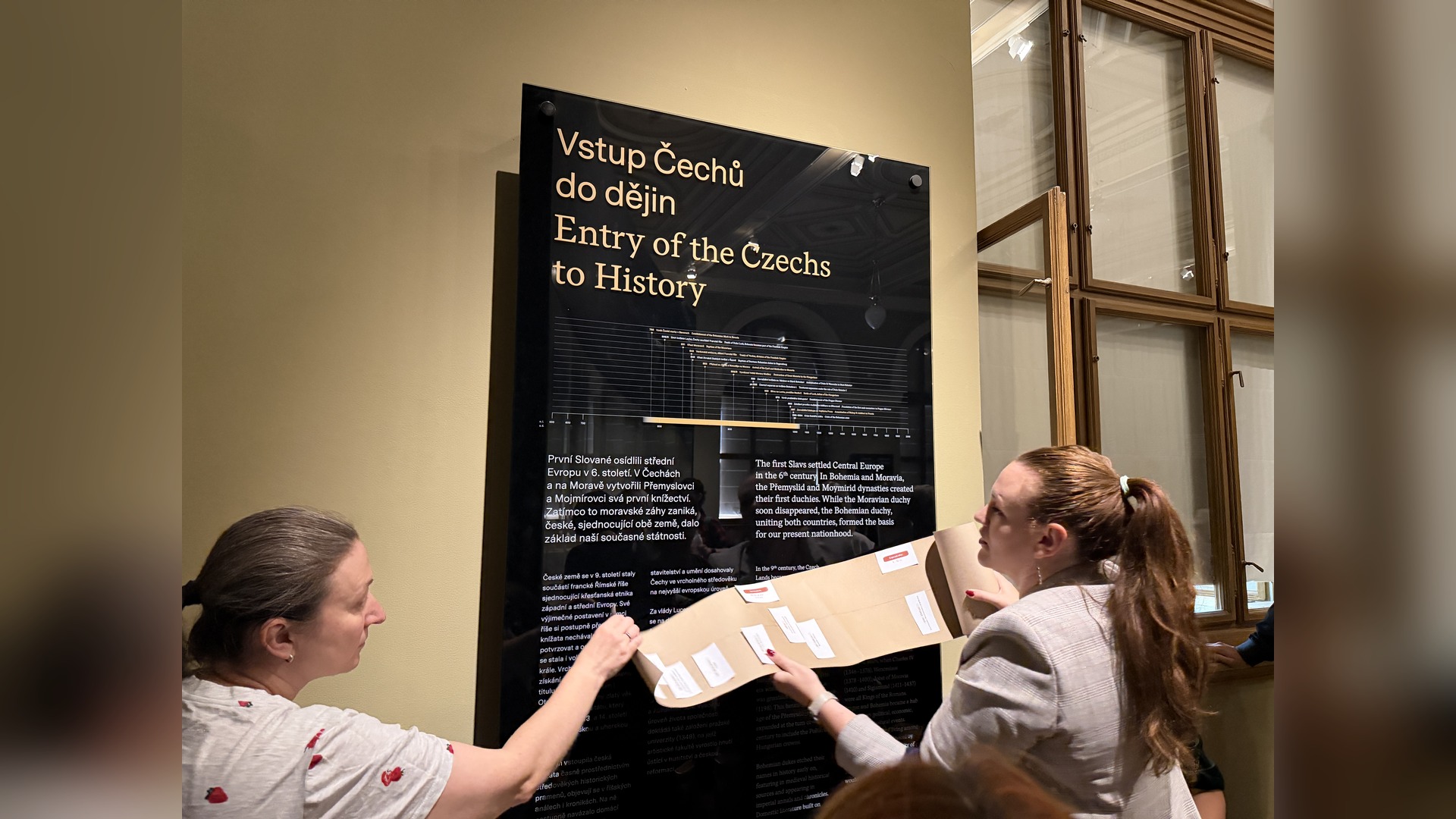
For the program’s participants, it was important not only to see the exhibition but also to walk through the same path they would later offer to children.
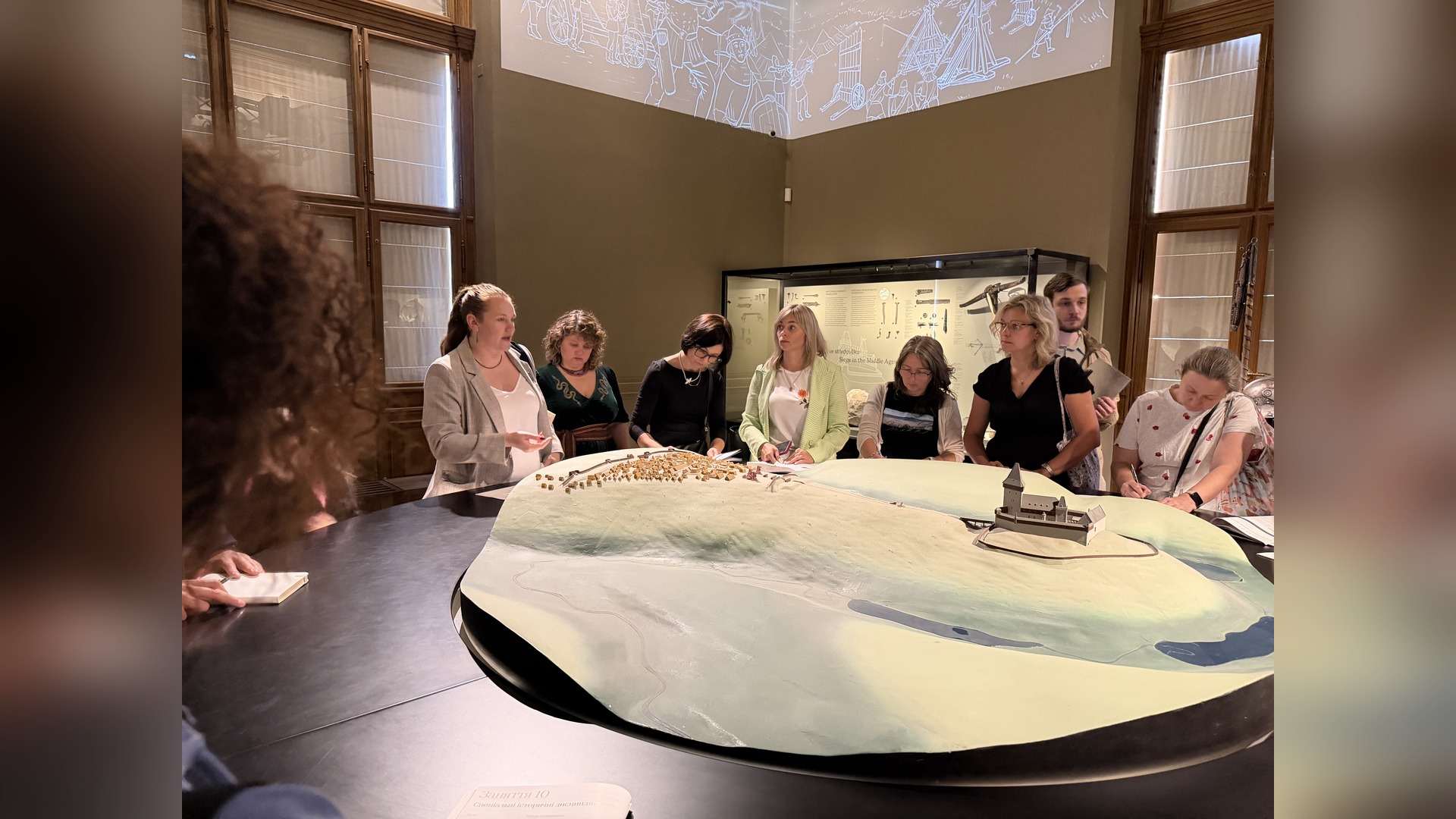
“I really enjoyed this. Right now I’m entering the museum with the practical workbook Natalia asked us to bring. So we’re not just viewing the museum theoretically — we’re also working with the workbook practically, so that afterward we can pass this store of knowledge on to our Ukrainian children”, said Olha Demchenko from the Ukrainian Saturday school “Vyshyvanka” in Barcelona (Spain).
Sofia Misko, who also represents the “Vyshyvanka” school, drew attention to the possibility of combining museum materials with modern formats for working with children.
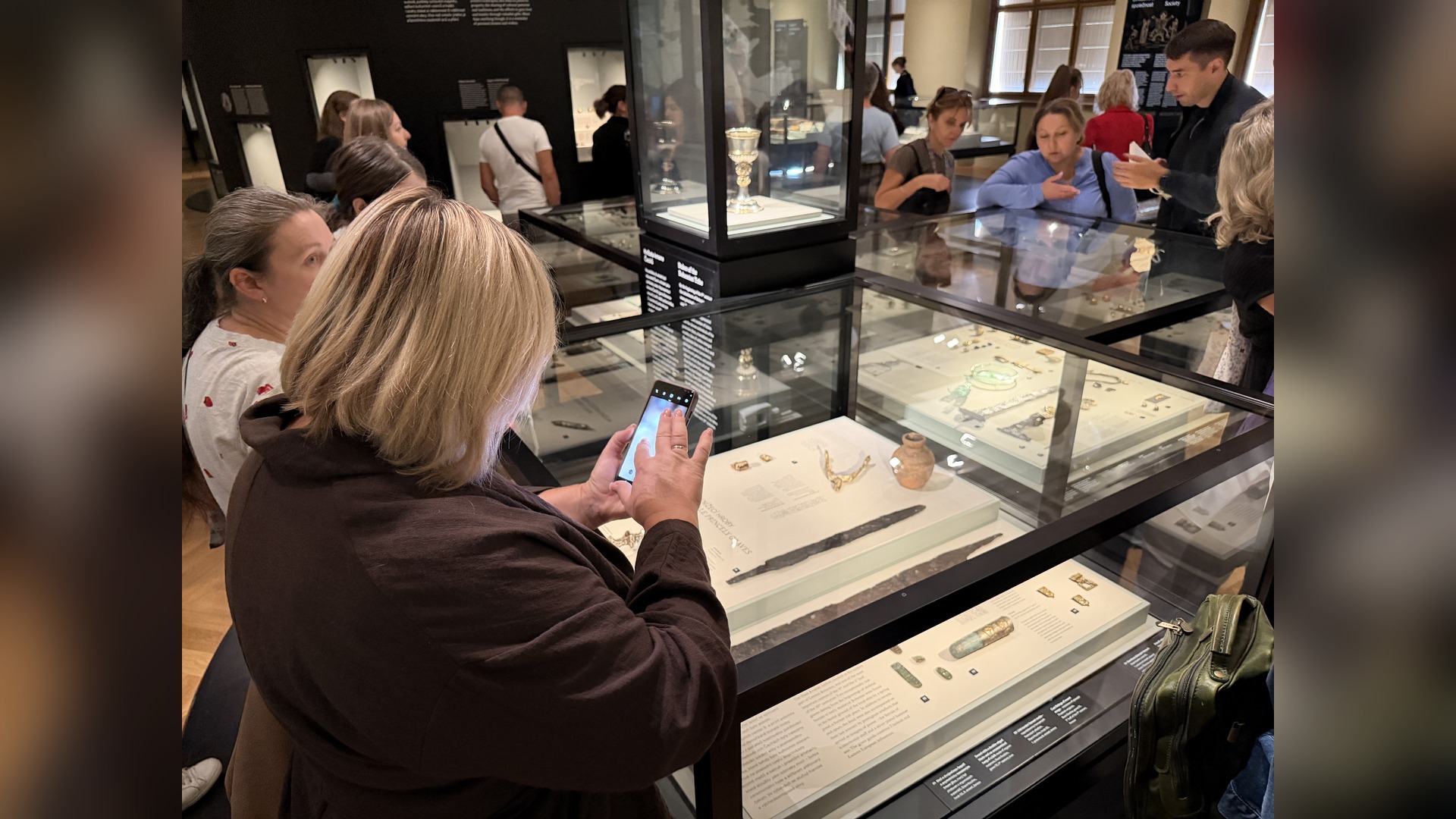
“I find it very interesting, and I think that for our kids we can later use a modern method: invite them on a tour, show photographs from here, tell them what was happening during this period. I like that the old is combined here with the modern — there are animations, video, different types of lighting. This can be shown to children, telling them what was happening in Ukraine during the same period, and comparing how the historical experience, traditions, and culture differed”, she said.
For Olha Yurchenko, founder and head of the “Open Door Academy” cultural and educational center in Vienna (Austria), the hands-on format became a way to talk with children about museums in a new way.
“For me this is all simply wow! I’m delighted, because thanks to such interactive technologies, the workbook, and working with artifacts found in the museum, we can instill in children a love of history”, she noted.
Kornel Balog, a representative of the Public Self-Government of Ukrainians in Hungary from Budapest, noted the possibility of using this approach not only in large museums.
“What impressed me most was everything we could see, look at, and hold in our hands. I think this experience can be applied in any museum, in any place, and even just during a walk to some historical site. And the system where there’s a workbook in which you need to note things down is entirely new for me. I think it’s very effective for engaging children in learning”, he said.
Yuliia Dobrynina from Prague (Czechia), representing the DOMA migrant support project, Diakonie ČCE, saw in the museum work an opportunity to connect what she saw with Ukrainian culture and contemporary activities. Among the exhibits, she drew attention to ancient objects that reminded her of Ukrainian traditions, and she is already thinking about how to use this as the basis for a lesson with a folk-art craftswoman.
“I’m already picturing in my head various ways to, first, bring the children here, and second, adapt these finds somehow differently. For example, there were seals made of stone, and I thought: this is just like our Ukrainian vytynanka. I have a folk-art craftswoman, and I already know I’ll invite her to a lesson so she can show the children how our ancestors in Ukraine used to do this”, she said.
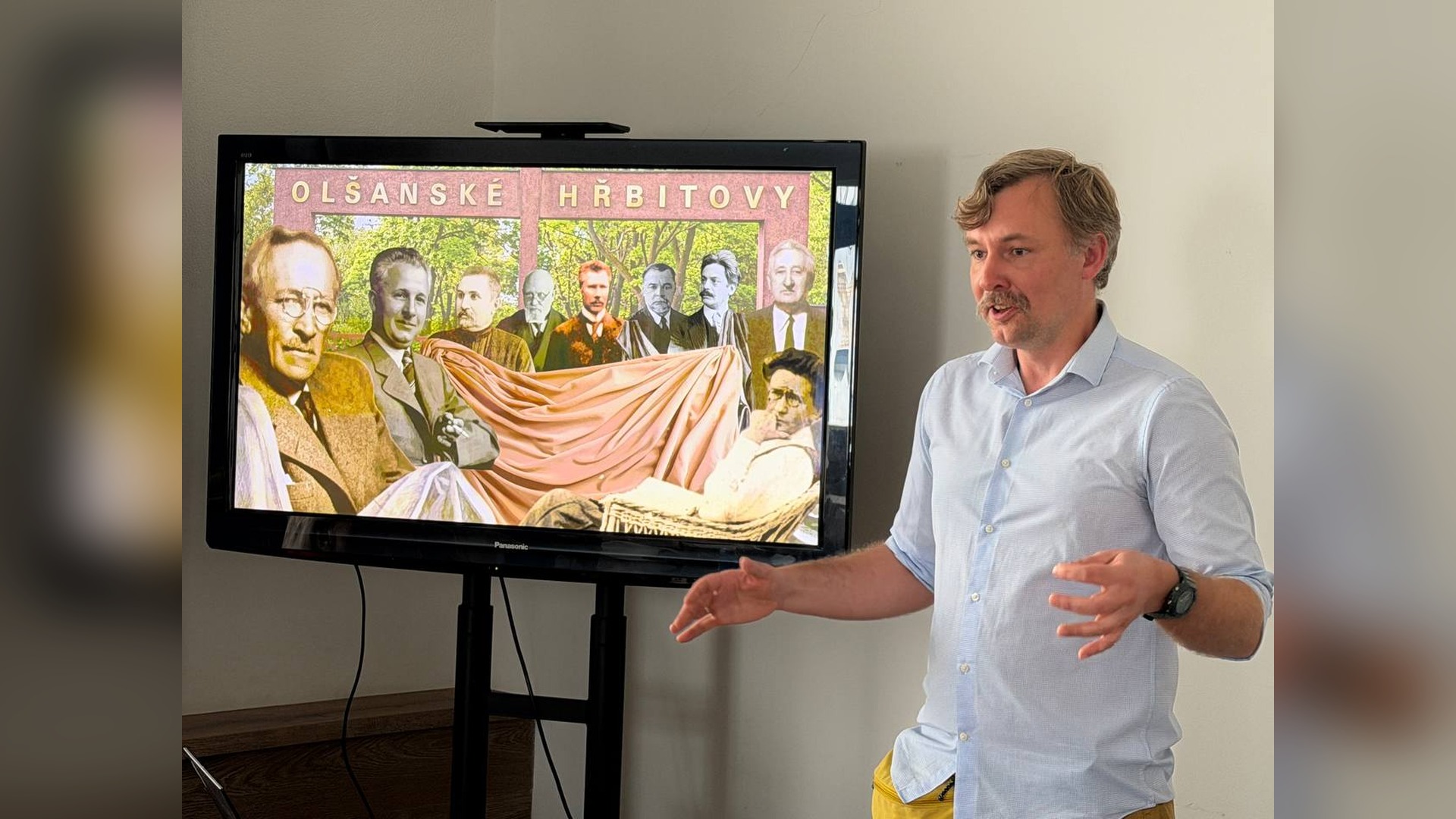
In addition to the hands-on work in the museum, participants attended a lecture, “A Walk as a Pedagogical Tool: Theoretical Foundations for Planning an Educational Excursion Route,” given by historian Volodymyr Poltorak.
“Koreni ta Kryla: istoriia, yaka ob’iednuie” (“Roots and Wings: a history that unites”) is a year-long educational and mentoring program of the Pylyp Orlyk Foundation for Ukrainian schools, community organizations, educational initiatives, and cultural and educational centers that work with Ukrainian children abroad. The second season involves 21 representatives of 11 Ukrainian schools and educational initiatives from Czechia, Austria, Hungary, Spain, and Slovakia.
The program organizer is the Pylyp Orlyk Foundation. Partners are the Embassy of Ukraine in the Czech Republic and the Ukrainian Institute in Prague.


