
The lecture took place at «Lontskoho Prison». The location was not chosen by chance, as it is a museum-memorial to the victims of occupation regimes. Three regimes once ran torture chambers there: the occupying Polish regime and two totalitarian ones — Soviet and German.
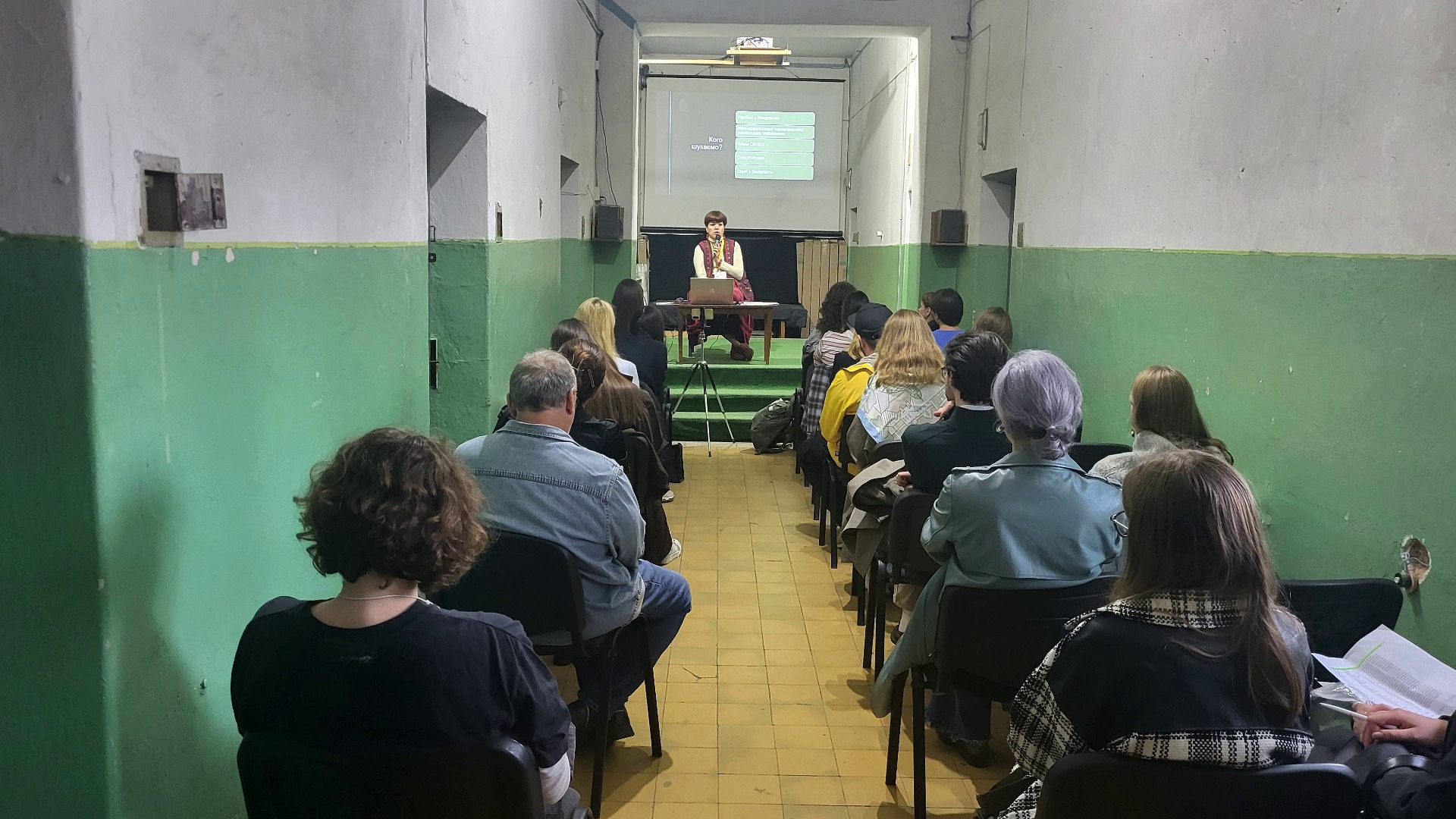
Olesia Isaiuk and her fellow historians are working on creating a Ukrainian digital database of Ukrainian prisoners of Auschwitz. The research has been underway for a little under a year. The origin of around 10,000 Ukrainians has now been confirmed. The project is supported by the Pylyp Orlyk Foundation.
In total, about 100,000 of our fellow citizens passed through Auschwitz. But some of the documents were destroyed by the Nazis. Another part was seized by the Soviet authorities and classified in their archives. An additional difficulty is that Ukrainians were often recorded as Russians or Poles because, before World War II, they did not have their own state and were citizens of Poland or the USSR.
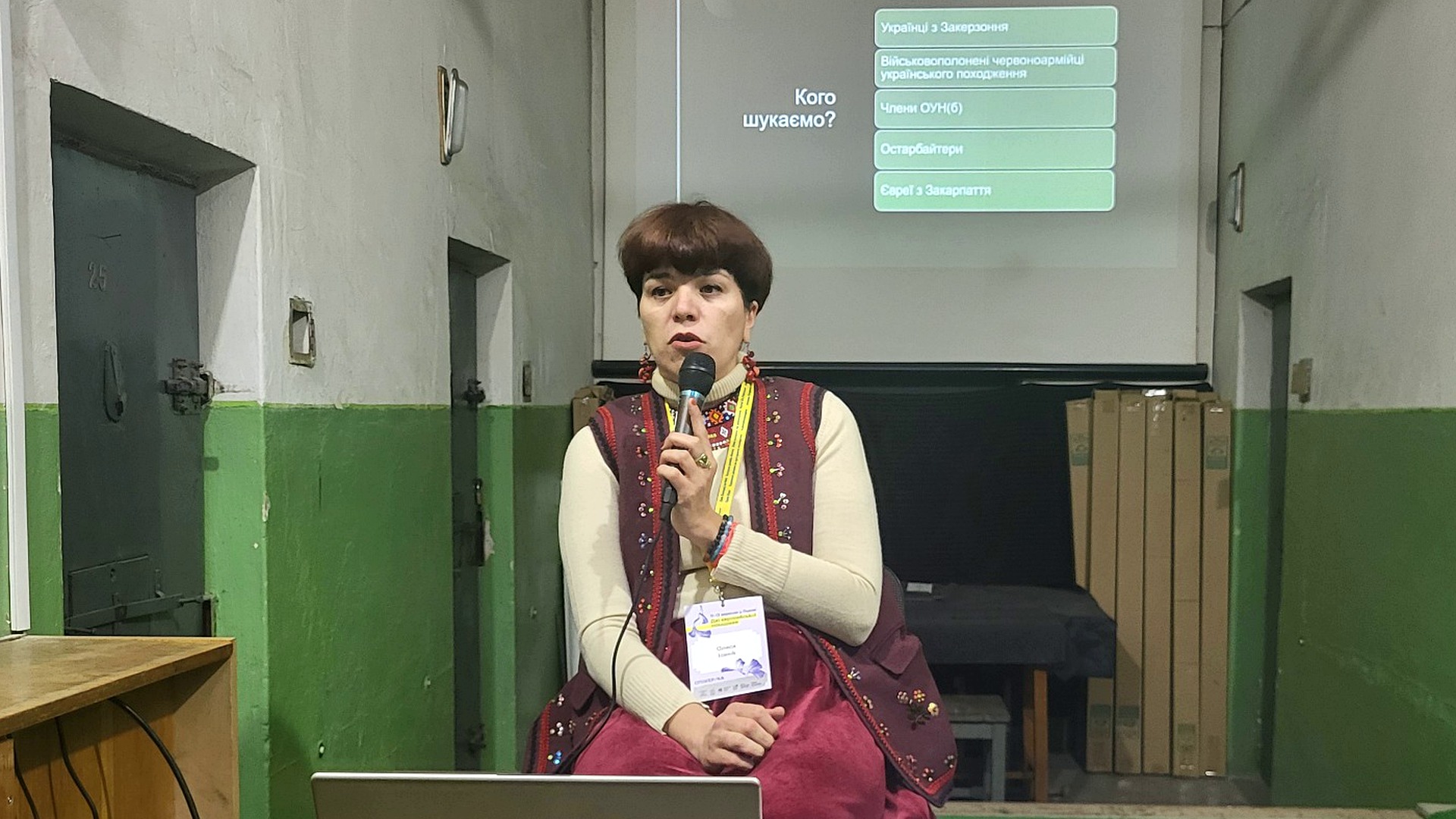
The absence of a Ukrainian database plays into the hands of Russian propaganda, the historian believes:
«The collective fate of the Ukrainian community during World War II and its relations with the Nazis is an important factor in international legitimization. This is still a persistent narrative of Russian propaganda — that all Ukrainians are collaborators. The Russians continue to push this narrative, and unfortunately not without success, because they have decades of experience spinning this ‘balalaika’ story themselves».
Researchers work with Nazi databases to study the collective trauma, fate, and experience of prisoners, among other things. But this information is also important for relatives. Most of the questions to the lecturer after the workshop came from grandchildren and great-grandchildren of Ukrainians who ended up in Auschwitz and other concentration camps.
Olesia Isaiuk said that it is now possible to find one’s relatives in concentration camp documents, in part, because the Nazis followed a number of rules when registering prisoners. For example, they registered them strictly by ear and transliterated names and surnames as they sounded. And in German perception, Russian and Ukrainian sound different, German phoneticians explained to our researchers. So, for example, if a person is recorded as «Vasyliy» rather than «Vasiliy», it is more likely that they were Ukrainian.
One such aspect alone is not enough to confirm a person’s origin. Therefore, for each individual prisoner, a whole range of aspects is taken into account: geography, surname, stated nationality, stated language, religion, transliteration methods, and so on.
For example, sometimes a prisoner is recorded as Ukrainian or as a Russian-subject Ukrainian. Russian and Ukrainian surnames were also recorded differently. The latter, if they ended in «-yi», were transliterated as «yj». Another attribute used for identification is religious affiliation. If a prisoner indicated the Ukrainian Greek Catholic Church, it is highly likely that they were Ukrainian, originally from Galicia.
For the Ukrainian database, not only prisoners’ registration cards were used, but also records from the local hospital. Although this was merely an additional way to die rather than to receive real treatment, says Isaiuk. If a person died in Auschwitz, their registration card was crossed out in black. As an example, the historian cites the card of prisoner Oleksii Lomaka:
«Unfortunately, we know nothing more about him besides the data on the card. It looks like this form is all that remains of a person after Auschwitz. The document is crossed out diagonally. This means the prisoner died. But it’s interesting how this prisoner perceived himself. In the second line, where citizenship was indicated, he asked for it to be written: rus ukr. This means ‘russischer ukrainer’, a Russian-subject Ukrainian. Even though Ukraine did not exist as a state, Oleksii Lomaka considered it important to emphasize this».
For those who are searching for relatives or conducting academic research, Olesia Isaiuk provided a list of databases with digitized Nazi documents. These are the Polish Auschwitz-Birkenau Museum website and the Arolsen Archives — the website of the International Center on Nazi Persecution, located in Germany.


