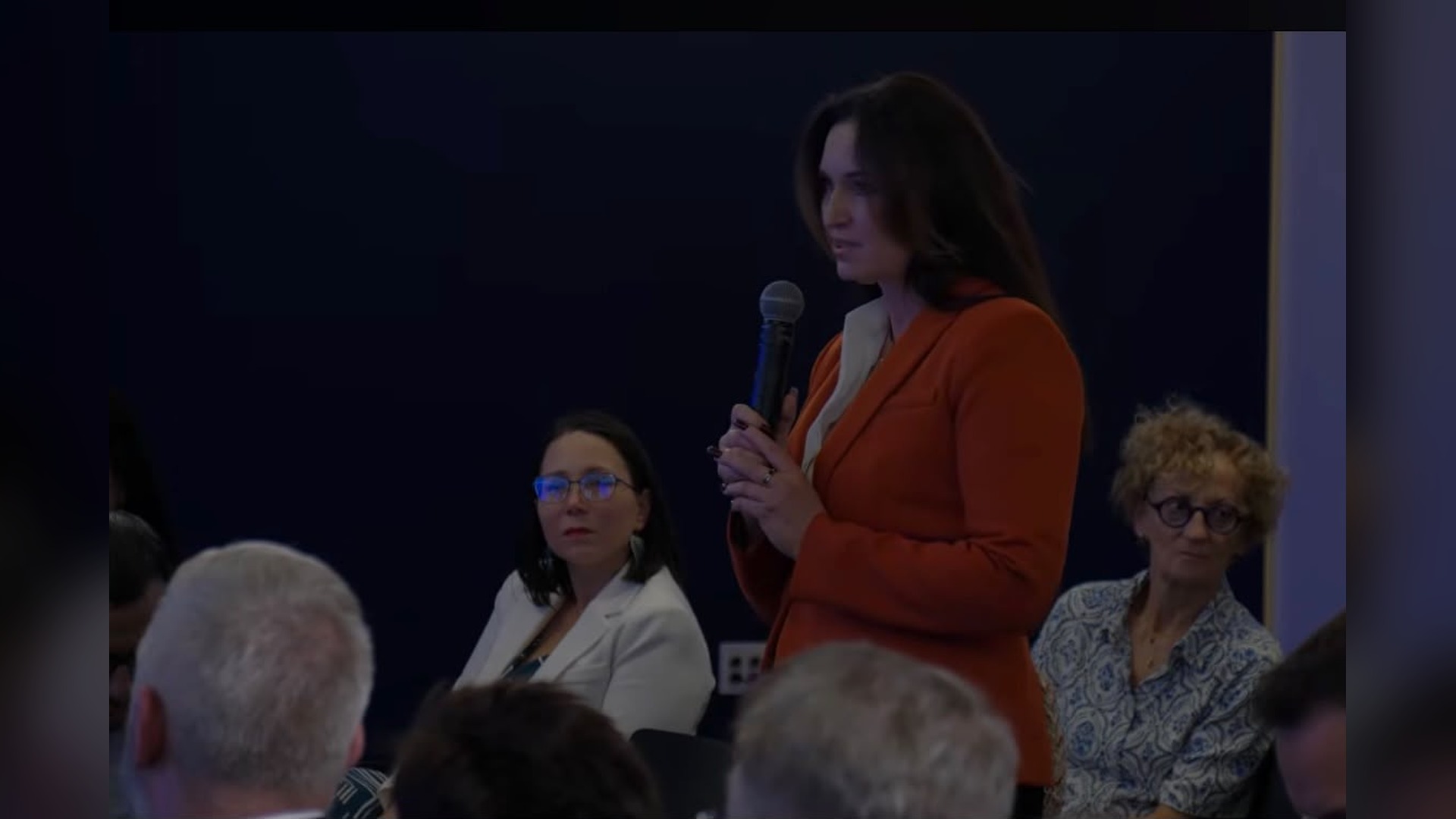
The discussion was joined by Pylyp Orlyk Foundation expert Lesia Yastrubetska, Doctor of Economic Sciences and Professor at Ivan Franko National University of Lviv. She emphasized that information warfare cannot be viewed separately from broader hybrid aggression, and raised the question of how international law should respond to such actions and ensure that aggressor states are held accountable.
“Ukraine has many years of experience in countering Russian hybrid aggression, of which information warfare is a component, and today this experience can be extremely valuable for European countries, which are increasingly facing information attacks and other forms of hybrid influence,” said Lesia Yastrubetska.
According to her, in the 21st century war is waged not only on the battlefield. The information space, the economy, the cyber sphere, and legal mechanisms are also becoming instruments of aggression. That is why it is important not merely to identify individual threats, but also to understand what goals the aggressor seeks to achieve and what the absence of a timely response may lead to. Instead, years of unpunished Russian hybrid aggression against Ukraine laid the groundwork for the full-scale invasion.
“That is exactly why international law needs more effective mechanisms of attribution and accountability. The argument that such actions are difficult to prove can no longer be a sufficient reason for inaction, given the consequences they may lead to,” the expert stressed.
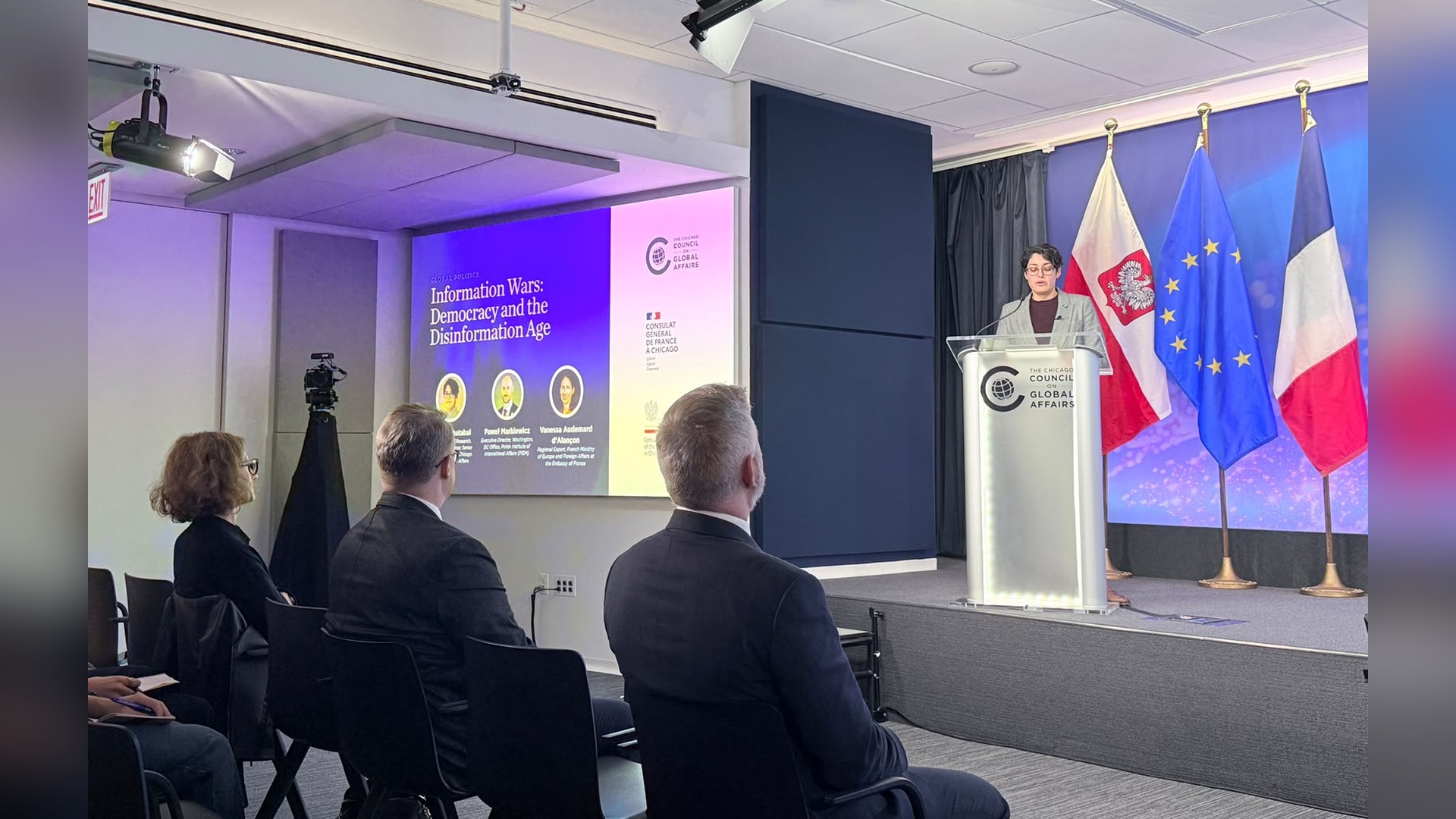
The discussion featured Paweł Markiewicz, Executive Director of the Washington Office of the Polish Institute of International Affairs (PISM); Vanessa Audemard d’Alançon, regional expert at the Ministry for Europe and Foreign Affairs of France; and Ariane Tabatabai, Vice President for Studies, Security and Defense and Senior Fellow on the Middle East at the Chicago Council on Global Affairs.
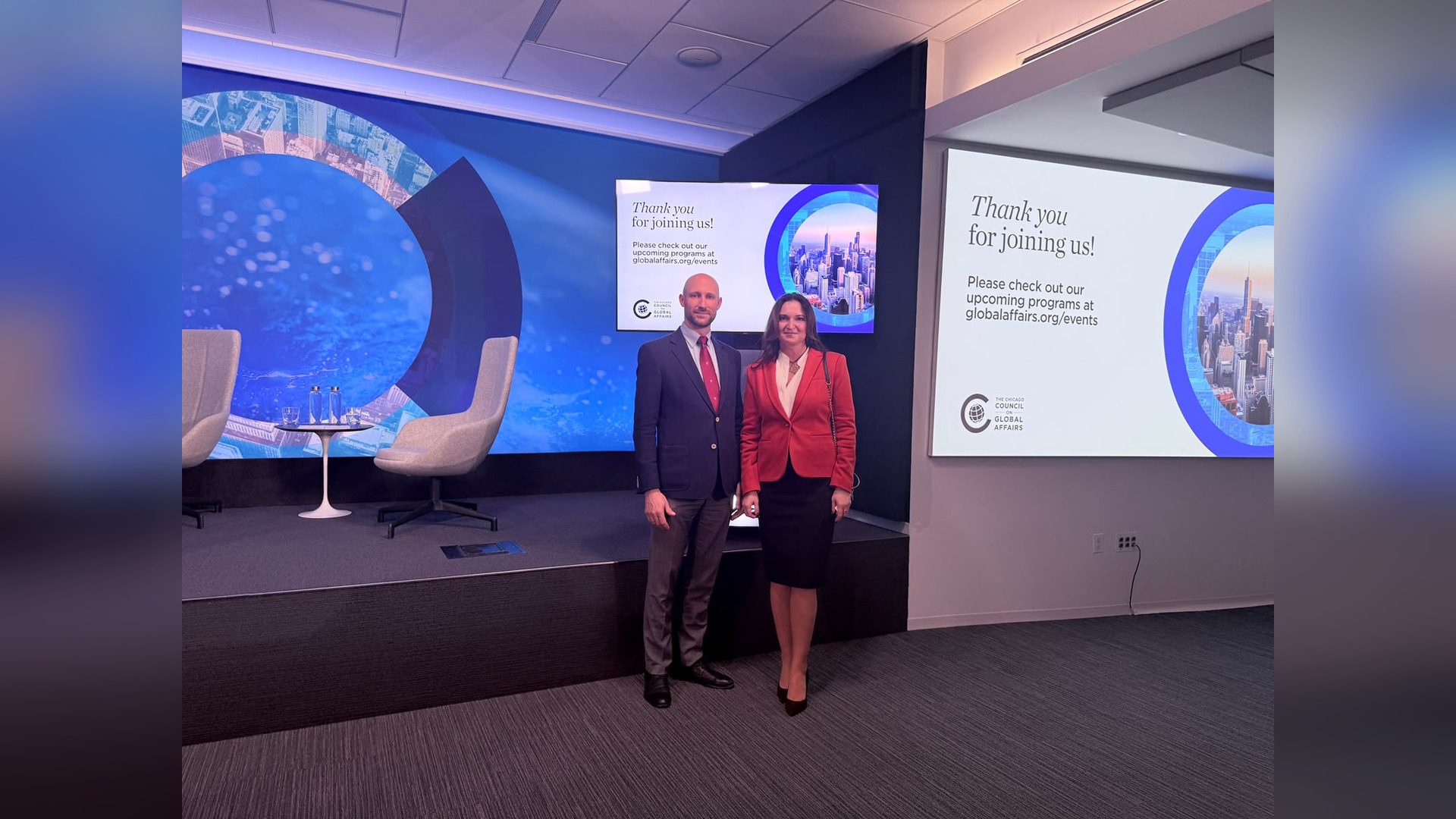
Lesia Yastrubetska’s participation in the event became an opportunity to present Ukraine’s experience in countering hybrid aggression and to recall the need for an international response to threats that emerge long before an open armed attack.
The event was organized by the Chicago Council on Global Affairs in partnership with the Consulates General of France and Poland in Chicago.