
How do you teach Ukrainian history to children living abroad? How do you help them preserve their Ukrainian identity while also integrating into the societies of other countries? And why can history be studied not only through textbooks, but also through objects, museums, and personal stories?
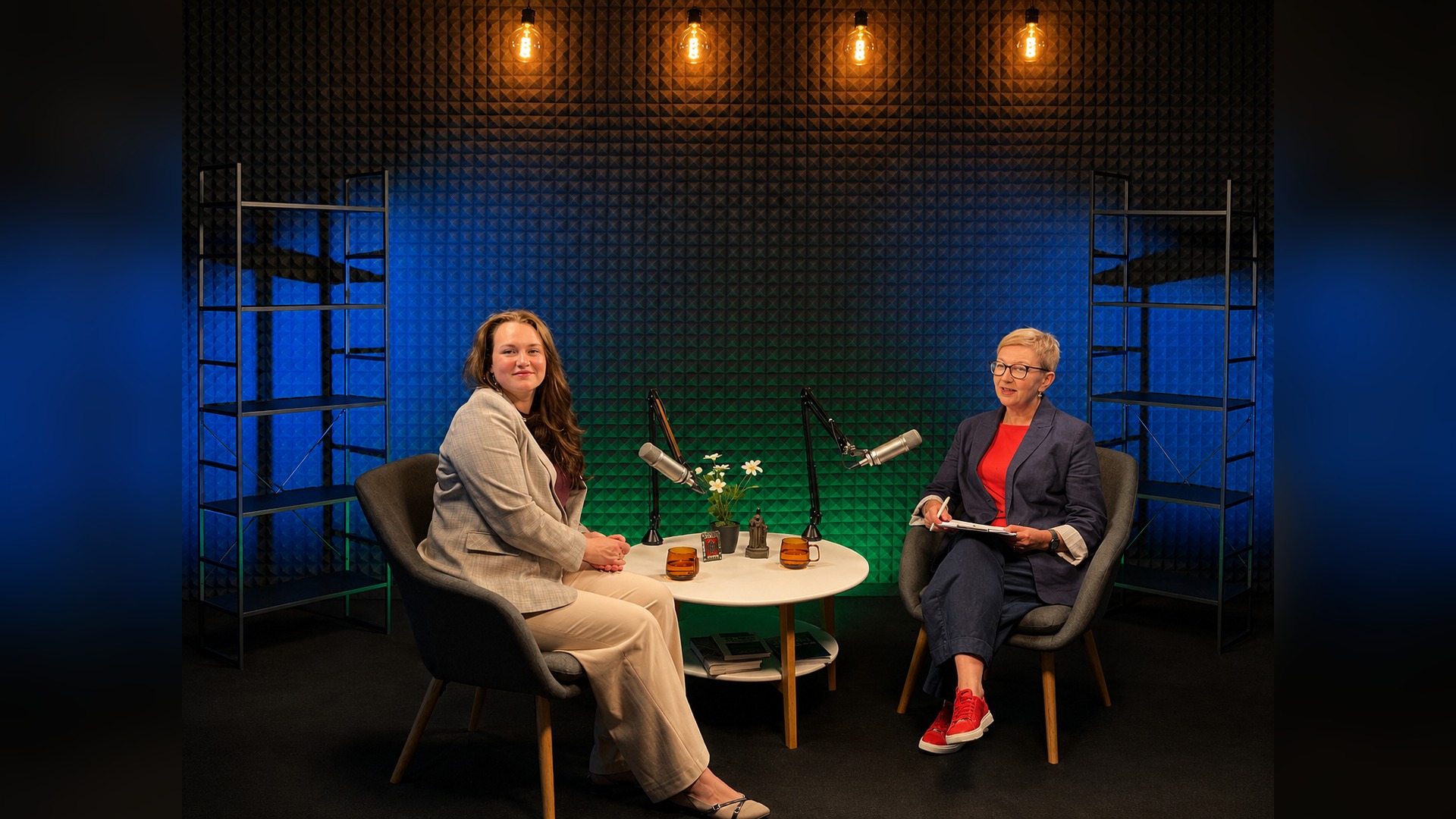
Natalia Omelchuk, an expert in educational initiatives and curator of educational programs at the Pylyp Orlyk Foundation, spoke about this in the program “Dobra Rozmova” (Good Conversation) with Halyna Babiy on “Zhyve Telebachennia” (Live TV).
We offer a text version of the interview about the Pylyp Orlyk Foundation’s project “Koreni ta Kryla: A History That Unites” — a mentorship program for teachers who teach the history of Ukraine to children abroad and in Ukraine.
FROM THE IDEA TO THE FIRST ATTEMPTS TO IMPLEMENT THE PROJECT
Halyna Babiy (hereinafter H.B.): How did the “Koreni ta Kryla: A History That Unites” project come about?
Natalia Omelchuk (hereinafter N.O.): This is primarily a mentorship program to support teachers who teach in Saturday or Sunday schools (weekend schools — Ed.), educational centers, community organizations, and diaspora initiatives. It was developed on the basis of the “Spohady v korobkakh” (Memory Box) methodology.
I began working in this direction in Kyiv, even before Russia’s full-scale invasion. I was looking for a way to teach history not exclusively through textbooks, but in museums. Starting in 2016, I began collaborating with private schools. We took children on museum tours. But the students weren’t just listeners — they were researchers. For my students, the museum became an educational space. We used the exhibits as a source of knowledge. Children no longer perceived history as a list of dry facts in a text. It became life: people, events, objects, songs, architecture…
In 2022, I had huge plans, because I was finishing a program for 5th grade. I still consider it the most important, because that’s the grade in which Ukrainian schoolchildren get acquainted with history as a school subject. The full-scale invasion seemed to cross everything out.
When I left Russian-occupied Kyiv region for Poland in 2022, I was looking for a way to make myself useful for Ukraine. I realized: I didn’t want to lose what I had achieved. As a teacher, I decided to focus first and foremost on what I do best. And that’s how the idea of creating an educational program came about.
It had to be a way of effectively teaching Ukrainian history to children while they are in another country. So I went to the museums of Warsaw. And I looked at them through the lens of my methodology. I looked for ways I could teach Ukrainian history using Warsaw’s museums. I discovered there weren’t many directly relevant exhibits.
Then I went back home for a couple of weeks. I packed my things. Since 2014, I’ve had “a box with my life” from when I left Russian-occupied Luhansk region. In 2022, new boxes appeared, into which my husband quickly packed important but non-essential items when he went off to fight and moved our belongings from a rented apartment to a storage place.
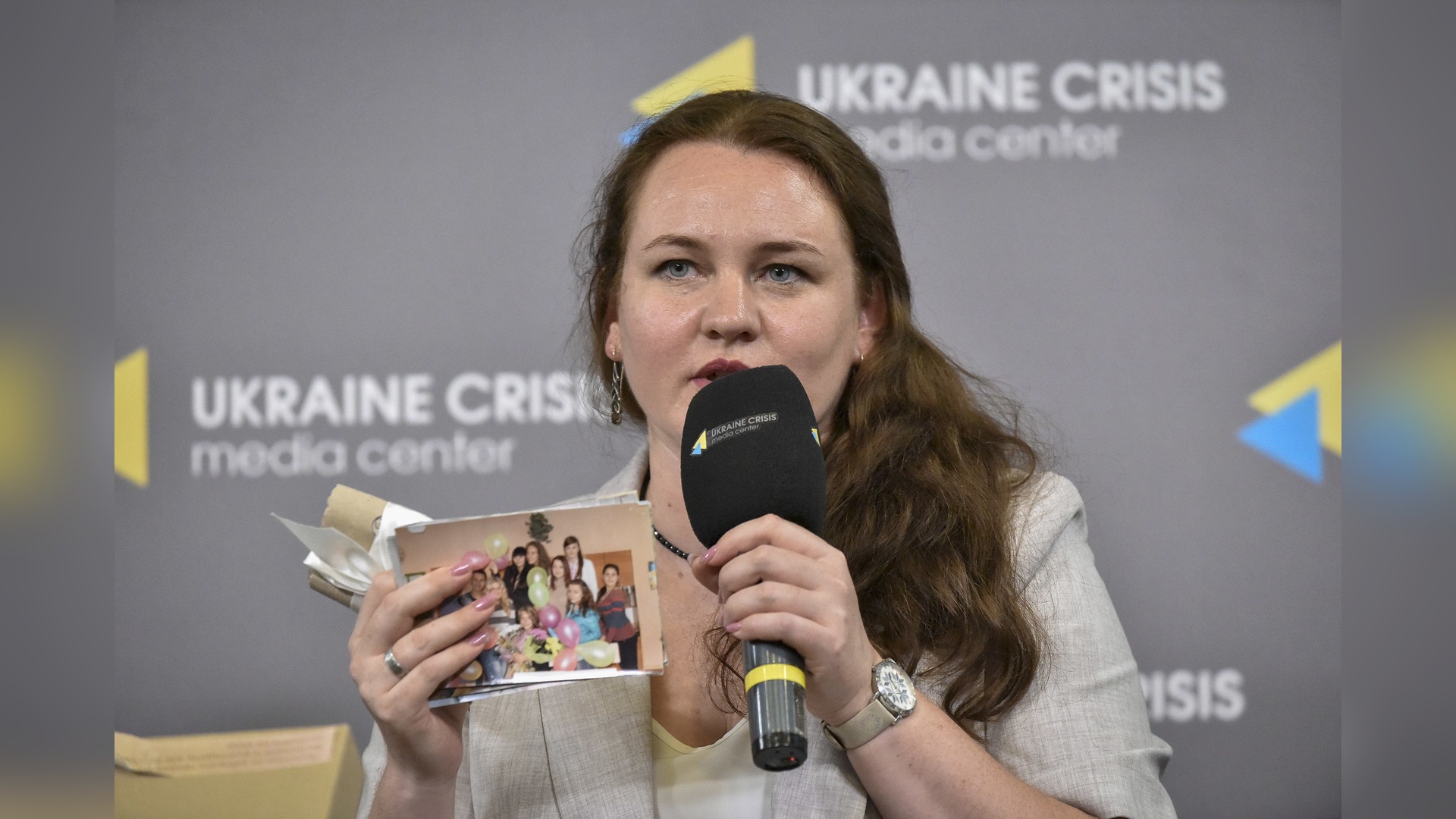
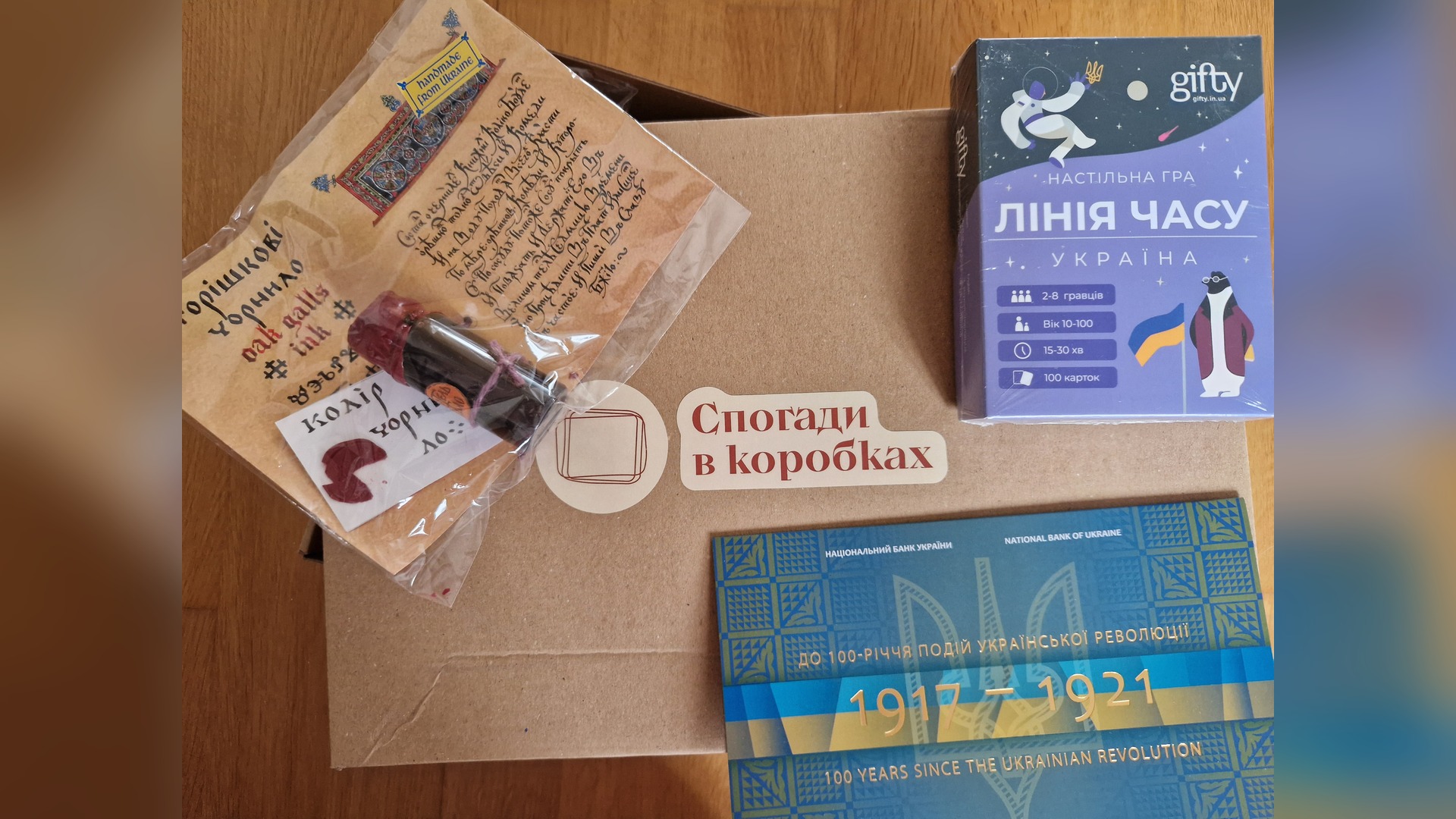
As I sorted through them, I thought that a story could be told through every object here. That’s how the name of the methodology appeared — “Spohady v korobkakh” (Memory Box). And these were the first items that tell the story of the current Russian-Ukrainian war. I put together a box of artifacts and used it for teaching. For example, photographs from 2013 from the Luhansk school where I worked. Through them, I could talk about the events we experienced at the start of the Russian-Ukrainian war (the hybrid invasion, the ATO — Ed.). I later expanded this approach.
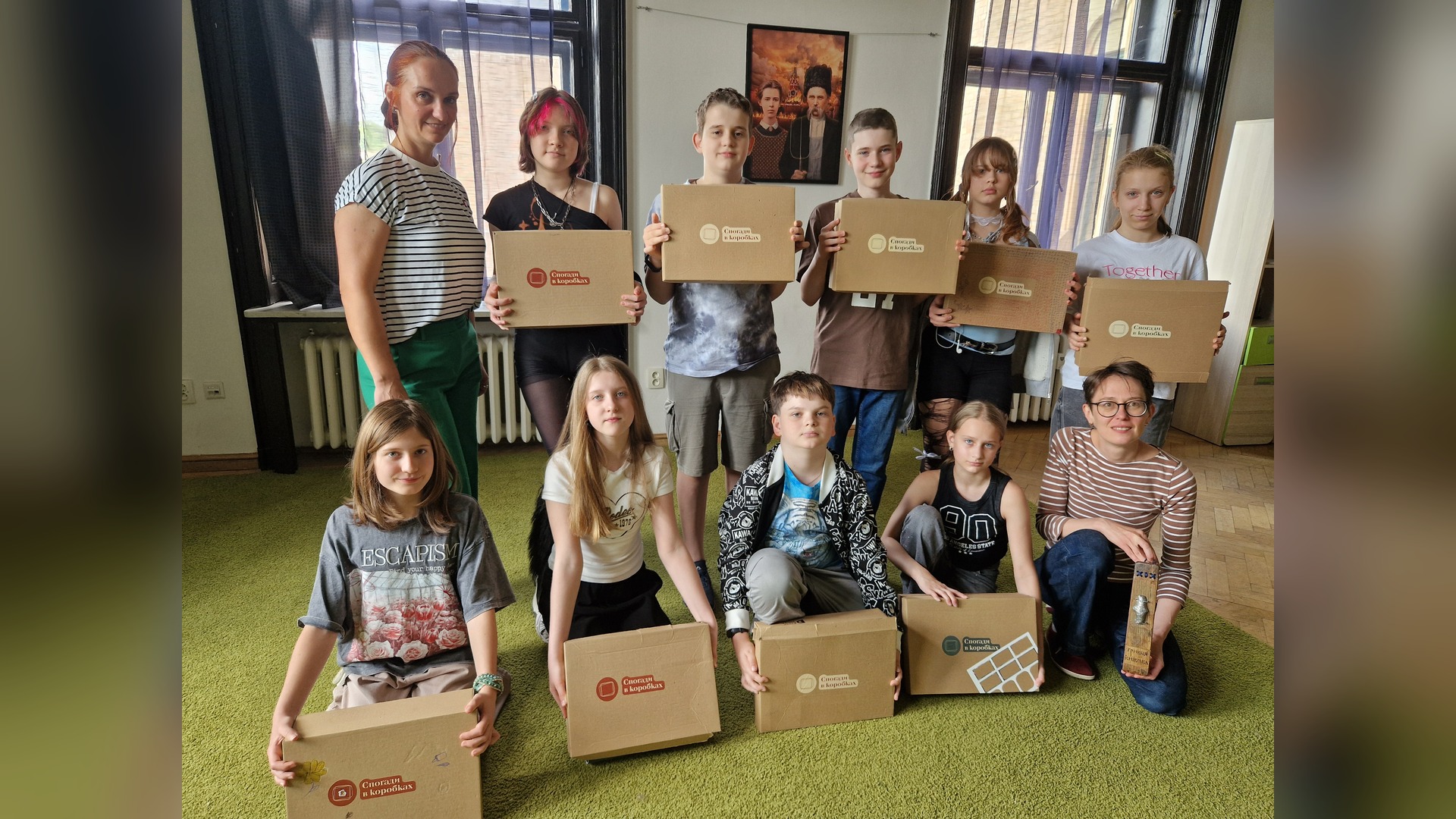
The first groups of students tested this approach in Poland. My children and I would come to a museum in Warsaw, and head, say, to the ancient Egypt wing. And alongside that I would say: look, at the same time, on the territory of present-day Ukraine, this was happening. To illustrate, I would take out one item or another from the box.
The pilot project proved successful, so I wanted to scale it up. In 2025, I met with the Pylyp Orlyk Foundation’s program director, Yaryna Yasynievych. She asked whether it would be possible to organize such training in other countries as well, not only in Poland.
I answered yes, because the methodology was developed specifically so that it could be adapted to any country. The most important thing is to gather teachers who are ready to do this.
That’s how it all began. We carried out a survey to ask [children and teachers] whether this was needed at all. And in June 2025, the first meeting with community organizations that wanted to get involved took place in Prague (Czech Republic). And in September we already started work with the first group of the “Koreni ta Kryla: A History That Unites” mentorship program for teachers.
H.B.: What advantages do your program and methodology have compared to teaching in a regular lesson?
N.O.: It’s important for the teacher that children understand: who came from where and why, where they settled, how they changed, and so on. That at different periods there were states, tribes, and cultures on the territory of present-day Ukraine. That the world was changing, and so were we. We were conquered, we fought, we experienced revivals. We had different people, and events had their own causes and consequences. [So that this isn’t just words], we take children to the museum. We look at cartography, art, models…
This is where Memory Box also comes in handy. It’s not just about personal items belonging to people connected to historical events. I found craftsmen who can recreate various items. For example, I bought replicas of Trypillian ceramics. Or coins, to talk about currency circulation and symbols.
This is, in fact, the approach that allows a child to talk about Ukraine as part of Europe — that our country did not exist in isolation. There are difficulties here too. In the European context, teachers have to explain why certain events are told one way in Polish textbooks and another way in ours. After all, in many cases children may hear about Ukraine in the histories of the countries they ended up in because of the war. And that information can be turned upside down. Sometimes it’s even a Russian view of Ukrainian history. We’ve already encountered this in the countries where we work. The Roots and Wings project essentially nurtures this approach, where we talk about the history of Ukraine from a Ukrainian point of view. Of course, without ignoring or dismissing the history that existed in Poland, Czechia, Denmark, and so on.
In addition to comparing different points of view, it’s necessary to strengthen children’s own understanding of what Ukraine’s history was like. This is especially important for teenagers, because it gives them arguments in discussions among peers. After all, besides Ukrainians, there are Russians and Belarusians in European schools. We cannot and must not isolate ourselves from them, or create Ukrainian ghettos. Children need to grow up and study in the environment where they live. But it’s important that they can [build up] inner strength, knowledge, and confidence that they have behind them their own state with a long, powerful history. And one they can be proud of.
This way, children’s faith in their state grows stronger, their identity is reinforced, and their resilience to outside influence increases. This is also, to some extent, protection against the influence of Russian intelligence services. It is known that they sometimes recruit our children into crimes. [Raising young people to be inwardly confident and strong] matters not only abroad, but within Ukraine itself as well.
SCALING THE PROGRAM TO DIFFERENT COUNTRIES AND THE CHALLENGES THAT NEED TO BE ADDRESSED
H.B.: Besides Czechia, where else is this program already running?
N.O.: I first tested the methodology in Poland. Then, together with the Foundation, we developed a mentorship program based on the methodology and launched an international project. We recruited the first group in Prague, the second in Denmark, and held a similar summer school in Ukraine: teachers came to Kyiv from various cities, towns, and villages. And together we planned how to teach the history of Ukraine today using the “Spohady u korobkakh” methodology.
The Baltic states are also planned. Not just Denmark, but all of Northern Europe, plus one more group in Prague.
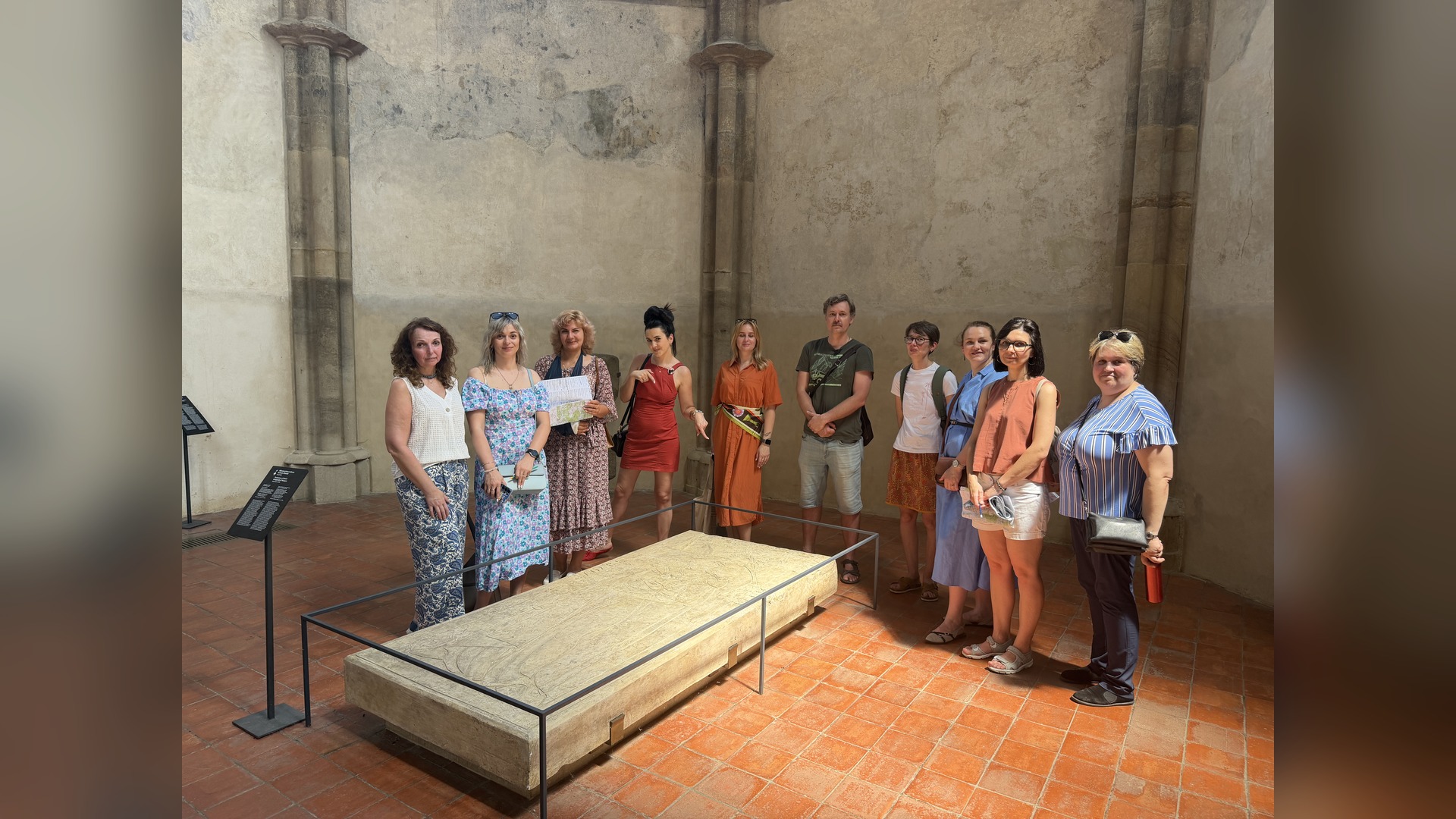
H.B.: So far we’ve been talking about children. But for them to gain knowledge, teachers are needed. Are there enough of them who are ready to look, together with you, for a different way of conveying our history and strengthening children’s Ukrainian identity in European countries?
N.O.: Fortunately, they are. Unfortunately, there are too few history teachers specifically. I’m a historian, so I understand how important it is to have a basic historical education when teaching this subject.
But I’m also aware that there aren’t enough history teachers. Last year we were struck by information we heard at a conference of the World Congress of Ukrainians in Lviv. It turns out that abroad, more than 60% of weekend schools don’t have the history of Ukraine as a separate subject. There’s ethnography, Ukrainian studies, but the history of Ukraine is absent, most often because there are no specialists. That’s why our project also invites language, literature, geography, and art teachers.
And that’s wonderful. I’m grateful to these teachers who take up our methodology and put in their own time to seek out additional information and create new materials. For them, within our mentorship program, we’ve prepared ready-made additional tools. For example, a ready workbook with assignments. Also, every teacher who joins the training receives a Memory Box. In addition, I’ve developed methodological recommendations in video format.
This is convenient for teachers. Before each lesson, they can listen and refresh in their memory what’s worth emphasizing, and which sources we recommend. Where to read up, whom to listen to, what to pay attention to, which item to show.
In parallel, we also hold various meetings. For example, the next one is devoted to human rights during war. We’ll talk about how to teach difficult stories and what materials can be used for that. A separate meeting is also devoted to ethnopedagogy.
I’ve invited Yaroslava Muzychenko to collaborate — an ethnologist, researcher, and an incredible person who knows how to ignite hearts and lead people forward. She shows how traditional Ukrainian culture is expressed in modern life. She talks about how it was represented in the works of 20th-century artists, and much more.
We also hold separate meetings on how to teach history to teenagers aged 15+. There, we add literature and culture to history. This is also a separate course, supplemented with materials and assignments.
Thanks to this interdisciplinary context, children don’t just memorize events. They explore how a particular historical process influenced culture. Why exactly these literary works appeared. How everything began and ended. Where this huge gap from the 13th to the 15th centuries came from. We talk about all of this. Although the course is for teenagers, in Poland I tried out this case with an adult audience. And people liked it.
Our entire program was designed so that teachers would receive as much literature as possible. We put together a small library for children and for teachers, so they can quickly look up what they need. Because I also understand that it’s impossible to remember everything perfectly. That’s why we provide everything that could hypothetically come in handy: read, talk, analyze things with the children.
And that’s why math teachers, art teachers, elementary school teachers, and even people who have never taught before but want to, are joining. We bring them in throughout the year. It’s a pleasure to watch them discover something new for themselves every time: “Why didn’t I see this before? How could I not have known this? I have so much to read now!”
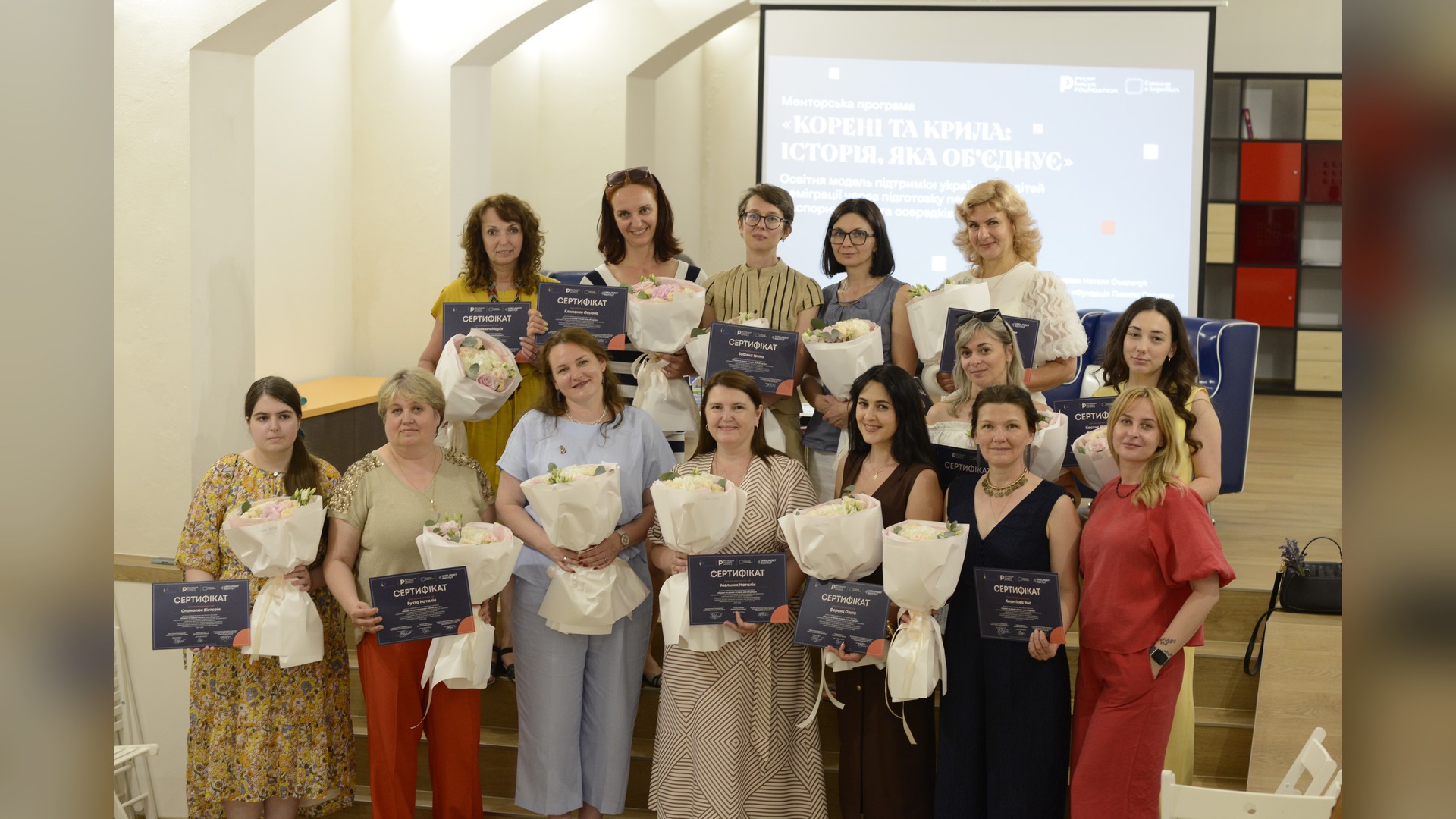
This is how a community forms and identity is preserved. Ukrainian teachers very rarely work in their profession in the countries they’re staying in. Usually these are jobs of a lower level. Our program becomes a shared space for them. They feel among their own again, in an environment of colleagues they teach alongside. Here, a person can once again feel their significance and their sense of being needed.
H.B.: Finally, we have one more important topic to discuss. Parents bring children who may not have heard explosions or seen the destruction and other horrors of war. Adults adapt to life in a new country as best they can. They don’t always work in prestigious jobs. They end up several steps lower in status than they had at home. Circumstances push them to assimilate faster. Parents tell their children: hurry up and learn the language, finish school, so you can earn some money. What do you advise for working with parents themselves, so that they don’t unwittingly push their children toward giving up their identity?
N.O.: I think the main thing is not to forbid it. If parents also support it, that’s wonderful. But from my own experience and from what colleagues have told me, in our programs — in Czechia, in Denmark, and in Poland — parents have actually gotten actively involved. They go on tours with their children and want to take part in discussions.
In Denmark, three organizations joined the first round of training. I ran a survey to find out how many student sets they needed sent. They replied: please send us this many for children, and this many for adults. Because our parents also really want to study this, and we’ll be running two parallel groups.
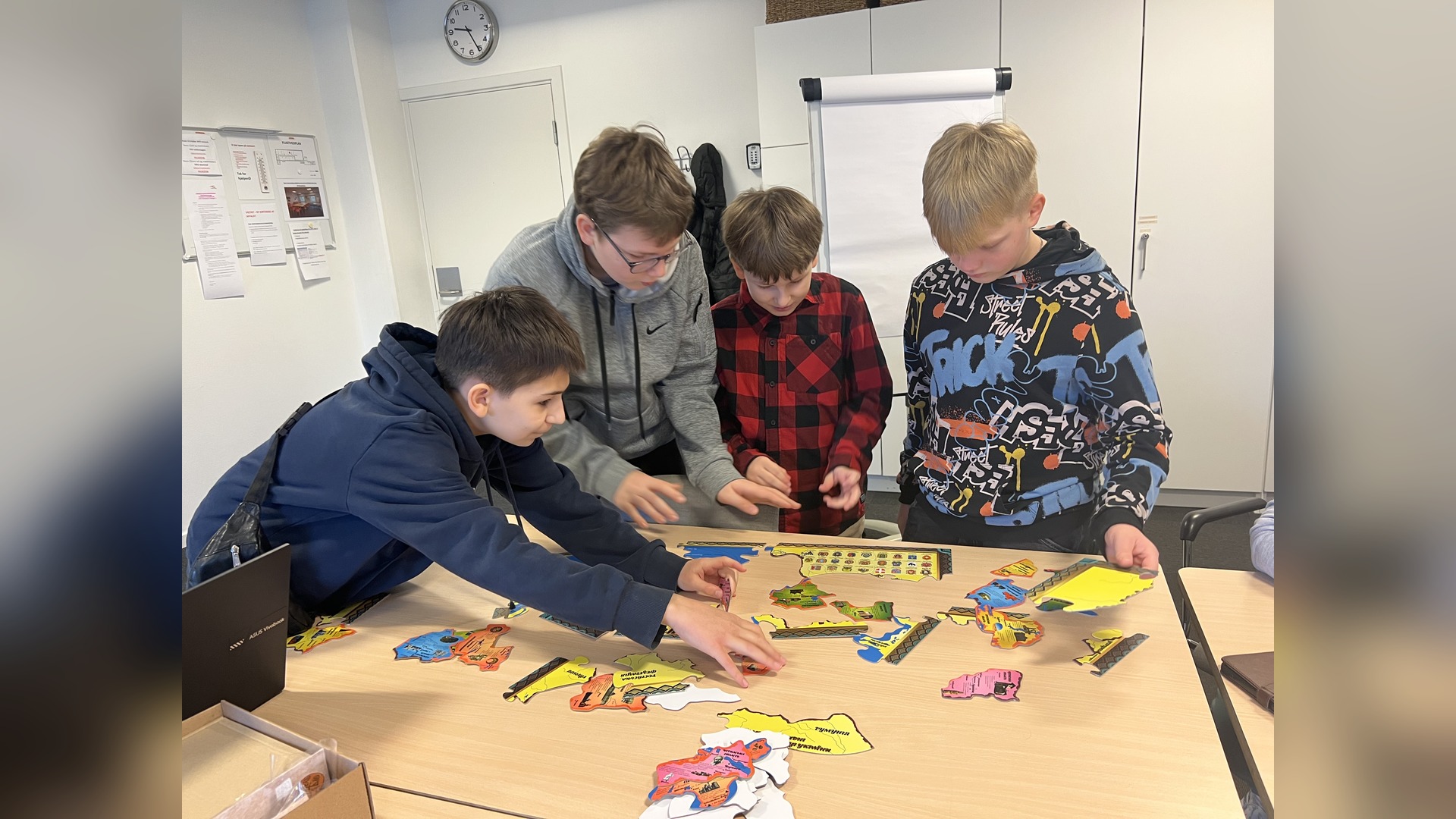
I remember, back when I was running the sessions myself in Poland, parents would bring their children, and within ten minutes they’d already be standing in the front row raising their hands to ask questions. The children were even a bit baffled by this unexpected competition.
I’m aware that some people won’t return to Ukraine and are doing everything they can to integrate as fully as possible into the society they’ve moved to. That’s their choice, and we have no right to judge it. You can still remain Ukrainian there too. There are also other families who would like to return but aren’t able to. For all of these groups, there are various Ukrainian organizations. We can come and support them, so that a history course is among the services they offer. And so that parents can come and study together with their children, and do interesting assignments at home.
H.B.: To wrap up our conversation, please tell us where interested organizations, teachers, and parents can reach out to arrange cooperation with you?
N.O.: As I already mentioned, the program is currently running in Czechia and Denmark. I hope that in the near future we’ll be able to put together another group in Denmark for people from the Baltic states and Northern Europe — so they can come.
We’ll also be recruiting another group in Prague for Czechia and the surrounding European countries. You can follow the announcements on the website and social media of the Pylyp Orlyk Foundation, since they’re the organizers.
To Ukrainians, I want to say: don’t lose the desire to read, come together, take your children to Sunday schools and Ukrainian organizations. I’m very grateful to every teacher there, who teaches children carols and koliadky and shchedrivky, paints pysanky, makes vytynanky, and everything connected with Ukrainian culture. Who talks to children about Ukrainian historical figures. And I hope that we’ll be able to extend our program to other countries as well. That we’ll be able to scale the project not only across Europe, but on other continents too. We’re open to partnership and cooperation, and we’re always glad to teach.
***
“Koreni ta Kryla: A History That Unites” (Roots and Wings: A History That Unites program) is a program of the Pylyp Orlyk Foundation aimed at teachers who teach Ukrainian history to children abroad and in Ukraine. The project helps maintain a connection with Ukraine through history, culture, and modern teaching methods.
Natalia Omelchuk is the educational projects coordinator at the Pylyp Orlyk Foundation. She is the author of the “Uroky-ekskursii” (Lessons-Excursions) history teaching methodology and the “Spohady v korobkakh” (Memory Box) project, and a WenDo trainer. She is the founder of the “Vilna Nytka” (Free Thread) social enterprise — a sewing and embroidery workshop at a shelter that gives women the opportunity to gain a new profession, become economically independent, and recreate traditional embroidered vyshyvanky using traditional techniques. She is a graduate student at Odesa I. I. Mechnikov National University.
Video version of the interview:


