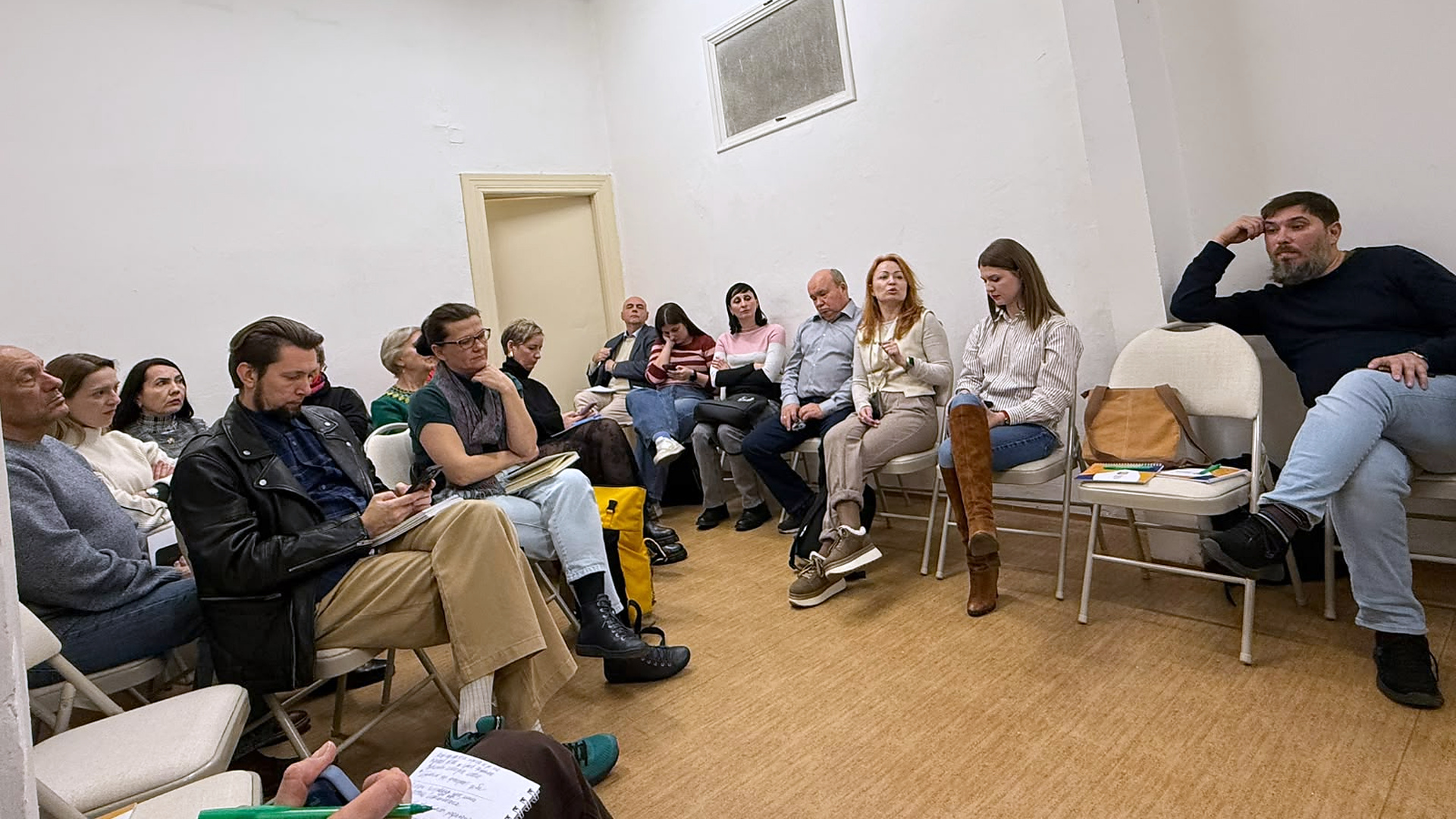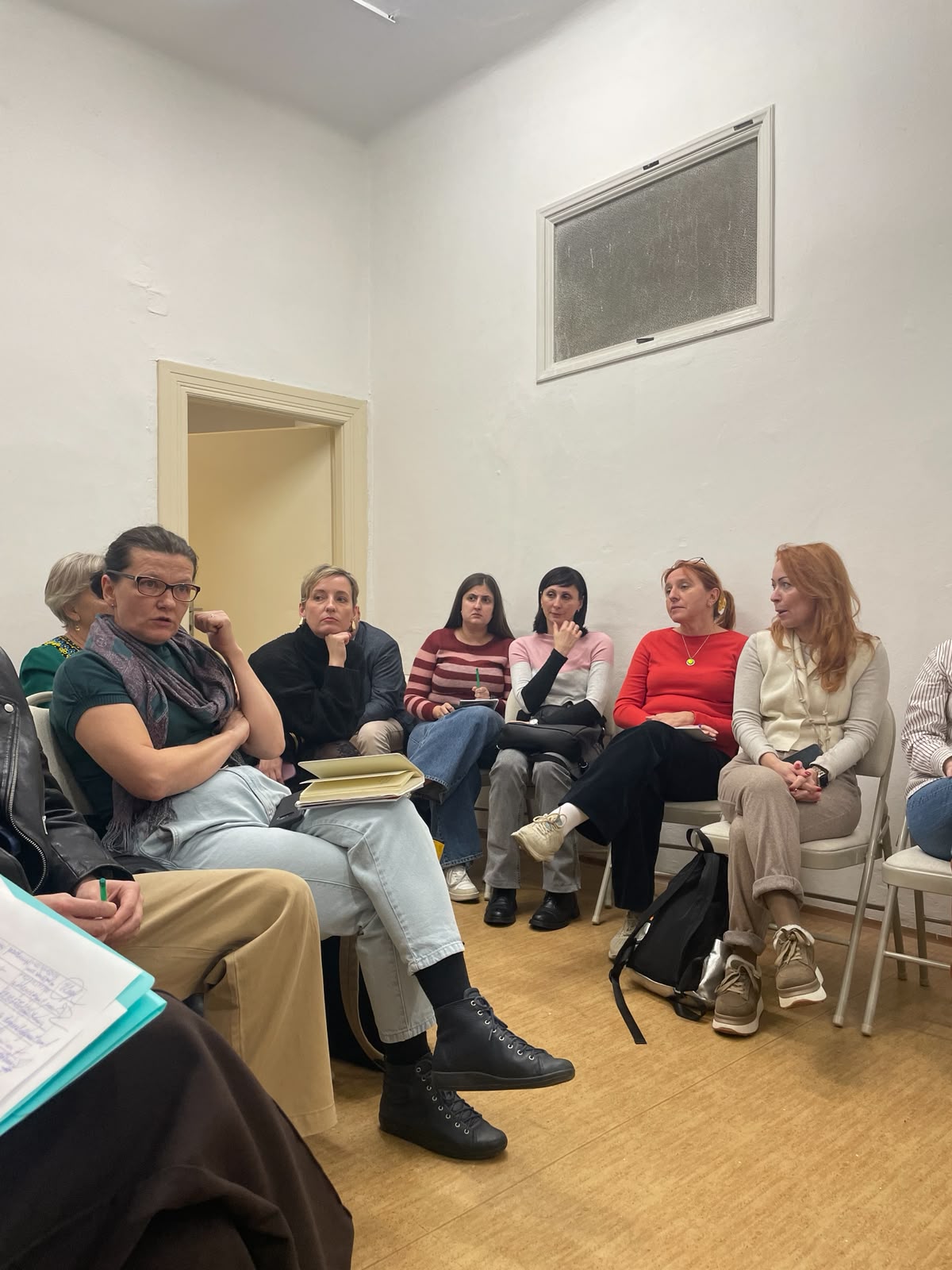
The session brought together representatives of Ukrainian organizations, volunteer initiatives, cultural and educational centers, activists, local leaders and engaged Ukrainians. Among the participants were representatives of the Pylyp Orlyk Foundation — educational projects coordinator Natalia Omelchuk and Olena Panasiuk, manager of the project “Koreni ta Kryla: History That Unites” (Roots and Wings).
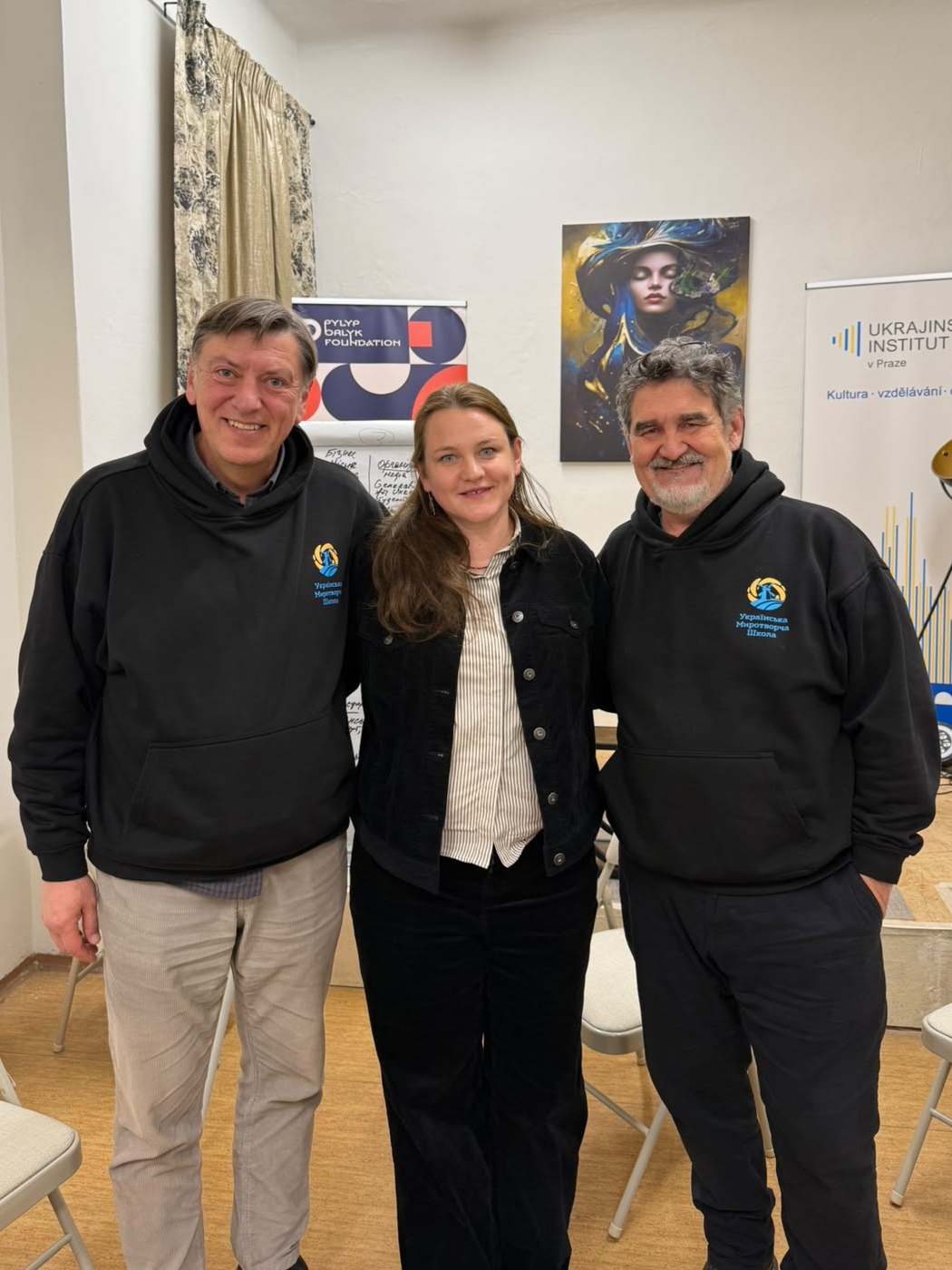
The session was facilitated by Ukrainian experts Ihor Semyvolos, Executive Director of the Center for Middle Eastern Studies, and his deputy Serhii Danylov. The meeting was part of research work aimed at studying Ukrainian communities in European countries. Before Prague, the team held similar meetings in cities in Germany and other European countries.
At the start of the meeting, Ihor Semyvolos emphasized that this was not a lecture format, but joint strategic work in which the participants themselves were to formulate the key problems, conclusions and possible solutions.
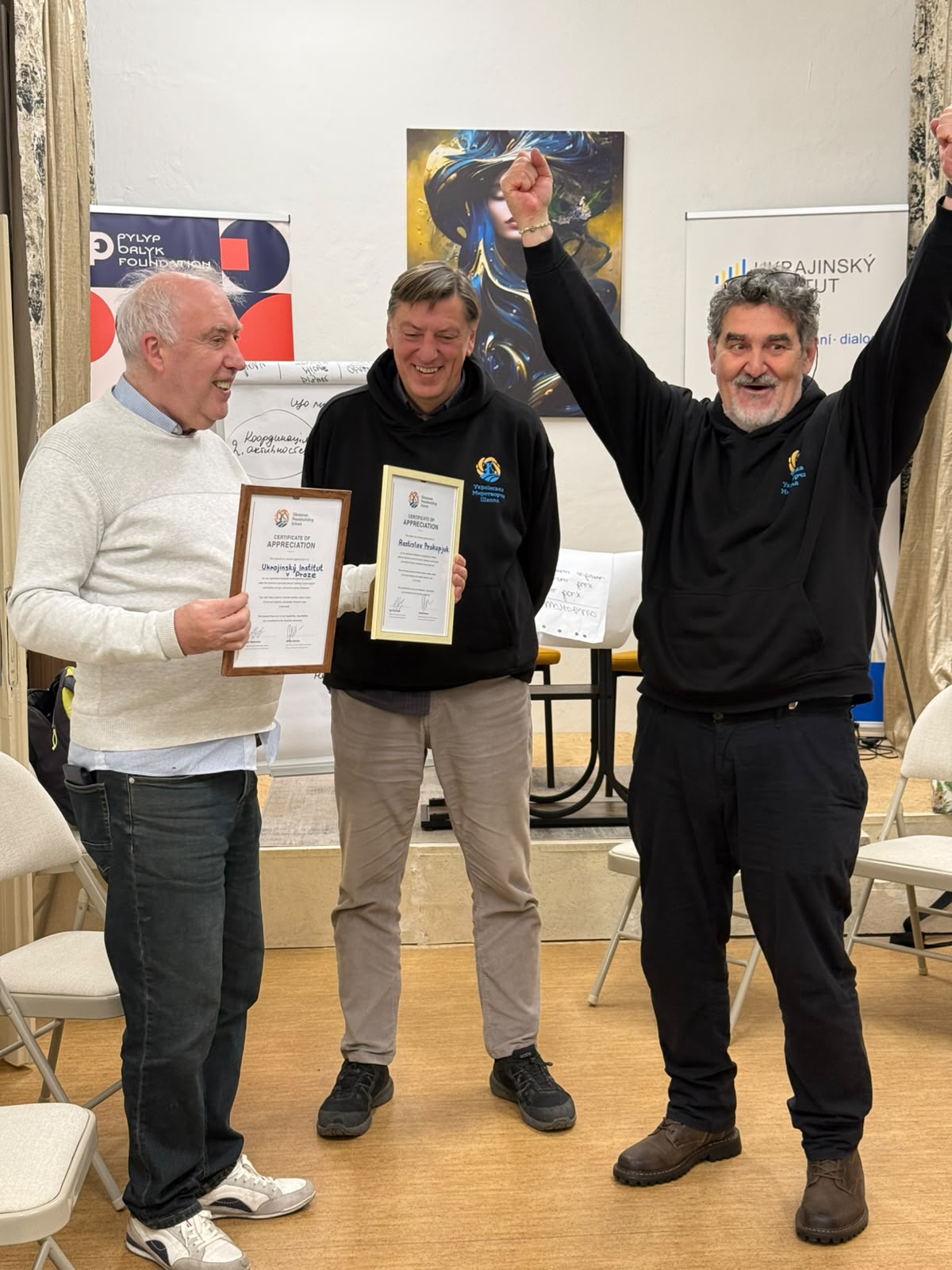
During the first meeting, those present worked with three dimensions of the Ukrainian community’s experience:
- The burden of the past — the experience, challenges and problems the community brought with it.
- The burden of the present — the current realities, barriers and opportunities Ukrainians face in Czechia.
- The burden of the future — factors that may hold back the community’s development, and the solutions needed to move forward.
Particular attention was paid to the needs and resources of Ukrainian initiatives, interaction between organizations, the sustainability and professionalization of the civil society sector, maintaining ties with Ukraine and defining shared priorities.
The discussion revealed the diversity of the participants’ experiences and views. At the same time, an important common reference point was the need to move from stating problems to concrete solutions, systematic cooperation and shared responsibility for the result.
“A strong community begins not with the number of organizations, but with their ability to hear one another, join efforts and take shared responsibility for the result,” — this was how the organizers summed up the first meeting.
Organizers: the Center for Middle Eastern Studies within the “Ukrainian Peacebuilding School” program with the support of the International Renaissance Foundation, the Pylyp Orlyk Foundation and the Ukrainian Institute in Prague.
For Ukrainian communities abroad, issues of self-organization, interaction and a shared vision of the future take on particular importance. Such meetings create an opportunity not only to exchange experience, but also to identify practical steps to strengthen the capacity of Ukrainian communities and their ties with Ukraine.