
In their presentations, they spoke about overcoming social trauma and creating conditions for community resilience, as well as ensuring the state’s financial security and countering the shadow economy during the war and post-war recovery.
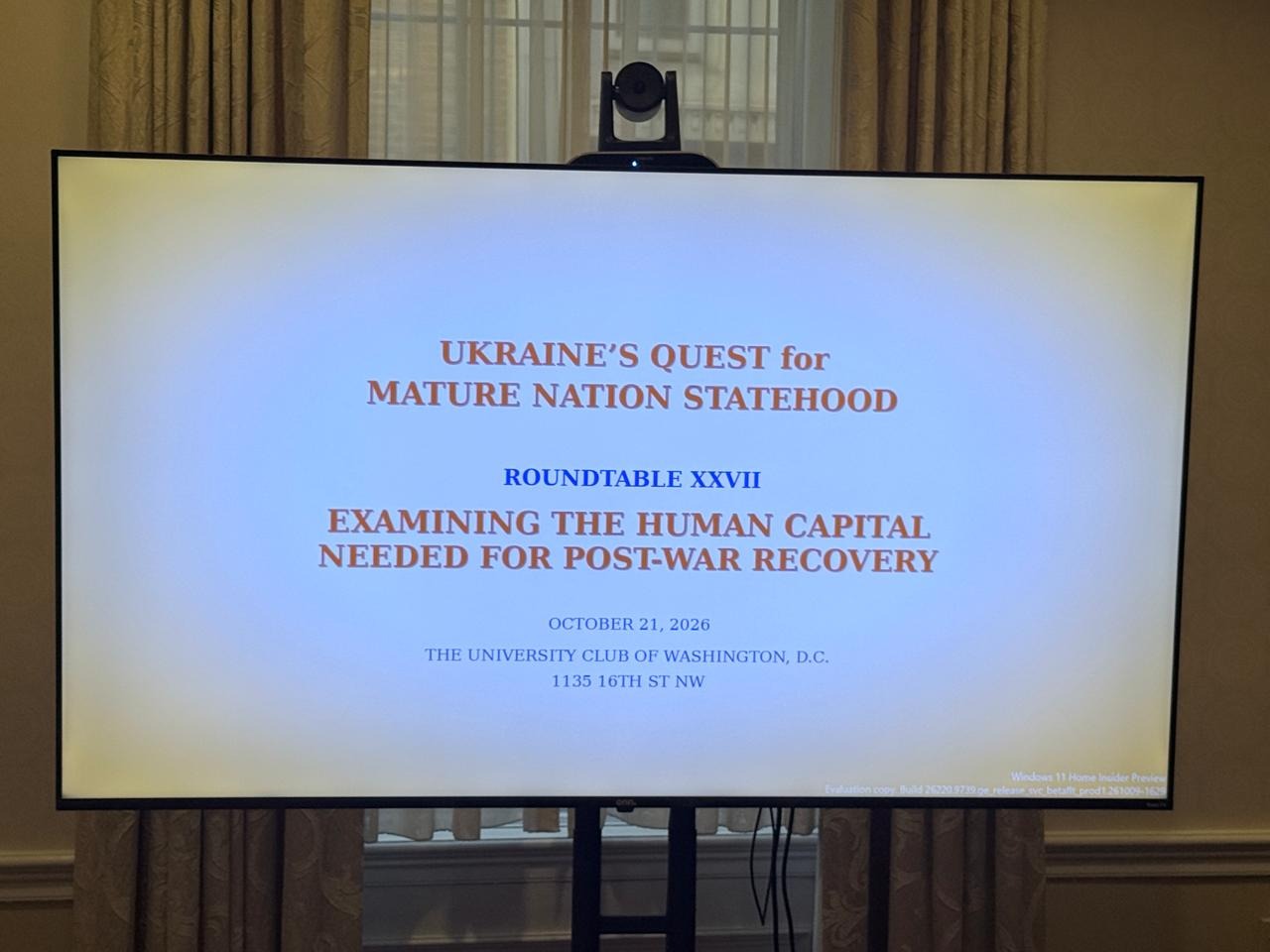
Pylyp Orlyk Foundation Program Director Yaryna Yasynewych focused on the consequences of Russia’s prolonged war for Ukrainian society, the needs of the population, and the tasks of state policy in the field of recovery.
She emphasized that Russia’s war against Ukraine has been going on for twelve years — since 2014. This is important for understanding Ukrainian resilience: the resistance of 2022 drew on the prior combat experience of the military, the volunteer movement, assistance to displaced persons, and practices of civic resistance in Crimea and Donbas.
At the same time, according to Yaryna Yasynewych, the full-scale invasion revealed the state’s insufficient preparedness for the civilian consequences of war. Evacuation, internal migration, protection of the civilian population, and provision of housing largely required rapid decisions, and a significant share of the burden was taken on by citizens and civil society organizations.
“In Kyiv, we joke that whatever doesn’t kill us gives us an inadequate sense of humor. Though this is nothing new: more than a century ago, Lesya Ukrainka wrote: ‘So as not to cry, I laughed.’
Resilience is the ability to withstand and to recover. Post-traumatic growth is the opportunity to find new meanings and perspectives after what one has lived through. The resilience of society is our advantage, but it must not justify the weakness of institutions,” the Foundation’s Program Director noted.
Yaryna Yasynewych paid particular attention to post-traumatic growth and the possibilities of creating conditions for the recovery of people who have lived through the war. She stressed that traumatic experience in itself does not make a person stronger, and post-traumatic growth cannot be their obligation. Instead, the state and society can foster recovery through professional support, education, and appropriate social programs.
In 2025, the Pylyp Orlyk Foundation supported an international conference on post-traumatic growth in Ukraine. Now, under the leadership of psychologist Oksana Korolovych, a professional training program is being developed: a year-long course for specialists is nearing completion, and a framework program for educators has been designed. According to Yaryna Yasynewych, it is important that these approaches become part of state policy supporting veterans, their families, and the civilian population.
Another topic of her presentation was the demographic and social dimension of the war. According to demographers’ estimates cited by Yaryna Yasynewych, about 29 million people live in Ukrainian-controlled territory, while approximately 6 million more Ukrainians are abroad as refugees, nearly a third of them children. According to the Ukrainian Ombudsman’s estimate, between 3.5 and 5 million Ukrainians are in the occupied territories or in Russia.
Thus, Ukrainians have different experiences of living through the war. In government-controlled territory, people live amid danger, loss, and exhaustion. Abroad, they face forced migration, adaptation, and uncertainty about the future. In the occupied territories, they suffer human rights violations, information isolation, and forced Russification.
In Yaryna Yasynewych’s view, state policy must take these differences into account while preserving a common goal — the unity of Ukrainians as a political nation.
She drew attention to the fact that policy toward Ukrainians abroad should not focus exclusively on their physical return. Decisions about returning will depend on security, the availability of work and housing, educational opportunities for children, and personal circumstances. Instead, it is already possible to maintain Ukrainians’ connection with the state through education, culture, and the information and civic space.
This goal is served by the Pylyp Orlyk Foundation’s international educational program “Koreni ta Kryla: A History That Unites” (Roots and Wings), which aims to help Ukrainian children abroad maintain their connection with the history and culture of Ukraine.
“It is important not only to bring people back physically, but also to preserve their belonging to the Ukrainian community,” Yaryna Yasynewych emphasized.
In her presentation, the Foundation’s Program Director also raised the issue of the destruction of the cultural environment as a result of Russian aggression.
According to the data she cited, Ukrainian serviceman and cultural figure Alex Zakletsky presented preliminary loss estimates to the European Cultural Parliament, according to which since 2014 about 500 cultural figures have been killed, including more than 300 writers, and more than 10 million books have been destroyed. According to the Ministry of Culture, since the start of the full-scale invasion more than 2,600 cultural infrastructure facilities and almost 2,000 cultural heritage sites have been damaged or destroyed.
Yaryna Yasynewych stressed that such losses go far beyond material damage. The destruction of cultural sites means the loss of the environment in which society preserves memory, passes on knowledge, and shapes identity.
Recovery, in her words, does not always mean a return to the pre-war state. During the war, communities, the economy, the population structure, and people themselves have changed. Therefore, the key condition for the recovery of territories must be the return and preservation of full-fledged life: the opportunity to work, study, interact, and build communities.
Yaryna Yasynewych also shared her own experience: after the liberation of the Kyiv region, her family, together with the children and older relatives, returned to their town. This experience, she said, helps to understand the importance of restoring housing, schools, hospitals, and cultural and public spaces already during the war.
She named the reintegration of territories after prolonged occupation as a separate challenge. In parts of Ukrainian territory, over twelve years a generation of children has grown up studying in the Russian education system. Restoring Ukrainian education, culture, social ties, and trust will require long-term work.
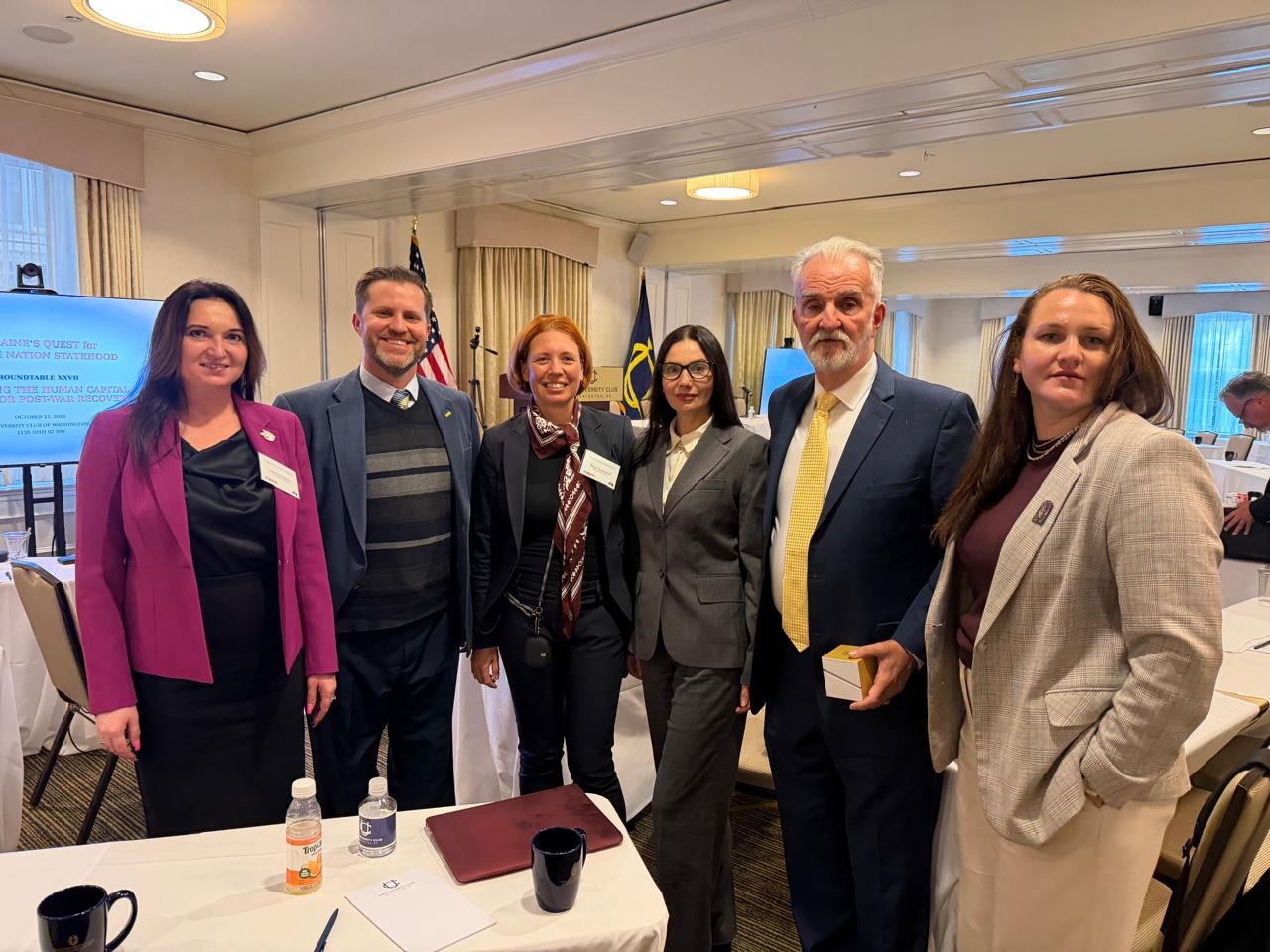
According to Yaryna Yasynewych, investment in restoring public life should not be set against defense needs. Supporting life in the liberated territories is also a component of countering Russian hybrid aggression, particularly in its cognitive dimension. After all, holding territory is not only military control, but also people, their daily activity, social ties, and the Ukrainian cultural environment.
Summing up her presentation, the Foundation’s Program Director emphasized that the state cannot demand that people become stronger as a result of what they have lived through. Instead, it must create conditions that will help them recover, work, study, maintain ties, and plan for the future.
Pylyp Orlyk Foundation expert Lesia Yastrubetska, Doctor of Economic Sciences and Professor at Ivan Franko National University of Lviv, presented the results of her many years of research on Ukraine’s financial security and outlined ways to counter the shadow economy in the context of war and post-war recovery.
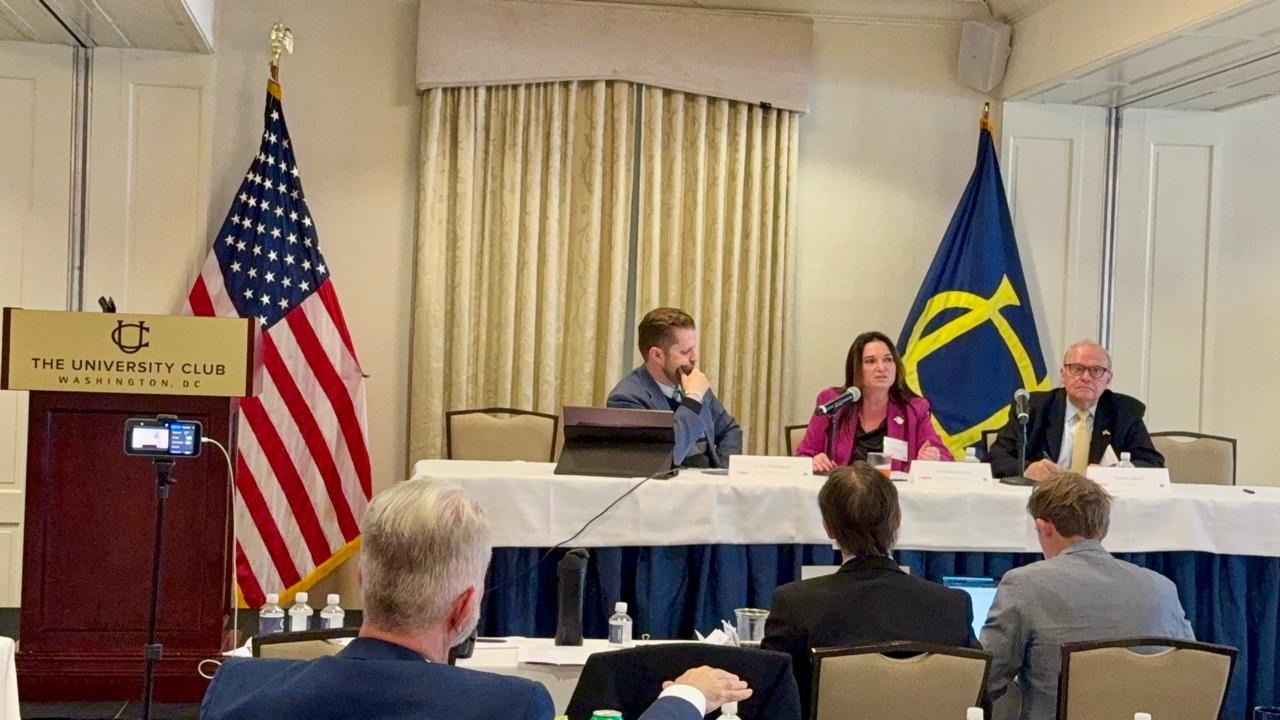
In her presentation, she examined the interrelation between tax evasion, corruption, employee financial fraud, and unfair competition. Taken together, these phenomena form a system of interconnected threats to the financial security of the state.
The expert paid particular attention to the administration of value-added tax (VAT), in particular fraudulent schemes using fictitious tax credits. She explained that such abuses create opportunities to evade not only VAT, but also other taxes and mandatory payments.
Using the example of Ukraine’s fuel sector, Lesia Yastrubetska revealed how such schemes operate and proposed a set of countermeasures. Among them are greater transparency of financial transactions, improved tax control, and the creation of economic incentives for legal business activity.
Another important issue was the fairness of the tax burden. The expert stressed the need to support the legal activity of small businesses and to seek a balance between the effectiveness of tax control and the prevention of further shadowing of the economy.
In the context of seeking additional sources of state budget revenue, Lesia Yastrubetska also raised the issue of taxing transactions with virtual assets.
According to the Chainalysis Global Crypto Adoption Index 2026, cited by the speaker, Ukraine ranks seventh in the world in the level of crypto asset adoption.
In the expert’s view, this makes it all the more pressing to introduce a transparent legislative mechanism for taxing real profits from such transactions. Appropriate regulation could become a promising source of additional state budget revenue.
Summing up her presentation, Lesia Yastrubetska emphasized the need to rethink the principles of mutual responsibility of the state, business, and citizens. In the context of war and post-war recovery, Ukraine’s financial security matters not only for filling the budget, but also for ensuring national resilience and shared responsibility for the future of the state.
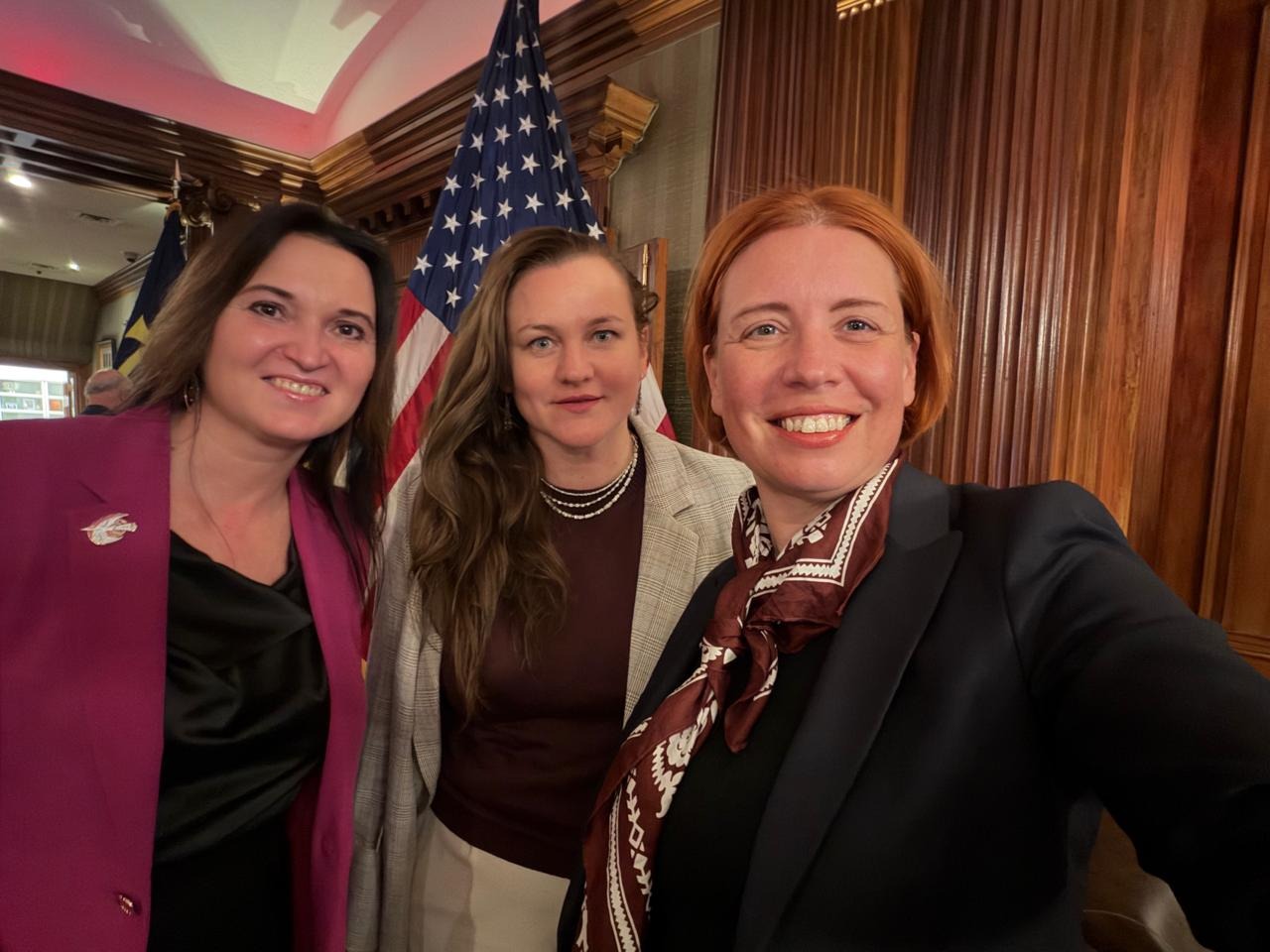
The participation of Yaryna Yasynewych and Lesia Yastrubetska in the CUSUR roundtable provided an opportunity to present Ukrainian experience and approaches to overcoming the challenges faced by the state and society as a result of Russian aggression to an international audience.


