
Answers to these and other questions are given by historian Oleksandr Kucheruk, head of the “Museum of the Ukrainian Revolution” sector at the National Museum of Ukrainian History, in his lecture on Yevhen Konovalets.
Thanks to the efforts of scholars, the figure of Colonel of the Army of the Ukrainian People’s Republic and founder of the Organization of Ukrainian Nationalists (OUN) Yevhen Konovalets can be considered a textbook case. There is a great deal of information about him in open sources, and schoolchildren study his biography. That is precisely why Oleksandr Kucheruk chose to focus on the colonel’s character and values, rather than solely on the events of his life story.
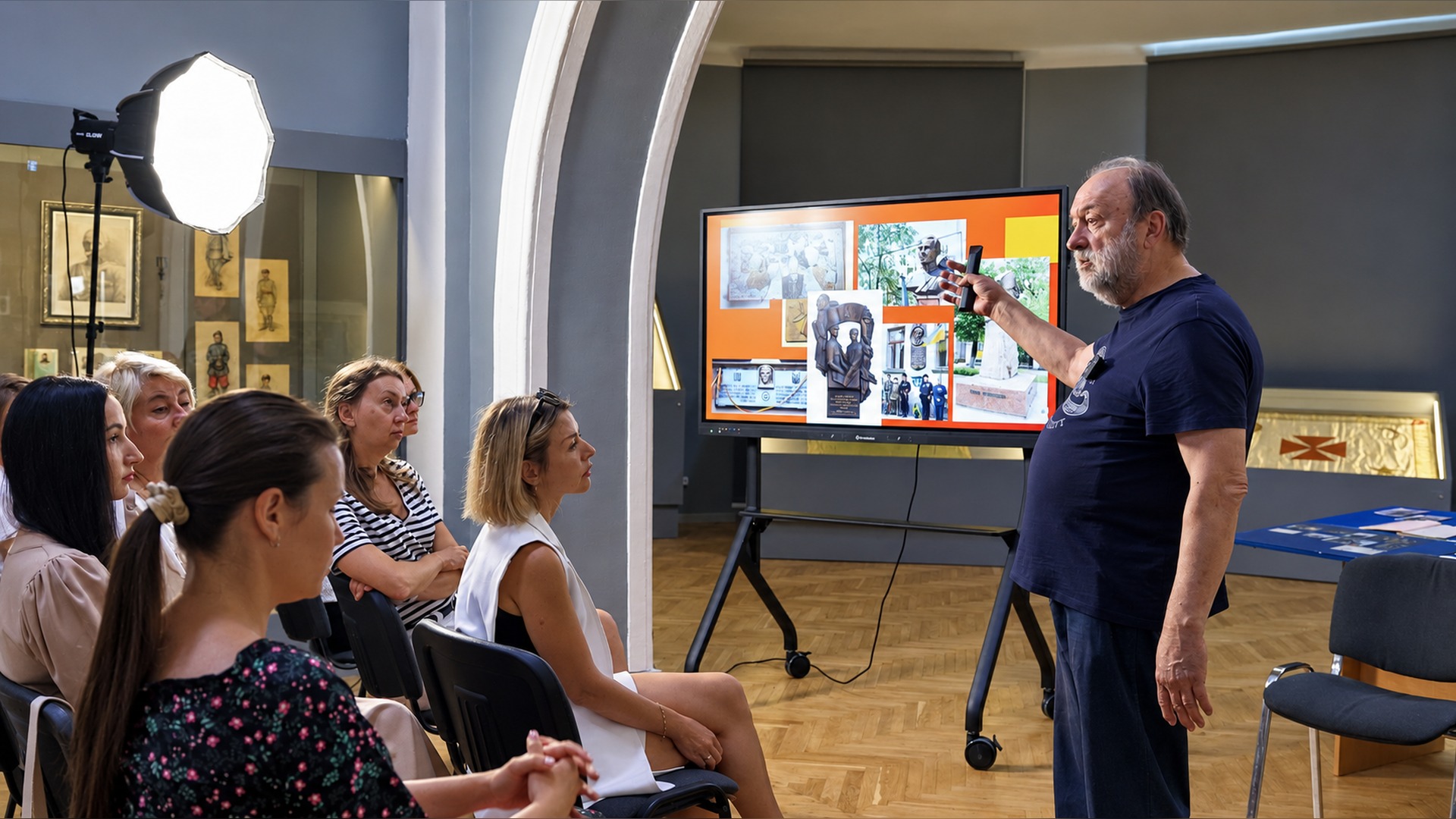
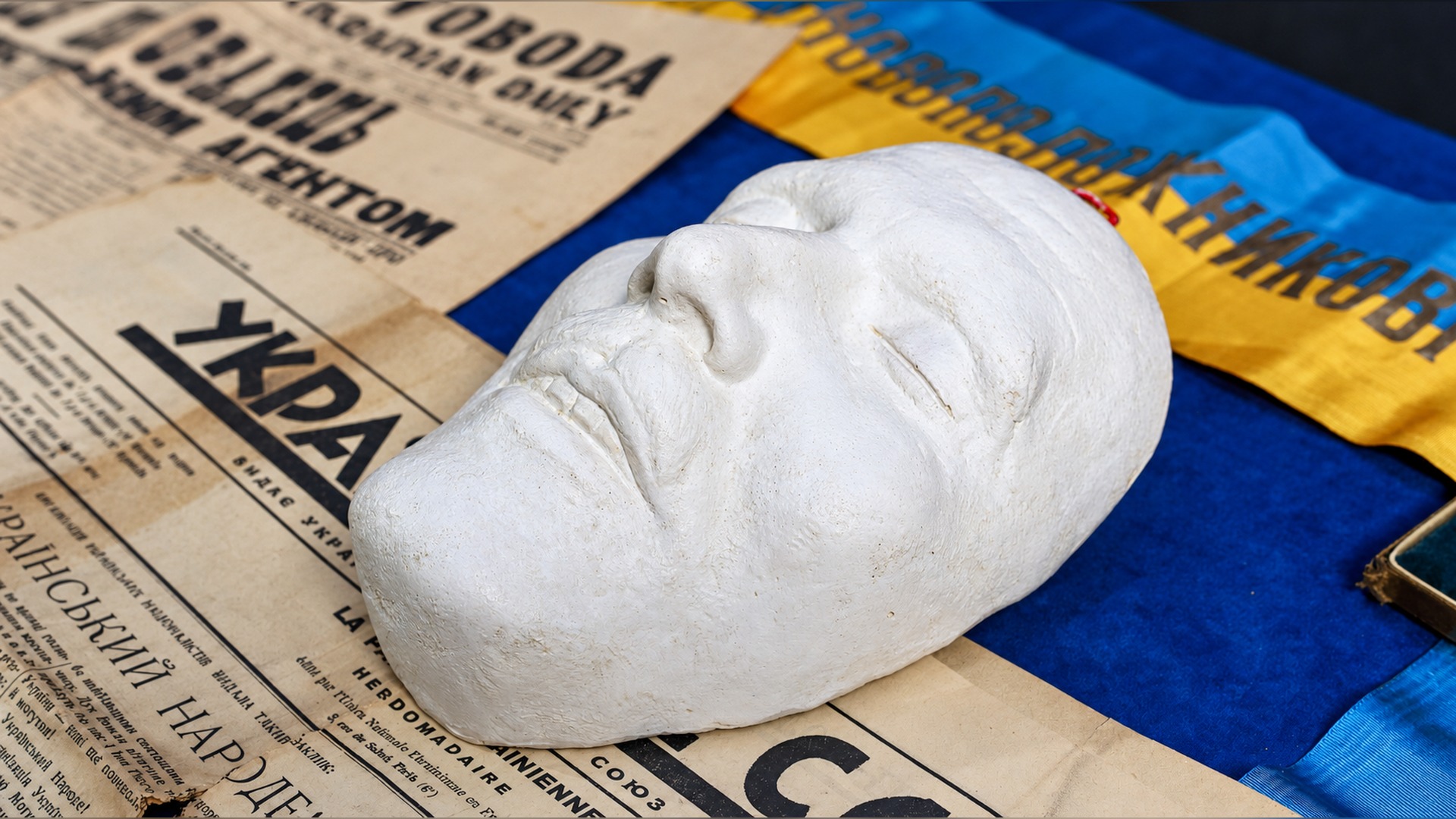
The lecture was organized as part of the “Koreni ta Kryla: A History That Unites” (Roots and Wings) educational program of the Pylyp Orlyk Foundation. It was timed to coincide with the return of the colonel’s remains to Ukraine. Konovalets was reburied in Kyiv on August 18 and became one of the first prominent Ukrainians to be brought home for burial in the future Ukrainian National Pantheon.
We offer readers five facts from the lecture on Yevhen Konovalets. The organizers uploaded the full version to YouTube (the link can be found at the end).
Mobilization into the Austro-Hungarian army
Yevhen Konovalets was mobilized into the ranks of the Austro-Hungarian army while studying in his third year at Lviv University (now Lviv University named after Ivan Franko). He was meant to become a lawyer and defend the interests of the Ukrainian community. But World War I began.
At that time, pursuing an education was not a valid reason for deferment from service. Having even an unfinished higher education not only did not exempt one from mobilization, but meant a person could take on more responsibilities. Thus, in 1914, after going through the corresponding military training, Konovalets went from student to cadet-aspirant — that is, a candidate for officer service.
He wanted to join the Legion of Ukrainian Sich Riflemen, but the imperial authorities limited recruitment into the USS, and Konovalets was sent to the Landwehr instead. So Yevhen became the commander of a company in the 19th Regiment of the Territorial Defense “Lviv” of the Austro-Hungarian army. Wartime training then lasted four months. Then came the front.
Konovalets fought for a relatively short time — after about six months he became a participant in the battles for Makivka mountain. The command of the Russian army decided to take the height at any cost. On the Austro-Hungarian side, the mountain was held by the Sich Riflemen and other Austro-Hungarian units, such as Yevhen Konovalets’s “Lviv” regiment. The Russians fought in World War I in a similar way to how they fight now — to use modern terminology, they carried out “meat assaults.” They lost so many of their soldiers that they suffered a strategic defeat and were unable to develop their offensive. But tactically they took the mountain, though far from on the first attempt. During these events, Yevhen Konovalets and his comrades from his company were taken prisoner by the Russians.
A fox in the henhouse: how, as a prisoner right under the Russians’ noses, Konovalets built up an underground Ukrainian network of prisoners of war
Having settled into captivity — this was in camps along the Volga — Konovalets began asking where Ukrainians were being held. Under various pretexts he visited them and introduced them to one another, weaving an entire network of connections. While doing all this, he behaved so innocently and nobly that guards were often not even sent to escort him.
Then tsarist rule collapsed in Russia. Konovalets took advantage of the resulting anarchy and the weakening of the regime. First, he escaped from the prisoner-of-war camp alone. Then, once he reached Kyiv, he began forming the Galician-Bukovynian Kurin of Sich Riflemen there to support the Central Rada. He called upon the Ukrainian prisoners of war he had organized in Russia to join. Notably, most of them escaped the camp together — when their guards had had their fill of “Christmas cheer.” And Konovalets directed all of this remotely.
Konovalets between Hrushevsky and Skoropadskyi
A defining trait of Yevhen Konovalets was that he always placed the idea of Ukraine’s independence first, and adjusted everything else to that goal. In his lecture, Oleksandr Kucheruk gave as an example Konovalets’s relationship with the Central Rada and the Hetmanate of Pavlo Skoropadskyi.
Both political forces fought for Ukrainian statehood, but understood and pursued it in different ways. The Central Rada, long before Skoropadskyi began to display political ambitions, saw him as a threat as a representative of large landowners. Skoropadskyi, as a hereditary aristocrat, did not favor the Central Rada’s socially oriented policy. He believed it should be done differently.
Amid this clash of values, the Sich Riflemen initially hid Skoropadskyi from the Bolshevik leader Mykhailo Muravyov, who managed to break into Kyiv for several weeks. Later, they defended Mykhailo Hrushevsky from Skoropadskyi. This happened after the Hetman, with the support of the German army, staged a coup, dissolved parliament — the Central Rada — and proclaimed himself Hetman of All Ukraine.
At first the Sich Riflemen refused to swear an oath to the Hetman, and he disbanded the Sich Riflemen regiment. But a few months later the Hetman allowed the rifle unit to be restored, stationed in Bila Tserkva. As Kucheruk explains, the main condition for cooperation, as far as Konovalets was concerned, was that Skoropadskyi pursue a policy toward an independent Ukraine.
In the uncertainty and confrontations of the time, Konovalets tried to support and strengthen any legitimate Ukrainian authority, without adding fuel to the fire of internal conflicts. For example, he was offered the chance to establish a military dictatorship together with Petliura and Melnyk. Konovalets refused.
How we ate the elephant in small bites: it began with a free Kyiv, and the idea transformed into an independent Ukraine as a guarantor of Europe’s security
Although Konovalets himself thought of himself more as a military man than a politician, he always had a strategic vision of the future — even when it was still illusory.
Historian Oleksandr Kucheruk recounts that the colonel used to emphasize: “Without a free Kyiv, there will be no free Lviv.” That is precisely why, after the collapse of the Austro-Hungarian Empire, despite the oppression of Ukrainians by the Polish authorities, Konovalets did not return to Lviv but remained in Kyiv to the last. And he went, together with the Ukrainian authorities of the time, through all the trials of the revolution, including the so-called triangle of death — when the army of the Ukrainian People’s Republic fought simultaneously against the Bolsheviks, the White Guards and the Polish army, while a typhus epidemic destroyed it from within.
All this horror ended with Polish captivity. And Konovalets managed to come out of it unharmed only because Symon Petliura concluded an alliance against the Bolsheviks with the Head of the Polish State, Józef Piłsudski.
Polish-Ukrainian relations were extremely complicated, and Piłsudski even wanted to create a “Malopolska” out of the Galician territories, as if we didn’t already have enough of “Little Russia.” But despite all these events, the idea of freedom kept growing and spreading. From Konovalets’s vision — “Without a free Kyiv, there is no free Lviv” — the thought eventually transformed into the later Polish thesis, “Without a free Ukraine, there is no free Poland.” Although no one deliberately established this connection, and the people behind these ideas were rather political opponents. Now we have both a free Ukraine and a free Poland, even though it all began with discussions about whether Lviv needed Kyiv, and vice versa.
It’s not your imagination: there really was a connection between the Irish and Ukrainian resistance movements — on a conceptual level
If you’ve ever suspected that the Ukrainian and Irish resistance movements had much in common, you weren’t imagining it — in creating the Ukrainian Military Organization and later the Organization of Ukrainian Nationalists, Yevhen Konovalets drew on the experience of Sinn Féin and the IRA as a model, says Oleksandr Kucheruk.
The lecturer helps trace Konovalets’s growing transformation from a field commander into a statesman in the process of creating the Ukrainian Military Organization. Inspired by the example of Ireland, Konovalets already saw, at that time, the need to develop not only a military wing but a political one as well. And he did not limit himself to mere reflection on the subject, but, among other things, carried out active work as a diplomat.
For example, he established close ties with Lithuania, which remains a friend of Ukraine to this day. The colonel was on friendly terms with the Lithuanian president and was the guest of highest honor at the commemoration of ten years of that country’s independence. In Lithuania, our November Uprising Day was even marked at the state level for several years.
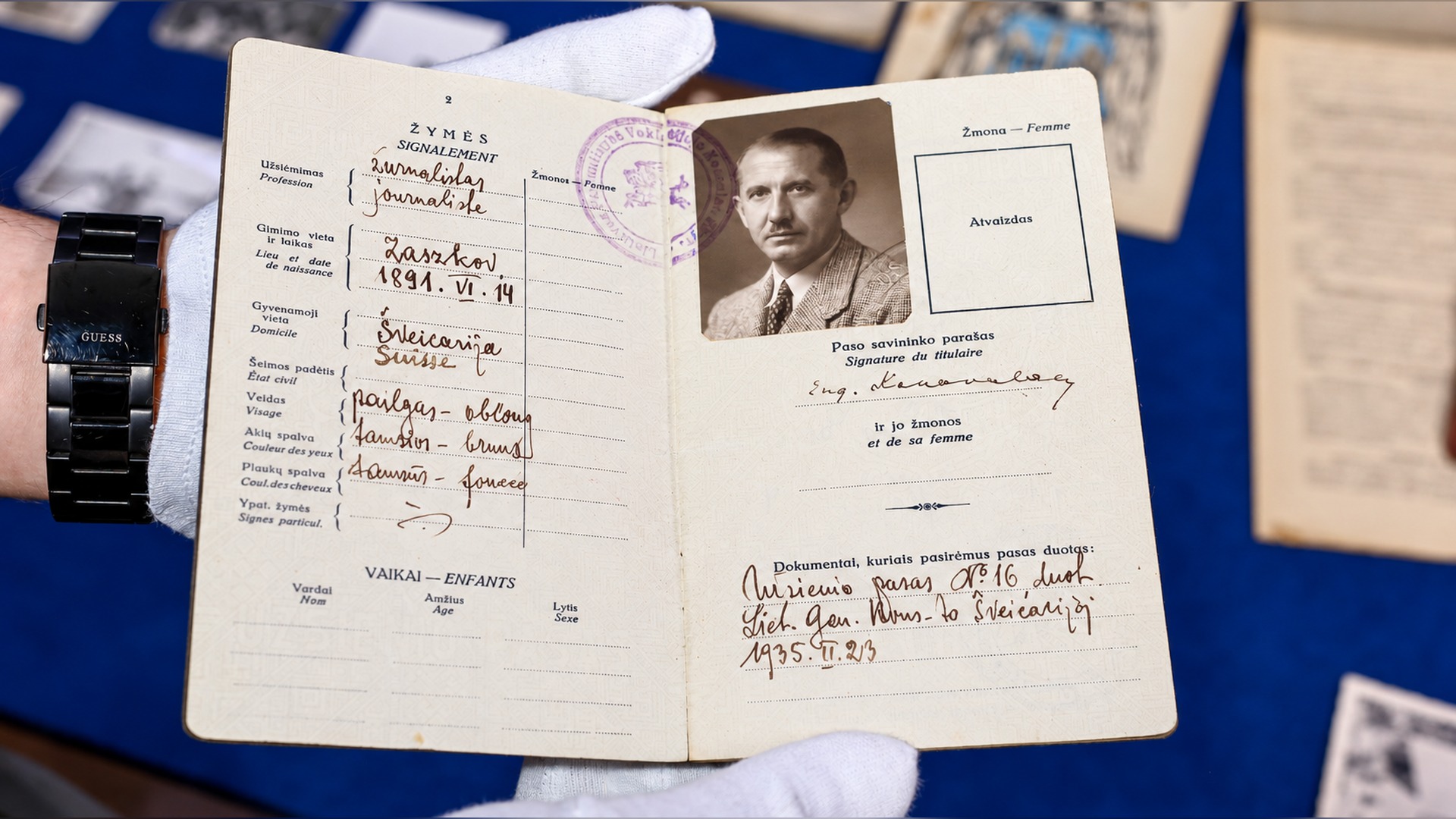
The two countries shared intelligence. Ukrainian underground operatives organized special operations for their partners. Among other things, they escorted Lithuanian submarines when the latter needed to safely pass the Polish coastline. And documents preserved from that period also show that Lithuania was one of the active donors funding the UMO, and later the OUN as well. Living in emigration, Konovalets even held a Lithuanian passport.
Briefly about Konovalets
Yevhen Konovalets was born in 1891 in the Lviv region. His family came from a background of Greek Catholic clergy and educators. After school, he enrolled in the law faculty of Lviv University. He did not finish his studies, as World War I began and he was mobilized into the ranks of the Austro-Hungarian army in 1914.
In 1915, Konovalets was taken prisoner by the Russians. He was held there until 1917. The Russian Empire was engulfed by the February Revolution; Konovalets escaped captivity and came to Kyiv — to the Ukrainian revolution.
The Ukrainian Military Organization he inspired, and later the Organization of Ukrainian Nationalists, out of which the UPA grew, made it possible — sometimes by force of arms, sometimes through information — to continue the struggle for national self-determination all the way to the early 1960s. It was then that the generation of the sixtiers (shistdesiatnyky) came to the fore. Resistance to the various occupying regimes — Austrian, Polish, Romanian, German, Soviet — turned out to be virtually uninterrupted.
Konovalets was killed by Soviet Russian special services in 1938 in Rotterdam. But his most seemingly unattainable dream — an independent Ukraine — survived and became our reality.
***
These are just a few interesting facts about the Ukrainian colonel Yevhen Konovalets — Oleksandr Kucheruk presents far more of them in his lecture. You can watch the full version here:
The lecture for teachers, held as part of the Pylyp Orlyk Foundation’s “Koreni ta Kryla: A History That Unites” (Roots and Wings) program, took place within the exhibition “The Path of Heroes: In Memory of Symon Petliura.”


