What the Texty.org.ua Research Found
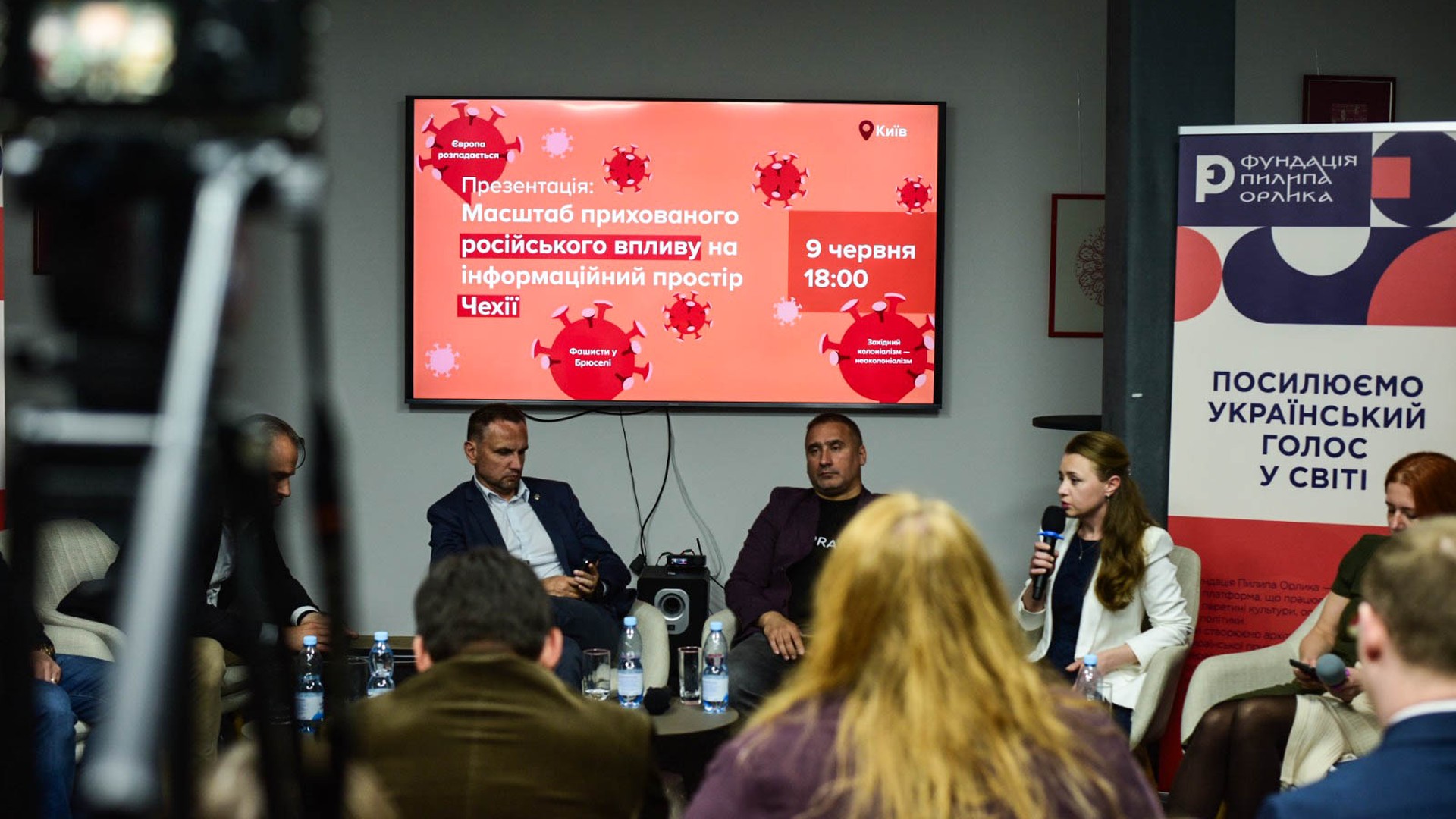
The research, presented by Serhii Mikhalkov — a journalist, head of the Russian disinformation research department at Texty.org.ua and head of the study — covered the period from February 2025 to February 2026.
The authors are Serhii Mikhalkov, Natalia Romanyshyn, Artem Korol, Nikita Holovinskyi, Nadia Kelm, Romana Kulchynska, Halyna Pastukh, Yaryna Yasynievych and Oksana Poltavets.
The Texty.org.ua team analyzed 167,941 publications from 21 Czech-language online media outlets of a disinformation and conspiratorial nature; 22,283 videos from 26 Czech YouTube channels — from public-service media and independent outlets to far-right and conspiratorial channels; and over 1.8 million comments, including cross-platform analysis of shared accounts on Czech and Ukrainian YouTube.
The researchers identified 55 pro-Russian narratives across seven thematic groups: the war in Ukraine, Russia, the USA, Europe, Czechia, Ukraine and international events. 66% of the analyzed publications contained at least one propagandist narrative. The most widespread among them: “Ukraine is losing the war” (28,095 publications), “Trump’s peacemaking strategy” (17,344) and “The EU and Britain are dragging out the war in Ukraine” (12,404). Among the messages were accusations against Ukraine of crimes against humanity, rhetoric about the collapse of Europe, and justification of Russian aggression through the “liberation from Nazism” narrative.
An analysis of 381,903 external links showed that low-quality Czech outlets rely directly on materials from RT, TASS, RIA Novosti and Telegram channels linked to Russia-affiliated authors. Telegram and telegra.ph alone account for 84,370 links — more than five times as many as all other social networks combined.
The research also documented 577 accounts showing signs of bots or trolls that were simultaneously active in the Czech and Ukrainian YouTube segments, leaving over 238,000 comments on Czech channels.
The full results of the research can be found here: texty.org.ua/projects/117534/x
Artem Mykolaichuk: “Studying the Influence of Russian Propaganda Is a Form of Fighting Russia”
Artem Mykolaichuk
Chairman of the Board of the Pylyp Orlyk Foundation

Studying the influence of Russian propaganda is currently a small, but nonetheless real, form of fighting Russia. For them it is a huge front. They have been investing millions in it for a hundred years. I deliberately say “a hundred years,” because it began a long time ago. The Italian revolutionary and Marxist theorist Antonio Gramsci once formulated an idea — and they have consistently kept building on it ever since. They genuinely influence universities, civic life, journalists…
And today’s research, especially regarding the sheer number of facts of Russian influence in just one European country, demonstrates frightening figures. And we understand that countering this is very difficult, but necessary. We must engage in this fight, we must win on this front. Because support for Ukraine depends on this direction. I hope this research becomes the beginning of good cooperation in this particular area. And we will continue to conduct such studies, first of all among our neighbors, and then across Europe as a whole. And I hope these studies won’t have to last long. Just two or three more countries, and then there will be nothing left to research, because there will be no more Russia.
Luboš Veselý: “There Is No Other Way but to Win”
Luboš Veselý
Ambassador Extraordinary and Plenipotentiary of the Czech Republic to Ukraine
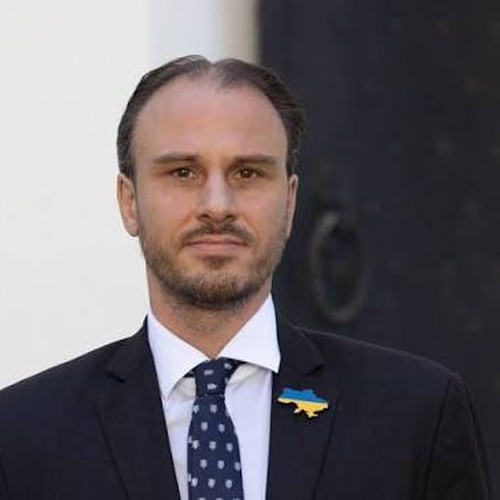
I am glad that Czechia is the first country in your research. Russian propaganda has been operating at least since the founding of the Soviet Union. As they call it, these are “active measures.” And unfortunately, they really are very active. They genuinely work both against Ukraine and against all democratic countries trying to remain free. This is a problem not only for Czechia and Ukraine, but for the whole of Europe. And I am glad that Czechs and Ukrainians are working on this together and will jointly propose how to solve it. And if Czechs and Ukrainians act together, then there is no other way but to win.
Vasyl Zvarych: “We Know About the Kremlin’s Intentions to Step Up Propaganda”
Vasyl Zvarych
Ambassador Extraordinary and Plenipotentiary of Ukraine to the Czech Republic
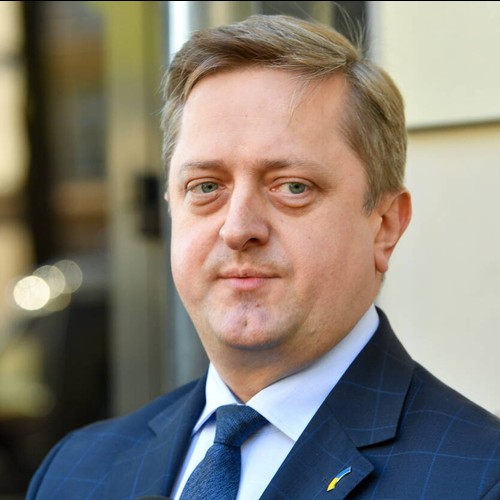
I want to sincerely thank you for this extraordinarily important research dedicated to analyzing Russian information influence on the information space in Czechia. I also want to express deep gratitude to the Czech Republic — its president, government, parliament and, above all, Czech society — for its unwavering support of Ukraine in its fight against Russian aggression. Thank you for constantly showing your solidarity and understanding that Ukraine today is fighting not only for itself, but for the protection of the norms and principles of international law, which are the best guarantee of security for the Czech Republic as well.
It is no secret to anyone that modern war is not waged on the battlefield alone. Information attacks have become an integral part of Russian aggression. The Kremlin long ago turned disinformation, manipulation of facts and propaganda into a weapon used to achieve its criminal, neo-imperial political goals. And the purpose of this weapon is well known: Russia seeks to sow fear, deepen social divisions, provoke hatred toward Ukraine and Ukrainians, undermine trust in democratic institutions, discredit support for Ukraine and everyone who supports Ukraine, and foster a sense of indifference and helplessness. And in my view, this is dangerous propaganda of the so-called “peace at any price,” which in reality means whitewashing the aggressor and encouraging new acts of violence.
Russia is trying to exploit one of the fundamental principles of democratic society — freedom of speech. In order to promote its own destructive narratives, threats to the national security of individual states are created, divisions within the European Union and NATO are deepened, and distrust of European and democratic institutions is reinforced. That is why the democratic world must draw the right conclusions. We must clearly distinguish where freedom of speech ends and where propaganda of hatred and hostility begins. Freedom of speech cannot be a justification for spreading lies, manipulation, hate speech, propaganda, or the justification of aggression.
At the same time, it must be understood that the threat is not confined to the information space. Russia is waging an active war in cyberspace and is attacking, among others, NATO countries, EU countries, including the Czech Republic. Over the past year alone, Czechia has suffered hundreds of cyberattacks. And here too we must join forces to prevent these attacks — or even counterattack in response. After all, these are not random incidents. They are elements of a systemic campaign aimed at destabilizing democratic states, undermining their security and weakening public trust.
It is not enough to react only to the consequences. We need more decisive preventive action. As the saying goes, it is better to blow on something cold to prevent a threat than to put out a fire afterward. We must be ready for new challenges, since we know about the Kremlin’s intentions to step up its activity in the field of propaganda and so-called public diplomacy. This is evidenced by the official budget figures of the Russian Federation: funding for projects through “Rossotrudnichestvo” has been more than doubled this year — from around 70 million US dollars in 2025 to around 150 million dollars in 2026. This means we can expect new information campaigns, new provocative actions, more active use of Kremlin-controlled structures, including religious ones. Unfortunately, the Moscow Patriarchate’s Orthodox Church continues to operate in Czechia. Particular emphasis will be placed on the use of various cultural and civic organizations that will spread the narratives of the so-called “Russian world.” New media platforms, podcasts and social media accounts will appear, as will new or already well-known faces spreading this ideology among European societies.
Countering disinformation is a task not only for state institutions and the security service — it is the shared responsibility of the whole of society. Just as the defense against Russian aggression is carried out not only by the Ukrainian army, but by all of Ukrainian society, the entire Ukrainian people, regardless of where they live. Ukrainians in the Czech Republic, for instance, provide strong support to the Ukrainian army, mobilizing all their resources, opportunities and strength to support the defense of Ukraine.
We need to develop critical thinking, learn to analyze information, verify sources, and take responsibility for what we read, share and like (support). Because this genuinely affects public consciousness. The word has enormous power. It can support peace, mutual understanding and solidarity, just as it can become a tool of hatred, of stoking conflicts and preparing for large-scale war. History has proven this more than once. Before the tanks moved, propaganda was already at work. That is how it was in Nazi Germany. Putin’s Russia operates the same way. First, words prepare the ground for aggression, and only then does the weaponry arrive. So this is not the time for Czechia to relax, or to believe that the threat does not exist, that it has passed, or that certain conflicts are happening far away from us. In reality, the threat is already here, and we must not close our eyes but act, unite and work to ensure that today’s threats do not turn into a full-scale war and do not take the lives of future generations of peaceful residents.
Volodymyr Viatrovych: “The Further West You Go, the Less Understanding There Is of How Disinformation Works”
Volodymyr Viatrovych
Member of the Ukrainian Parliament, historian
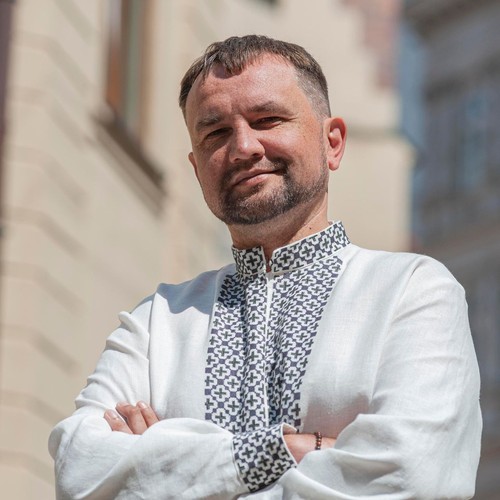
The roots of Russia’s modern information war lie in the developments of the 1960s, 1970s and 1980s. Naturally, the toolkit changes, but the methodology remains roughly the same. So I recommend that everyone read Thomas Rid’s book “Active Measures,” which traces the history of the establishment of this method in the 1960s. I hope this book will indeed be published in Ukrainian. By the way, one of the first testing grounds for establishing this method was Czechoslovakia at the time.
As a historian, all of this incredibly reminds me of another story: recently I received four extraordinarily interesting volumes from the Foreign Intelligence Service archive on “active measures” aimed at stoking Ukrainian-Jewish misunderstandings. In the 1960s–80s there were attempts in the diaspora to reach mutual understanding between Ukrainians and Jews. And Ukrainian and Jewish dissidents in the Soviet Union did reach an understanding. Then specific special operations followed… When we talk about “active measures,” this doesn’t necessarily mean disinformation or lies. Sometimes it’s the truth, correctly presented, correctly focused, and delivered at the right time.
The new research resonates incredibly with these technologies and methodologies that were being worked out in the 1960s–70s–80s. We still haven’t fully studied how it works. It seems to me that if we study this technology itself more thoroughly, we will see this monster — and understand how to contain it.
The research is particularly excellent, in my view, because it uses Czechia as an example. Because when it comes to anti-Ukrainian propaganda in Czechia, we have an almost sterile — forgive the comparison — example of Russian propaganda itself. Because, thank God, there are no deep historical misunderstandings in Ukrainian-Czech relations that would complicate distinguishing where exactly Russian propaganda ends and where certain internal pains of Czech society, or misunderstandings with Ukrainians, begin. As happens, for example, with Poland. I hope the Texty team will later take on research into Poland as well. There it will be much harder to separate Russian info-ops from certain social and mental problems within Poland itself, which unfortunately also exploits this theme.
So Czechia is a fairly clean example, one that makes it possible to see the methodology itself more clearly. I also hope that in the future similar studies will be carried out in Slovakia, Hungary and Romania. At the very least, the entire western border needs to be covered. Because Russia is working systematically there, at the very least. And we understand perfectly well that Russia’s goal is to sever Ukraine’s direct contact with the West. And it hopes (and sometimes, unfortunately, hopes effectively) that these information operations will have concrete consequences in the form of political decisions. In part this looks effective, even in the case of Czechia, when there are decisions to limit the supply of this or that weapon. Just today there was news about the Bulgarian case, when Bulgaria already announced its intention to stop arms deliveries to Ukraine. In other words, we see just how concrete, practical, and highly negative for Ukraine the result of such an information war against our country can be.
It has already happened that we found ourselves at the epicenter of an absolutely new dimension of war in world history. And Ukraine has already become a kind of laboratory ground on which new types of warfare are being tested: drones, missile programs… We are already leaders here, we can become an example for others. We can offer our own developments, which can become a basis for study or borrowing by other countries. That’s why I would like us to eventually manage not just to expose the machinery of Russian propaganda and disinformation, but also to develop some mechanisms for countering it, which can then be adopted by others. I’m convinced this should be exactly us. Because the further west you go, the less understanding there is of how it works, the less understanding there is of the danger of this process. Literally a year ago we had a meeting in Britain with British politicians and an expert on these issues. And I was struck that the British consider the question of Russian information influence in the context of “freedom of speech.” That’s absurd! We are saying that this is not about “freedom of speech” — it’s about a weapon. It’s about the fact that information is being used as a weapon. And if you continue to look at this exclusively through the lens of upholding democratic freedoms, then Russia’s hands will be free.
So I very much hope the research will continue, and that we will be ready to use some recipes for countering it and export them as much as possible. So that this Russian offensive, which unfortunately remains fairly effective, especially at the European scale, can finally be stopped.
Having official information in various languages on Ukraine’s behalf (international broadcasting) is great, but it’s clearly not enough. We need to work on the enemy’s own field too — propaganda work (“propaganda,” from the notion of “conveying”). It pains me that for so long the Ukrainian parliament — my colleagues — have been putting off passing a law on the principles of state policy toward the peoples enslaved by Russia. We need our own version of the 1970s Radio Liberty, which broadcast into the Soviet Union. That could be radio or television, or other tools. But we have to work for the peoples enslaved by Russia, in order to carry the information war onto Russian territory itself and to give those people certain tools and channels too.
Peter Pomerantsev’s wonderful book, “How to Win an Information War: The Propagandist Who Outwitted Hitler,” has been translated. I would very much like to believe that something similar is being done in Ukraine — we simply don’t talk about it. That kind of sometimes dirty information war against the enemy, on the enemy’s own territory, is also needed. As a historian, unfortunately, I see this kind of dirty information war being waged by the enemy on Ukrainian territory. Reading Pomerantsev, you can simply lay out storylines that we see daily in Ukrainian media, especially on Ukrainian social networks. All these scandals, for example, about military recruitment offices or about emigrants. That’s exactly how British intelligence worked against the Germans on German territory. And I miss seeing something similar being done on enemy territory. Maybe I just don’t see it, God grant that’s the case. But it seems to me that we don’t pay enough attention to carrying the information war onto the enemy’s own territory.
Besides, one shouldn’t overestimate the effectiveness of Russian propaganda, especially inside Russia itself. One topic I follow is the so-called “pobedobesie” (victory frenzy). For a long time I thought this quasi-religion had a colossal influence on Russian society, that it was incredibly imbued with “pobedobesie,” but it turns out that isn’t so. It turns out that those who wanted to fight for the “motherland,” for Stalin or Putin, have long since ended up in Ukrainian soil. And “pobedobesie” no longer works to mobilize Russian society. That’s why Putin is afraid to announce a general mobilization, why he prefers to keep fighting using mercenaries instead. “Rise up, vast country!” didn’t work. Everyone who wanted to rise up already rose up long ago. The influence of Soviet propaganda during the Second World War on Soviet society is incomparable to the influence of modern Russia on Russians.
Ihor Solovei: “Information Is a Weapon Being Used for Criminal Purposes”
Ihor Solovei
Head of the Center for Strategic Communications
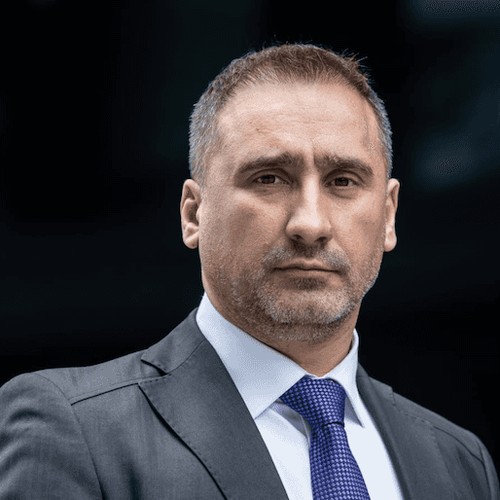
How does Russian propaganda operate, not just in Czechia but everywhere? Conceptually, they have two tasks. The first is to convey the point of view of the Kremlin, of Moscow, of the Russian authorities, in exactly the form it was generated in Moscow — and preferably without context, that is, as a direct broadcast to the audience. The second task is to create so-called “srachi” — that is, to generate chaos in this or that country. And this is exactly where the research by the Texty team, led by Serhii Mikhalkov, shows which points, which topics, they use to create this kind of chaos. There’s friendly fire in it, and unfriendly fire too. There’s one goal: to get everyone quarreling with everyone else.
How do you counter this? This is the most popular question our foreign partners have been asking us for at least four years now. So we’ve developed a certain algorithm for answering it, based on the activities of the state, civil society and international partners. First, there is no universal pill. There is a set of measures and mechanisms which, if put in place, can protect one’s own information space, one’s own people and citizens from this harmful influence.
At the Center, we’ve divided this into three key areas. The first is to take away the stage from Russian propagandists. That’s what has been done in Ukraine since 2014, and very successfully. We were criticized for it at the time, but time has shown it was the only correct decision. Let me remind you: this meant shutting down the Russian platforms VKontakte and Odnoklassniki, and Russian Yandex services… In other words, giving up everything of Russian origin and funding that Russians can use for their own purposes and interests. And the final point in that story was set in 2020, when they shut down the Russian channels that mimicked being Ukrainian but were funded with Russian money. That was the pool of TV channels “belonging to Medvedchuk.”
The second step is to create alternative content. After all, when VKontakte was shut down, there was a lot of crying about it. But everyone smoothly moved over to Facebook. In other words, it’s important not only to ban, but also to provide a normal alternative. Instead of Russian books — quality Ukrainian book publishing; instead of Russian films — Ukrainian films; instead of Russian music (people also cried, saying, what will the radio stations play now) — now we see a rapid rise of Ukrainian music.
And the third element is citizens’ media literacy — something Ukraine has made serious progress on since 2014. And many of our European partners have come to us to learn from this experience. But you can never stop in this work. The information war is a process that has neither a beginning nor an end. It will exist for as long as we have such a neighbor next door.
And a sub-strand of that third block, born in recent years: we realized that all these measures can be taken by each country separately, but it’s far more effective when done jointly. That’s how the “information Ramstein” initiative was born. True, it also died… It turned out that our state lacked the politician, the political force, the state body to keep pushing this issue forward. Now a second attempt at this is underway. I hope it will be more successful this time.
This is about international consolidation of efforts across all three directions I’ve listed above. A certain embodiment of this project can now be seen at the level of the European Union. Europeans have only just started building the so-called European shield. We still don’t know what configuration it will take. But if you only defend yourself in an information war, there will be no victory. So the idea is already ripening among our European partners not only of a cognitive shield, but also of a cognitive sword. Actively defending means entering the adversary’s territory, working with their information space, offering your own agenda.
It’s good that the world is finally coming to realize that the Russians have “hacked” democracy and are using democratic mechanisms for their own interests and against democracies themselves. Unfortunately, this understanding is only coming now. But it’s already an irreversible process. And the Russians themselves brilliantly help this along every single day. As our colleague Denys Kazanskyi says, there’s no need to invent anything — just show some of the footage of what Russians say among themselves. And that works better than any propaganda.
Information is a weapon being used for criminal purposes by the Russian Federation. And this has finally become clear to the civilized West. Although we still sometimes lose our allies. We see that this information weapon is succeeding in some countries — in Poland, for instance, and now in Bulgaria. So the process of resisting this evil is an ongoing one. You cannot stop. The more players there are on the ring of cognitive defense, of cognitive resilience, the better, and the faster our victory will come.
Jan Šír: “Both the ‘Junkyard Sites’ and Czechia’s Leading Media Are Steeped in These Narratives”
Jan Šír
Czech political scientist, lecturer at Charles University (Prague, Czechia)
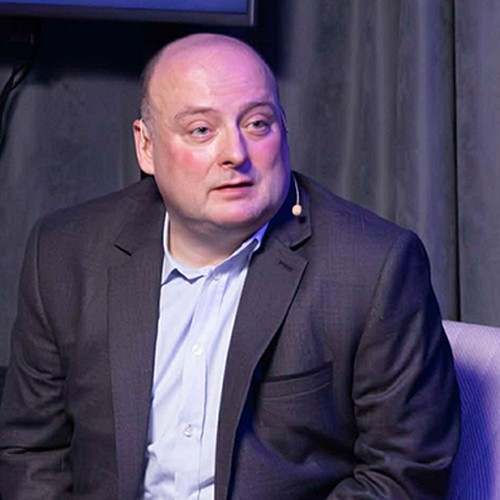
Thank you to our Ukrainian colleague researchers. What you’ve done is work that should really fall to Czech researchers and counterintelligence. You’ve done this work for us. I have one remark about the research. It was focused on the so-called “junkyard sites” and on YouTube comments. I would be very curious to read a similar analysis carried out on mainstream media. I fear the results wouldn’t be any different… Because many of the narratives you were able to identify are Czech mainstream — which, unfortunately, is spread by Czech officials themselves. Our new government includes parties that make use of Russian narratives to mobilize their share of the electorate.
The scale of the messages you analyzed is off the charts. And both the “junkyard sites” and the leading media are steeped in these narratives.
Has Czech society really changed its mind, its attitude toward Ukrainians? Has it noticeably worsened? Or is this still, for now, more of a political agenda item? I don’t see major changes in how Czechs treat Ukrainians. Ukrainians are already part of Czech society. Since 2022 Czechia has granted Ukrainians temporary protection status. More than half a million Ukrainians currently hold this status. That’s a large figure, a serious one.
But yes, the political climate has changed. Pro-Russian forces in Czechia, the ones that exploit Russian influence, are now in government. That affects the policy Czechia pursues. What’s worse, Czechia isn’t ready for this massive offensive that Russia is mounting. And it isn’t preparing for it. In Ukraine you don’t need to explain such things: you had Yanukovych, now you have a full-scale invasion. Here everyone understands that they work until the very end. But they work wherever they’re allowed to. Right now they’re working in Czechia, and the government isn’t fighting it. So the trends are, rather, bad, not positive.
There used to be a post of special representative for combating disinformation. But that position was cut, that official no longer exists. There was a special unit at the Ministry of the Interior that coordinated the fight against hybrid threats. It, too, was dissolved. And all of this affects policy — regardless of what attitude the majority of Czechs, or say the academic community, actually hold toward Ukrainians.
Yuliia Yanchuk: “Russia Is Using Social Media and AI-Generated Content”
Yuliia Yanchuk
Deputy Director of the Department of Strategic Communications and Promotion of Ukrainian Culture, Ministry of Culture and Strategic Communications of Ukraine
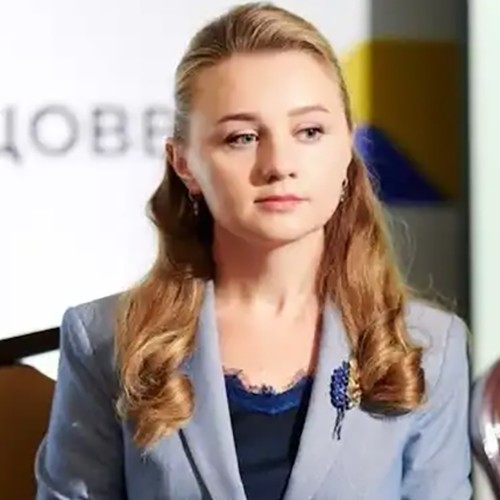
To sum up what’s been said, today the entire European diplomatic space is facing hybrid threats from Russia, particularly in the field of information security. And this isn’t always open propaganda. Most often it is covert influence using tools of information manipulation and interference. As technology develops, these tools become more sophisticated — and they create the kind of manipulative narratives we’ve seen today in the research, about Ukraine, about democratic institutions, about European unity…
Russia is using social media and its algorithms, as well as content generated by artificial intelligence. Russian disinformation is aimed at undermining overall trust in Ukraine as a reliable partner, reducing support from Western countries, and destabilizing the situation inside the country itself. That’s why, under such conditions, it is extremely important to spread accurate, official information about Ukraine among the global community — particularly in European countries, in Czechia.
And here it’s important to develop the state’s international broadcasting system. This is one of the methods of responding to threats and an important element of state information policy. So the State Media Platform for International Broadcasting of Ukraine, as well as the Ukrinform news agency, have the relevant resources, which are available in many countries around the world, in European countries, including Czechia. These resources usually contain information about events in Ukraine, about Ukraine’s struggle for independence… This information is important and truthful, it is official. So it’s important to spread the word about these resources, so that people use them — particularly the population of Czechia — so they know about them and can obtain official information.
Also, two years ago an agreement on cooperation in the field of security and long-term support was signed between Ukraine and the Czech Republic. And one of the important provisions of this agreement is cooperation in countering disinformation, foreign information manipulation and interference, and the development of a strategic communications system. The agreement provides for an exchange of experience, including an exchange of news items between the public broadcasters of Ukraine and Czechia, including within the framework of cooperation with the European Broadcasting Union.
We can only counter Russian disinformation through joint efforts. No single country can resolve this issue on its own. International cooperation, and the exchange of data, information and experience, are essential. Only this will give us the ability to support the resilience of our democratic societies and ensure access to truthful information.
Ihor Rozkladai: “Russia Isolates Itself Fairly Well, and Has Been Doing So for a Long Time”
Ihor Rozkladai
Media lawyer, Deputy Director of the Center for Democracy and Rule of Law
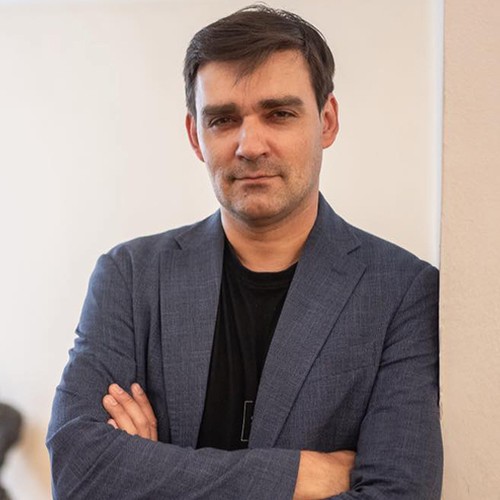
What Russia has been mega-effective at for more than a hundred years now is behaving like a woodpecker that lands on a metal pole and really loves banging on the lamp. Russians do this constantly, adapting to new technologies. And the methods themselves are described in my favorite KGB manual from 1968. By the way, there’s a lot in there about Ukraine, and about our diaspora.
When it comes to truth, I would recommend one thing that a state can do even with minimal resources — there’s something like DL. This is the adaptation of websites with the help of artificial intelligence. And that’s something that should have been done yesterday. Because a massive artificial intelligence works like this: wherever it finds something, that’s where it feeds — it is absolutely indifferent to the source. It’s just a tool. And if our official resources, the sites where there’s a pile of great historical literature, aren’t visible to search engines and artificial intelligence, they’ll remain accessible only to a small circle of people who are already interested in that particular topic.
As for working on the ground inside Russia, unfortunately, from my own experience I can say that they isolate themselves fairly well, and have been doing so for a long time. The peak was somewhere around late 2024 to early 2025, and that’s why working in this field has become harder. But it can still be done, especially since many Russians are now sitting on Threads via VPN. But there you already need to work a bit with psychologists. I, for example, found a very interesting audience that’s very satisfying to “hammer at.” That’s the audience of women aged 18 to 42. When you tell them they’ll have to sit in camps, pay reparations, they go: “Well, everything was fine before; she’s so beautiful; and here you are talking to her about politics”… In reality, that’s a good nerve to hit, one you can hammer at to the maximum. And it doesn’t require much effort, just time.
We also continue to cooperate with platforms. We have successful cases on TikTok — removing Russian disinformation from there. In other words, it’s possible. The only thing is, we’re not in Russia and we don’t have 30 million Instagram/Threads users, so we’re left having to be more creative and look for those pressure points among Russians that can be struck.
Prepared by Halyna Huzio.